|
|
|
|
|
|
|||||||||||||
|
|
|
|||||||||||||
|
|
|
|
| |
Martin Ignores Homelessness Crisis by Cathy Crowe
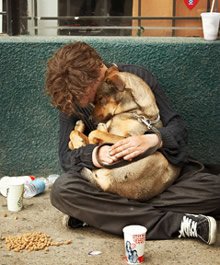
I've been a street nurse in Toronto for 15 years. In the spring of 2004 I received the Atkinson Economic Justice Award which permits me to pursue, for up to three years, my passions for nursing and working on homelessness and housing issues. Disaster: "catastrophe, calamity, tragedy, flood, deluge, quake, typhoon, tsunami, hardship, adversity, hurt, ruin, desolation, trouble and strife, collapse, breakdown." (from Rodale's Synonym finder) There's essentially one thing on everyone's mind of late - the tsunami disaster. The consequences of disaster, natural or man-made, are linked to social vulnerability and the strength, capacity and resilience of a region's infrastructure and economy. This will be apparent in years to come in the more than 13 countries affected by the tsunami. Like other Canadians I gave a donation to one of the Tsunami relief groups. Will this catastrophe be solved by the global community's outpouring of donations? Should the weight of that responsibility be on individuals and groups or on governments? If this huge fundraising effort is not enough, what then? This got me to thinking about my own personal interest in the concept of disaster. Canada has seen its share of natural and man-made disasters (the 1917 Halifax explosion, 1958 Springhill mining disaster, the 1987 Edmonton tornado, the 1950 and 1997 Manitoba floods, the 1998 Canadian ice storm, and Canada 's late -90s worsening homelessness disaster). In the spring of 1998 the City of Toronto's Homeless Advisory Committee, which advises City Council, asked that the city be declared a federal disaster area because it could not treat or shelter its growing number of homeless people. This motion was shuffled to another committee and was ultimately ignored. So, later in the year some of the proponents of this motion (myself included) came together and formed the Toronto Disaster Relief Committee. We asked that the disaster of homelessness be dealt with in the same manner and spirit as other Canadian disasters such as floods and ice storms. We demanded emergency relief monies for our cities and a long term strategy for a national housing program where an additional 1% of government budgets would be allocated for an affordable national housing program. (The entire State of Emergency Declaration document is on the TDRC web site at www.tdrc.net - look at Reports and Articles - before 2002). What was the Canadian response to Canada's homeless disaster? -- On the day the declaration was released the Toronto Star headlines read "Plight of the homeless a National Disaster" (Toronto Star, October 8, 1998) -- Within weeks of the Disaster Declaration, hundreds of prominent individuals and groups including city councils across the country and the Big City Mayors' Caucus of the Federation of Canadian Municipalities endorsed the disaster declaration. -- The United Nations responded by criticizing Canada's track record on housing. "The Committee is gravely concerned that such a wealthy country as Canada has allowed the problem of homelessness and inadequate housing to grow to such proportions that the mayors of Canada's ten largest cities have now declared homelessness a national disaster." (UN Committee on Economic, Social and Cultural Rights, Dec. 1998) -- The federal government responded as well. Prime Minister Chrétien appointed a senior Cabinet Minister, Claudette Bradshaw, as Minister Responsible for Homelessness, perhaps the only government position in the industrialized world with this title. Eventually the federal government rolled out hundreds of millions of dollars for homelessness relief called 'Supporting Community Partnerships Initiatives' or as we call it "SCPI" (pronounced skippy). The good thing about Ms. Bradshaw's appointment was that communities across the country had to develop community plans to document the horrific state of their communities when it came to housing and homelessness and it forged some pretty strong alliances for advocacy work. However, as the name suggests, the federal response "skipped" over the concept of housing. Instead, the government took an individual approach to the homeless victims of the disaster, focusing on circumstances of their homelessness: mental illness, alcohol or drug use, personal trauma or crisis, etc. They "skipped" the broader social and structural causes of the crisis: cuts to social programs including housing and social assistance, tighter eligibility restrictions for social safety net programs such as EI and disability benefits, changes to tenant protection legislation, to name just a few. As Michael Shapcott has said "the "SCPI" monies made homeless people more comfortable being homeless, but no less homeless." This would be like providing emergency relief to the victims in Asia but refusing to bring in the necessary long term infrastructure. Many commentators are presently warning of this outcome. Almost 7 years after Canada 's historic Disaster Declaration we still await the federal government's commitment to a national housing program. Emphasizing this point, economist Armine Yalnizyan points out - Canada now has a population of 31 million. 1.7 million are underhoused or non-housed (Canadian Housing and Renewal Association). That's 5.5% of the Canadian population still looking for safe, decent and affordable housing. Disasters are both natural and man-made. It's important to note that the term "disaster" was and still is appropriate to use to describe Canada's homeless situation. The World Health Organization describes a disaster as "any occurrence that causes damage, ecological disruption, loss of human life, deterioration of health and health services on a scale sufficient to warrant an extraordinary response from outside the affected community." Disaster is not just a single event but a social consequence. In the 1999 World Disasters report, an annual survey of humanitarian trends, Astrid Heiberg states "everyone is aware of the environmental problems of global warming and deforestation on one hand and the social problems of increasing poverty and growing shanty towns on the other..when these two factors collide, you have a new scale of catastrophe." So what is the government role in responding to disasters - whether it be a natural disaster like the tsunami or one caused by structural policies like Canadian homelessness? Experts who study disaster such as Saundra Schneider argue that "natural disasters create problems that can realistically be addressed and managed by government." Certainly Canada's growing volunteer sector, the charity sector, which has responded to the life and death needs of homeless people, whether it be church basement Out of the Cold programs, or annual drives for sleeping bags, have proven ineffective in alleviating homelessness. Perhaps worse, they have allowed the municipal sector to further withdraw from providing essential life-saving shelters that meet UN standards for refugee camps. Furthermore, Canadian governments' promises that the private sector would fill the gap in affordable housing starts has been an empty promise, although the private sector has certainly been there to benefit from what scarce provincial housing monies there are. Professor Ursula Franklin suggests that natural disasters such as the 1985 Mexico City earthquakes that killed 10,000 people, evoke solidarity and tolerance. Political and social divisions are put aside and people focus on providing solutions to the injured and homeless while at the same time addressing prevention, for example, in the Mexico case - improved use of geological knowledge and the role of the subway layout in the amplification of shock waves. Homelessness, in the Canadian case a man-made disaster, increasingly evokes blame, discrimination and stereotypes as an excuse to not do anything. For example, we have recently witnessed debate at Toronto City Council that I would consider discriminatory - homeless people called bad for tourism, called lazy, an eyesore and best suited for assignment to garbage pick-up responsibilities. We have also witnessed provincial legislation that makes it illegal to panhandle or beg for money. Had our governments acknowledged homelessness as a legitimate political earthquake, it could have resulted in an organized tri-level government response to homelessness and it's not unrealistic to have expected that. We have witnessed other landmark Canadian versions of the earthquake, for example floods, and chemical spills. These catastrophes all resulted in a government led shelter and rehousing response. We perhaps should apply the same lesson to our response to the tsunami. How should we respond to "political earthquakes"? Are emergency pledges within days of a catastrophe and frantic global relief charity drives enough? * Richard Gwyn in the Toronto Star (January 5, 2005) argues that some of the wealthy nations that have proudly announced large contributions will never fulfill their pledges, and many will take the money from other projects, including from countries like Haiti and Iran, hard-hit by their own natural disasters, or from HIV/AIDS funds to Africa. * While the Indian Ocean tsunami killed 150,000, both the Toronto Star and the Globe and Mail have reminded us of other worldwide disasters. AIDS, tuberculosis and malaria alone kill 40 times that number every year. In the days since the tsunami, more than 360,000 have died around the world from poverty diseases (tuberculosis, malaria, AIDS, pneumonia). ( Toronto Star Jan. 8, 2005 and Globe and Mail January 7, 2005 ). The United Nations still struggles to respond effectively. We need to keep reminding our governments of the homeless disaster right here in Canada . In 1990, while in opposition, Liberal MPs Paul Martin and Joe Fontana called for a major new national housing strategy. The report is called Finding Room: Housing Solutions for the Future, Report of the National Liberal Caucus Task Force on Housing. Released after an extensive national consultation, when Mr. Martin's Liberal Party was not in power, the report contains 25 recommendations to improve the lot of Canada's homeless population, aboriginal people, tenants and low-income homeowners. The report states: "The federal government has abandoned its responsibilities with regards to housing problems... The housing crisis is growing at an alarming rate and the government sits there and does nothing; it refuses to apply the urgent measures that are required to reverse this deteriorating situation... The federal role in housing must not be a residual one. The connection between housing and other aspects of both social and economic policy means that the federal government must take a lead role... Our market housing system has not responded adequately to all of society's needs. ...The Task Force believes that... all Canadians have the right to decent housing, in decent surroundings, at affordable prices." Well, Paul Martin is now Prime Minister and Joe Fontana is now Canada's housing minister and they have promised $1.5 billion towards housing. In Ontario we also have promises. In 2003, Premier Dalton McGuinty promised monies for 20,000 housing units and for 35,000 rent supplements. "We can deliver relief when there is pain, shelter where there is none", Ontario Premier Dalton McGuinty said on January 8th, Day of Mourning for Tsunami victims. We should be absolutely certain that Ottawa and Ontario 's promise are not like the outcome of the numerous Toronto waterfront announcements we have heard over the last few years. What if governments just gave short term aid such as clean water, food and blankets to the tsunami victims? What if we didn't help them with housing, fishing boats and the repair of their tourist industry? The outcome would be long term poverty, homelessness and death. Presently, the Canadian government's response to our homeless disaster has essentially been limited funding of shelters, social services and food. This has left people poor, homeless, and dying. The response to disasters has to answer more than immediate needs - whether it is at home or abroad. As my TDRC co-founder Beric German says "Disasters are only over when civil society is returned and people can live together with dignity, prosperity and hope." 
|
|
|
|
|
|||||||||||
|
Copyright © 2007 The Canadian. All rights reserved. | |
|
| ||||||||||||||
 |
||||||||||||||||||