|
|
|
|
|
|
|||||||||||||
|
|
|
|||||||||||||
|
|
|
|
| |
NDP attacks Liberals irresponsibility on Homelessness Compiled by J. Desrochers
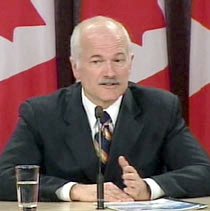
NDP Leader Jack Layton has said that, "Deaths due to homelessness in this city took a rapid rise immediately after Paul Martin [then Finance Minister] cancelled the affordable housing program, and their names stand in testimony to the neglect that has been rained on our city." Jack Layton has indicated that "When Eugene Upper froze to death on a street a block from my home in Toronto, I was shocked. My community was shocked. In 1996, a homeless person dying alone on a rich country's streets was big news. Today, it barely makes the paper. Our sense of outrage is dulled by repetition. The forgotten are common on urban streets." He further elaborates that "Why are we debating where to put them instead of how they got there? Over the past decade, the federal government has abdicated its responsibility. As a result, rental-housing construction has fallen by 50 per cent. This creates homelessness. If we're uncomfortable with the presence of so many people we've abandoned to the streets, the solution is to build more affordable housing. It's a good thing local communities aren't as irresponsible as Ottawa. Fed up with chronic federal inaction, they're acting themselves." There are good reasons to act. Despite record surpluses, 1.7 million people live in substandard housing or pay an unsustainable portion of their income on shelter. Many are a pay cheque away from a shelter or the streets. When in opposition in 1990, Paul Martin said, "The housing crisis is growing at an alarming rate and the government sits there and does nothing; it refuses to apply the urgent measures that are required to reverse this deteriorating situation. . . . Leadership must come from one source, and a national vision requires some national direction." Yet, as finance minister in 1996, he abolished what was left of the national housing program (created by a minority government in the 1970s). With the record surplus in 2000, he delivered a concrete plan for billions in corporate tax cuts, and vague words on building housing. Matters have only slightly improved since. In 2001, he announced $680-million over three years for housing; $320-million was added in 2003. But today, just a quarter of that money has been spent, mainly because provinces can't afford to match federal dollars. Yet, while many provinces drown in deficits, Ottawa rolls in surplus and spends $61-billion on debt repayment. Less debt is good -- but we need to take a balanced view of future challenges and help communities solve problems rather than watch them grow. The current federal approach implies that the days of its leadership in social policy are over. This is nonsense. We need to move the debate from what to do with homeless people to how to prevent there being homeless people. The people are not the problem. According to Layton, "A decade-long federal withdrawal from social policy is." Unfortunately, Layton indicates "we have a government that throws money at problems when crises are full-blown, and then largely abandons communities to their own devices. This creates gaps so wide that not only people but whole provinces fall through: In Newfoundland and Labrador, for example, which can't afford to match federal funds, no new affordable housing has been built in three years." Layton concludes that "Across Canada, there are too many Eugene Uppers for a country this rich. We can and must do better."

|
|
|
|
|
|||||||||||||||
|
Copyright © 2007 The Canadian. All rights reserved. | |
|
| ||||||||||||||||||
 |
||||||||||||||||||||||