|
|
|
|
|
|
|||||||||||||
|
|
|
|||||||||||||
|
|
|
|
| |
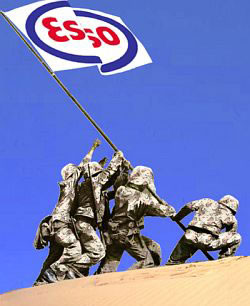
The U.S. War in Afghanistan Is Stephen Harper's Conservative minority government supporting another Oil War? This would yield enormous profits for greed-driven investors, and the atmosphere will continue to dangerously heat from the increasing use of those fossil fuels. by David Michael Smith
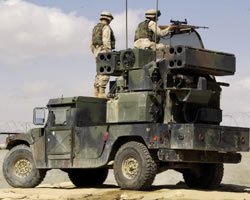
In the aftermath of the terrorist attacks of September 11, 2001, President Bush declared that the United States would launch a "War on Terrorism." In early October, U.S. airplanes began bombing Afghanistan and providing assistance to the Northern Alliance and other groups opposed to the Taliban regime. Within a few months, U.S. troops and their Afghan allies had succeeded in ousting the Taliban and installing a new regime. Although Osama bin Laden and his top lieutenants apparently escaped, U.S. officials proclaimed that a significant blow had been dealt to the al-Qa'ida network. Traumatized and outraged by the horrific events of September 11, the majority of Americans supported the war in Afghanistan. Most people believed the U.S. Commander-in-Chief when he said that the replacement of the Taliban regime was required to safeguard our country against another catastrophic attack by al-Qa'ida forces. Even Princeton Professor Richard Falk, a longtime anti-war activist, wrote in The Nation ("Defining a Just War," Oct. 29, 2001) that the war in Afghanistan was "the first truly just war since World War II." But was it? Since last October, thousands of people have participated in anti-war rallies, marches, and teach-ins in New York City, Washington, San Francisco, Houston, and other cities. People opposed to the war have made clear that they condemn the atrocity of September 11. But they also condemn the U.S. role in the deaths of thousands of Afghan people who had nothing to do with the attack on the World Trade Center and the Pentagon. In the British Guardian ("The innocent dead in a coward's war," Dec. 20, 2001), journalist Seumas Milne estimated that about ten thousand Afghan soldiers may have died in the war and cited University of New Hampshire Professor Marc Herold's estimate that about four thousand civilians have also died. Moreover, anti-war activists and progressive writers argue that the war in Afghanistan has been, in large part, another "oil war." The September 11 attacks provided a compelling pretext for military action against the al-Qa'ida forces in Afghanistan. But a growing body of research by journalists and scholars reveals that the Bush Administration's decision in favour of a regime change and all-out war in Afghanistan was significantly influenced by the desire to install a new government that would be more sympathetic to U.S. economic interests in Central Asia.
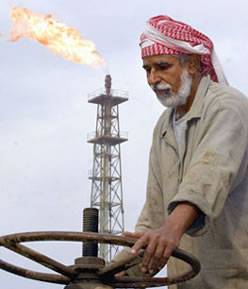
Although Afghanistan itself has no significant oil or natural gas reserves, it is strategically located in a region which does. As Eric Margolis observed in the Toronto Sun ("The U.S. is Determined to Dominate the World's Richest New Source," Jan. 13, 2002), Central Asia's Caspian Basin, over which sit the former Soviet states of Uzbekistan, Tajikstan, Kyrgystan, Turkmenistan, and Kazakhstan, is the world's "richest new source of oil." In the Jurist ("The Deadly Pipeline War," Dec. 8, 2001), Marjorie Cohn noted that some analysts have estimated the potential value of Caspian oil and natural gas reserves at four trillion dollars. Phil Gasper recalled in the Socialist Worker ("The Politics of Oil," Jan. 25, 2002) that the Middle East Economic Digest editors have described Central Asia as "the Middle East of the twenty-first century." Even if this latter projection proves overly optimistic, Martha Hamilton concluded in a Washington Post article ("The Last Great Race For Oil Reserves," April 26, 1998) that the "largely untapped subterranean treasure" in the Caspian Basin may be "the third-largest reserve in the world, after the Persian Gulf and Siberia."
As Hamilton wrote, "The possibility of bringing those huge energy reserves to market has touched off a scramble by international oil and gas companies to get in on what may be one of the world's last great energy plays." As Cohn pointed out in "The Deadly Pipeline War," Dick Cheney, then chief executive officer of the energy company Halliburton, told a meeting of oil industry leaders in 1998: "I can't think of a time when we've had a region emerge as suddenly to become as strategically significant as the Caspian." U.S. government officials and energy company executives have been anxious to exploit what Daniel Yergin, renowned energy expert and author of The Prize (1993), has called "the number-one prize in world oil." However, the transportation of oil and natural gas extracted from the region has posed a serious challenge for them. The Caspian Pipeline Consortium, led by the Chevron Corporation, opened a new oil pipeline from Kazakhstan to Russia in October, 2001. But, as George Monbiot reported in the Guardian ("America's pipe dream," Oct. 23, 2001), policymakers in Washington have generally opposed the construction of pipelines through Russia or Iran. This is why U.S. energy companies and government officials have been so interested in Afghanistan. As Ahmed Rashid explained in his book, Taliban: Militant Islam, Oil, and Fundamentalism in Central Asia (2001), U.S. policy toward Afghanistan during the past decade has been largely driven by corporate interests in the region's resources. Rashid noted that in 1995, the California-based UNOCAL Corporation began negotiating with the government of Turkmenistan to build oil and gas pipelines from that country through Afghanistan to Pakistani ports on the Arabian Sea. Soon after the Taliban came to power in Afghanistan in 1996, UNOCAL executives initiated discussions with them in order to secure the pipeline agreement.
According to Rashid, the Taliban's religious fundamentalism and harsh repression precluded normal diplomatic relations at the time but did not pose an insurmountable obstacle to a potential business deal. Strikingly, neither did the relocation of Osama bin Laden and numerous al-Qa'ida fighters to Afghanistan in 1996 and 1997. As Rashid recounted, UNOCAL Vice President Marty Miller and other company executives even wined and dined Taliban representatives in Houston in November 1997. Mullah Mohammed Ghaus and his Afghan colleagues stayed at an expensive hotel and visited the Houston Zoo and the NASA Space Center during their visit. Miller offered the Taliban representatives a lucrative contract and thought a formal agreement was imminent. The Clinton Administration quietly supported UNOCAL's efforts, but these negotiations eventually failed. Taliban leaders finally decided against the pipeline deal, and Washington's willingness to do business with them ended after the al-Qa'ida bombings of U.S. embassies in Kenya and Tanzania in 1998. President Clinton ordered cruise missile attacks on al-Qa'ida training camps in Afghanistan and even authorized efforts to assassinate bin Laden. At the same time, the U.S. tried to persuade Taliban officials to surrender bin Laden. As Monbiot has noted, notwithstanding these developments, U.S. business executives and government officials remained deeply interested in the potential of oil and gas pipelines through Afghanistan. In May 2001, the mainstream media widely reported that the new U.S. Bush Administration had awarded the Taliban regime forty-two million dollars to support the eradication of opium production in Afghanistan. Less well known is the fact that, shortly after taking office, the Bush Administration had quietly resumed negotiations with the Taliban. In an important new book, Bin Laden: The Forbidden Truth (2001), French authors Jean-Charles Brisard and Guillaume Dasquie have revealed that the Bush Administration worked long and hard to "decouple" bin Laden from the Taliban and lay the foundations for U.S. diplomatic recognition and pipelines for oil and natural gas. Brisard and Dasquie have drawn on numerous sources, including discussions with John O'Neill, the former FBI Deputy Director who retired in July 2001. Ironically, O'Neill then became security director for the World Trade Center, where he died in the September 11 attacks. According to the authors, O'Neill resigned from the FBI because the State Department had continually blocked his investigation into al-Qa'ida's roots in Saudi Arabia. The authors report that O'Neill bitterly complained about the ability of the U.S. oil companies and their State Department allies to thwart an investigation that might offend the Saudi royal family and jeopardize U.S. economic interests in that country. Brisard and Dasquie's account of the negotiations between the Bush Administration and the Taliban between February and August 2001, provides a helpful framework for understanding the eventual U.S. decision to topple the Afghan regime after the tragedy of September 11. The authors have explained that Washington saw the Taliban as a potential partner who could provide stability in Afghanistan and benefit from the construction of pipelines by U.S. corporations. But, in a series of meetings in Washington, Islamabad, and Berlin, U.S. officials demanded that the Taliban surrender bin Laden and invite other Afghan political forces to join their government. When the Taliban equivocated over and eventually refused these demands, U.S. officials threatened to take military action against them. As Brisard revealed in an interview in Paris, at one point in the negotiations, these officials told the Taliban, "Either you accept our offer of a carpet of gold, or we bury you under a carpet of bombs." As Jonathan Steele and his colleagues reported in the Guardian ("Threat of US strikes passed to Taliban weeks before NY attack," Sept. 22, 2001), U.S. representatives told Russian, Iranian, and Pakistani diplomats at a mid-July meeting in Berlin that Washington was seriously contemplating this option. Although these U.S. officials have since denied making such a threat, former Pakistan Foreign Minister Niaz Naik, who was present at the meeting, confirmed their remarks in an interview with the Guardian reporters. Is it a coincidence that the deadliest terrorist attacks in U.S. history occurred just several weeks after negotiations with the Taliban broke down? Perhaps. But Brisard and Dasquie have speculated that the prospect of U.S. military action against Afghanistan may have led bin Laden to approve the massive assault on New York City and Washington. Similarly, Steele and his colleagues have raised the possibility that bin Laden "was launching a preemptive strike in response to what he saw as U.S. threats." Other analysts have suggested that bin Laden may have authorized such a "preemptive strike" because he feared that the Taliban might finally accede to Washington's demands and try to force him to leave Afghanistan. Although such speculation cannot be confirmed, it seems clear that long-standing U.S. economic interests in pipeline construction played a major role in the U.S. government's decision in favor of a regime change and all-out war in Afghanistan. Notably, as Shaun Casey emphasized in the Boston Globe ("Ethics of This War Have Yet to be Spelled Out," Oct. 11, 2001) and Stephen Zunes pointed out in the San Jose Mercury News (" U.S. Military Response is Wrong -- And It Won't Work," Oct. 12, 2001), there has never been any evidence of the Taliban regime's involvement in the attacks on the U.S. As John Pilger remarked in the British Daily Mirror ("Hidden Agenda Behind War on Terror," Oct. 29, 2001), the Bush Administration knew well before the Pentagon's first bombs began falling on Afghanistan that the attacks of September 11 were planned in Britain and the United States, and that none of the actual perpetrators were Afghan nationals.
As Howard Zinn observed in The Progressive ("A Just Cause, Not a Just War," December 2001), the U.S. government rejected the alternative of turning to international law, diplomacy, and limited multinational military action in order to bring al-Qa'ida forces to justice. As Zinn has noted, the U.S. government also rejected the Taliban regime's offer to surrender bin Laden for trial in a third country after receiving evidence of his involvement in the September 11 atrocity. As Phil Gasper wrote in the International Socialist Review ("Afghanistan, the CIA, bin Laden, and the Taliban," November-December 2001), the Bush Administration's refusal to seriously consider these options revealed that the overthrow of the Taliban and the installation of a new, more business-friendly regime had already been designated as primary objectives of the impending war. In his book Resource Wars: The New Landscape of Global Conflict (2002), Professor Michael Klare of Hampshire College has acknowledged that one purpose of "Operation Enduring Freedom" was to "capture and punish those responsible for the September 11 attacks." But Klare has explained that a second objective was "to consolidate U.S. power in the Persian Gulf and Caspian Sea area, and to ensure continued flow of oil." As Klare has emphasized, while this latter objective "may get far less public attention than the first, this does not mean it is any less important."
In a report released just days before the attacks on the World Trade Center and the Pentagon, the U.S. Energy Information Administration described Afghanistan as a significant "potential transit route for oil and natural gas exports from Central Asia to the Arabian Sea." However, the report noted that the potential construction of oil and natural gas pipelines has "been undermined by Afghanistan's instability." As Monbiot has written, "Given that the U.S. government is dominated by former oil industry executives, we would be foolish to suppose that such plans no longer figure in its strategic thinking." Indeed, the way in which the Bush Administration sought to "capture and punish" the al-Qa'ida forces in Afghanistan was significantly influenced by its commitment to promoting U.S. economic interests and power in the region. Gore Vidal argues in his book entitled, Perpetual War for Perpetual Peace (2002), that the drive for profits and power are central to the Bush Administration's so-called "War on Terrorism." Vidal writes, "We need Afghanistan because it's the gateway to Central Asia, which is full of oil and natural gas... That's what it's all about. We are establishing our control over Central Asia." Many Americans may not want to believe that such economic motives could play so important a role in U.S. foreign policy. But developments in the aftermath of the war in Afghanistan make it difficult to deny journalists Jim Hightower and Phillip Frazer's observation that "War is politics by other means, and politics is business, and oil is very big business." As Hightower and Frazer concluded in their book The Hightower Lowdown (January, 2002), the tragedy of September 11 and the subsequent war in Afghanistan "put the U.S. pipeline plans back on track." Hightower and Frazer cited a remarkable article in the Pakistani Frontier Post (Oct. 10, 2001). This article reported that, though the U.S. war against the Taliban had barely begun, U.S. Ambassador Wendy Chamberlain had already informed the Pakistan government that, "in view of recent geopolitical developments," the negotiations for a pipeline through Afghanistan would be revived. After the Taliban regime collapsed, the Bush Administration hand-picked Hamid Karzai to head the new Afghan government and named Zalmay Khalilzad, an Afghan-American, as its new special envoy to the Karzai government. As Richard Neville pointed out in the Australian Sydney Morning Herald ("Beyond Good and Evil," April 15, 2002), both Karzai and Khalilzad are former consultants to UNOCAL. Eric Margolis has disclosed in the Toronto Sun ("America's New War: A Progress Report," Dec. 9, 2001) that Karzai is also a former "asset" for the U.S. Central Intelligence Agency. As Salim Muwakkil wrote in the Chicago Tribune ("Pipeline Politics Taint U.S. War," March 18, 2002), the "rise to power" of these two former UNOCAL employees will "make things even smoother" for the resumption of the pipeline project in Afghanistan. As Daniel Fisher reported in Forbes Magazine (Feb. 4, 2002), "It has been called the pipeline from hell, to hell, through hell" but "now, with the collapse of the Taliban, oil executives are suddenly talking again about building it." To be sure, the giant U.S. energy corporations are unlikely to make major investments in the project until the new Afghan regime proves able to suppress the outbreaks of violence among the various warlords' forces and any military challenge from resurgent Taliban fighters. This is certainly one reason why U.S. and British troops in Afghanistan are struggling to piece together a viable Afghan national army that can defend the new regime. In the meantime, Karzai has already made clear that his government fully intends to work closely with neighboring countries and U.S. oil companies to reap the immense profits from the transport of Caspian Basin oil and natural gas. On Feb. 8, 2002, Karzai visited Pakistan and joined with General Pervez Musharraf in pledging "mutual brotherly relations" and cooperation "in all spheres of activity." As the Irish Times reported on Feb. 11, 2002, Karzai announced that he and Musharraf had discussed the proposed Central Asian pipeline project "and agreed that it was in the interest of both countries." The mounting U.S. military presence in Afghanistan and other Central Asian countries may enable Chevron, Exxon-Mobil, UNOCAL, and other giant corporations to lay claim to "the number-one prize in world oil." But the extension of U.S. military power and economic domination into this region comes with very grave risks. As hundreds of millions of people in Central Asia and the Middle East watch their oil and natural gas being extracted and transported for the profit of Western companies, the prospects for a massive, violent backlash against the U.S. and its client regimes are likely to grow. As horrific as the September 11 attacks were, they may only be the beginning. About the Author: David Michael Smith is a professor of government at the College of the Mainland in Texas City, Texas , in the United States.  |
|
|
|
|
|||||||||||||||||||||||||||||
|
Copyright © 2007 The Canadian. All rights reserved. | |
|
| ||||||||||||||||||||||||||||||||
 |
||||||||||||||||||||||||||||||||||||