|
|
|
|
|
|
|||||||||||||
|
|
|
|||||||||||||
|
|
|
|
| |
Modern Iran struggles through Hangover of Nuclear Threats by Amir Azizmohamadi, Iranian Foreign Correspondent
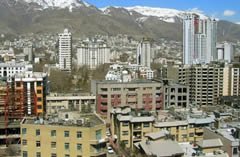
Peering through radio and television signals and waving away the pollution of Tehran, one can see that not all Iranians are masked figures in white nuclear gears, puffing and panting while they push uranium barrels- as pictured frequently by Western TV channels. Most of Tehran citizens are ordinary people with ordinary dreams, who have to try hard, dealing with the propagandist political spanner that has been forcefully plunged into their works, to live the ordinary life of a twenty-first-century citizen of the global village.
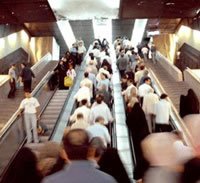
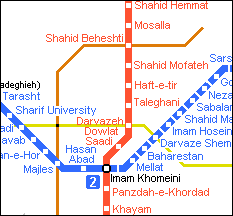
It is May 14. The Tehran Metro. Seven in the morning at Sadeghieh Station, the west of the ever-expanding capital with a population of about twelve million. The train has just left. On a bench, I can see the main headline of the Iran Newspaper, which reads: "Nuclear banquet ends with no result," referring to a Security Council meeting concerning Iran the night before. In a matter of seconds the shining platform is crowded again with rows of passengers waiting. It is not difficult to verify your statistical knowledge that seventy percent of the Iranians are under thirty, taking a look at the crowd. Proof is handy- jeans, T-shirts, hairstyles, school bags, university textbook covers concealing curious faces, ears romantically glued to mobile phones with naughty smiles, and young muscles with sinews doubled in the reflection of the clean floor. We get on the train. The newspaper is stomped by the crowd and swept away by the cleaner.
The industrial types are already on their way to Azadi Square by bus or taxi. They will be soon spreading all over south-west Tehran to get the wheels and pistons of its industries to spin and run. Their range of products is certainly broader than missiles- from ice-cream licked in the heat of Basra in Iraq and tiles decorating Kabul houses in Afghanistan to cars manufactured in gigantic factories such as Iran Khodro and Saipa. The nerds and geeks wait for the Sharif Station, named after the university next to it. Cheerful bunches get off, joking in a Farsi mixed with jargons and formulas. Their bags and books and smart eyes show they are going to Sharif University of Technology, the engineering heart of Iran and its most known academic centre. The 42-year-old university is home to 8000 students studying in ten different departments of science and engineering. This fifty-acre campus has brought up generations with considerable degrees of scientific refinement, and Western universities have been quick to recognize this fact. Being a SUT student is a safe guarantee of admission to any Western university.
At ten in the morning, I am trying to take a taxi at Enghelab Square in the centre of Tehran. As the taxi weaves through the tooting traffic, we pass by the imposing gate of University of Tehran, Sharif's educational rival with more focus on medicine and humanities, and the opposite side, the long row of the book shops and printing houses feeding the university. After a five-minute drive, the magnificent building of Taatr-e-Shahr, the most advanced theatre in Iran and arguably the Middle East, gracefully emerges. It is a grave-looking cylindrical building. The dignified simplicity of its body is softly decorated with modified patterns of Islamic art. The dome of the building also has been tamed by modern standards. Since the first performance on its main stage, Chekhov's The Cherry Orchard in 1972, this six-hall house has been the Mecca of Iranian theatre goers. The awe of the building has been surrounded with a circle of Achaemenid columns. A tiny piece of graffiti on one of them says: "Nuclear energy, Undeniable right." It must be a leftover from the government-arranged demonstration the previous week. Taatr-e-Shahr people cover it with the poster of a new production, An Enemy of the People by Ibsen, directed by Akbar Zanjanpour. Another poster also is being put up on the walls of a concert hall, Tallar-e-Vahdat, just a twenty-minute walk from Taatr-e-Shahr. It announces a concert by Simin Ghanem, a distinguished diva. The performance of course will have a female audience. I have an appointment with a few cardiologists in north Tehran to prepare the English brochures of an international heart congress and cannot check up on the Tehran Contemporary Museum of Art. In the taxi, however, Michel, my French friend calls my mobile to inform me about "Journées de la francophonie," a cultural event at the House of Artists. It is a cultural gathering of French speaking nations with the presence of some French cultural heavyweights, including the French sociologist Dominique Walton.
It is two in the afternoon and I am in an office in Rajayee Heart Hospital, a huge educational heart centre with a regionally cosmopolitan combination of patients, Turks, Kurds, Arabs, and so and so forth. Dr Eftekhar turns down the radio roaring about the Security Council meeting and joins us at a table loaded with medical journals and a few coffees. We talk about the rather reasonable and pragmatic stance of Shiite clergymen on ethically controversial issues such as contraception, abortion, and euthanasia, compared with other faiths and other Islamic sects. We are also impressed by the scientific success of Royan Institute, a research centre which has taken huge leaps in Stem Cell research. The rumour has it that the knowledge of cloning is not really farfetched either. The institute seems to have been throwing their scientific weight around even internationally. Since 1996 they have presented 206 papers in international congresses. The traffic is so breathtaking as if the whole city is at the same time rushing to Tehran's Annual International Book Fair, this year with about two million visitors. It is a Tower of Babel. A showcase of regional dialects, with their speakers flooding from different corners of Iran to attend this cultural luxury, trying to decode the linguistic signs and sounds of publishers from 66 countries and 150000 foreign titles. The Book Fair is a country thumbing through millions of books over ten days.
At six I am at the Tehran Hopkins Club, a literary
club which holds weekly meetings entirely in English.
At the moment the Club is focusing on modern English
poetry. There is a certain amount of gossip about the
recent trip of the French film star Juliet Binoche to
Tehran to see the praised Iranian director Abbas
Kiarostami before we start to read "O Wha's the
Bride?" by the Scottish poet Hugh MacDiarmid. The poet
likens wounded Scotland to a bride raped by the
English. The bridegroom, the new generation of Scots,
is in for a shock since he can not guess the bride has
already been deflowered. He will be devastated, MacDiarmid's emphasis on Scottish vocabulary has slowed down the members of the Club, who are non-native speakers of English. There is a bit of a disagreement about the part of speech of the word "fell." But finally everybody agrees it is an adjective meaning "cruel." So it means that the English wrought and inflicted their cruel purpose. I wonder, in the face of any military disturbance, what Iran will be telling her future groom.
Today I have been surveying mostly the central parts of Tehran. As you move southwards the cultural vitality of Tehran is dissolved by poverty and finally dies completely in Tehran's Hades, the city's vast and generous cemetery, Behesht-e-Zahra. Among all who have passed away, it has given shelter to the innocent bodies of very young people, even as young as 14, killed in Iran-Iraq war. The war did not only bring death but overnight wealth as well. It manifests itself in the impenetrable palaces of the wealthy in the north of Tehran. Any attack on Iran will eradicate the cultural centre in favour of the graveyard in the south and the corruption in the north even if the northern castles are occupied with new faces.
|
|
|
|
|
||||||||||||||||||||||||||||||||||||||||
|
Copyright © 2007 The Canadian. All rights reserved. | |
|
| |||||||||||||||||||||||||||||||||||||||||||
 |
|||||||||||||||||||||||||||||||||||||||||||||||