|
|
|
|
|
|
|||||||||||||
|
|
|
|||||||||||||
|
|
|
|
| |
George Monibot warns of Runaway Global Warming on TVOntario Compiled by Jen Lepage
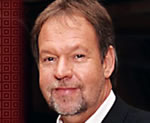
When it comes to the threat of global warming and what we can do about it, few make a more urgent case than British journalist and activist George Monbiot. In a new book, Monbiot argues that we have to take drastic action far sooner than we realize, to have even a chance of preventing runaway global warming. His book is called Heat: How to Stop the Planet from Burning . The interview with Mr. Monibot originally aired on Sunday, January 14 - 11:00 PM, and repeats on January 15 at 03:30 AM January 20 at 06:00 PM on TVOntario's critically acclaimed Allan Gregg in Conversation. About this Book "We are the most fortunate generation that has ever lived. And we are the most fortunate generation that ever will." - George Monbiot What George Monbiot means by this is that our civilization has leveraged the awesome power of fossil energy to create a world that only a short time ago would have been nearly unimaginable. Our health, our wealth, our leisure, our freedom from tyranny and struggle, are all benefits bestowed upon us by harnessed energy of oil and coal. But the price of these gifts has been a growing environmental crisis. Our atmosphere is filling up with carbon dioxide, which is released by the burning of fossil fuels. Carbon dioxide traps the sun's heat, causing the temperature of our planet to rise. The reason why future generations are unlikely to be as fortunate as us is that fossil energy is just too good to be true. We cannot go on enjoying the benefits of this dirty energy. We must either address the problem, which will be a tough challenge involving many sacrifices, or ignore it, with unthinkable consequences. George Monbiot's Heat: How to Stop the Planet from Burning marks an important moment in our civilization's thinking about global warming. The question is no longer whether climate change is actually happing. The question is what to do about it. Monbiot offers an ambitious and far-reaching program to cut our carbon dioxide emissions to the point where the environmental scales start tipping away from catastrophe. (But not before he devotes a chapter to unmasking the vested interests that have spent fortunes funding the specious science of the climate change deniers). He does not pretend it will be easy. The threshold for disaster, he argues, is a rise of two degrees centigrade above pre-industrial levels. Past two degrees, science tells us, the ability to control climate change passes out of our hands. At that point, the world's forests will fall into decline, changing cloud formation patterns and releasing the billions of tons of carbon the trees store. Past two degrees, the permafrost begins to thaw, releasing billions of tons of methane, a greenhouse gas far more destructive than CO2. At the same point, the polar ice begins to melt, affecting ocean currents and water levels. This is called a "positive feedback loop," and it means that once we've passed two degrees, nothing can be done to stop it rising to three. And once we hit three, four will follow. Two degrees is also the point at which the globe slides towards increasing water scarcity and, eventually, food deficit. And the fact is, we're already seeing the consequences of climate change around the globe: collapsing ice shelves, the failure of the cyclical rains in Eastern Africa, drought in Australia, the spread of tropical diseases into new territory as temperatures rise, pollution of aquifers with salt water in Bangladesh. Global temperatures have already risen 0.6 of a degree, causing huge damage to the natural environment and inflicting suffering on vast numbers of people. The only way to avoid further devastation, and forestall the catastrophe of positive feedback, Monbiot argues, is a 90% cut in CO2 emissions in the rich nations of the world by 2030. In other words, our response will have to be immediate, and it will have to be decisive. But where to start? Monbiot starts at home, where we have most control. Though he draws his examples from the UK, and commends Canadians for our superior building standards, he makes a damning case that the buildings we live and work in squander energy. Since our heat and electricity produce CO2, nearly every bit of heat and power we waste (like nearly every bit of heat and power we use) commits us to greenhouse gas emissions. Monbiot finds ways for us to build, and live, so much better that we can cut emissions at home by the required 90%. He then looks at the source of our electricity, and evaluates the arguments for both local micro-generation (for example, solar photovoltaic panels and small wind turbines), and renewable energy for the grid. His research leads him to some unexpected discoveries, but he finds a way to trim our emissions by the necessary margin. Another obvious source of CO2 emissions is our transportation-the cars we drive and the flights we take. A little ingenuity, he argues, will allow us to deal with the former. But the latter, he acknowledges, is shaping up to be the Achilles heel of all efforts to curb greenhouse gas emissions. A couple of less obvious major sources of CO2 are the retail and construction industries. Big box stores, with their inefficient designs, their racks of heaters, air conditioners, and blazing lights (to say nothing of the sprawling parking lots full of cars that drive back and forth on shopping trips), are simply inconsistent with a low-carbon future. But Monbiot has a thoughtful and surprisingly simple solution. Similarly, the concrete industry, that backbone of all new construction, emits millions of tons each year as a consequence of the immense heat and chemical processes involved in the manufacturing process. Though the solution here is not as ready to hand, it is still possible. In short, the scale of the changes before us is staggering, as is the size of the problem. But Monbiot ends on a note of hope. We have shown ourselves to be capable of enormous ingenuity and great feats of cooperation and sacrifice when confronted with a serious threat. The Second World War provides countless examples of citizens and engineers doing the supposedly impossible in order to get the job done. Fighting climate change will not require young men to die in battle, but a failure to tackle the problem urgently and with all the determination we can muster will cost uncountable lives. There is no reason to think we will do less when faced with a threat to the sustainability of all life on the planet than we did when faced with a threat to our political and ethical values. Monbiot argues there is no time to waste. As he has said himself, "we are the last generation that can make this happen, and this is the last possible moment at which we can make it happen." Top 10 Things You Can Do For The Environment from George Monbiot, author of Heat: How to Stop the Planet From Burning 1. Cut your flights. Nothing else you do causes so much climate change in so short a time. 2. Think hard before you pick up your car keys. On average, 40% of the journeys made by car could be made by other means - on foot, by bicycle or on public transport. 3. Organise a "walking bus" to take the children to school. 4. Ask your boss to devise a "workplace travel plan" which rewards people for leaving their cars at home. 5. Switch over to a supplier of renewable electricity. You don't have to erect your own wind turbine, but you can buy your power from someone who has. 6. Ask a builder to give you an estimate for bringing your home up to R2000 standards. 7. Ditch your air conditioner. 8. Turn down your thermostat: 18 degrees is as warm as your house ever needs to be. You just have to get used to it. 9. Make sure every bulb in your house is a compact fluorescent or LED. 10. Do NOT buy a plasma TV: they use 5 times as much energy as other models. Comment on Geoge Monibot's book or Global Warming in general in The Canadian Blog Other recommended title: The Kyoto Protocol is Not Enough!
|
|
|
|
|
||||||||||||||
|
Copyright © 2007 The Canadian. All rights reserved. | |
|
| |||||||||||||||||
 |
|||||||||||||||||||||