|
|
|
|
|
|
|||||||||||||
|
|
|
|||||||||||||
|
|
|
|
| |
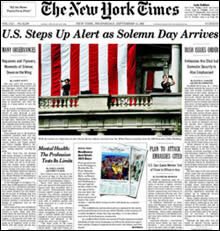
New York Times links Prime Minister Stephen Harper to American far Christian right Edited Iain Mackenzie
Over 20 candidates and members of Parliament for the Conservative Party of Canada, including leader Stephen Harper, Justice Critic Vic Toews, Foreign Affairs Critic Stockwell Day and Firearms Critic Garry Breitkreuz, have had on-going links to organizations established under the umbrella of the Council for National Policy (CNP), an American group that the David Kirkpatrick in a New York Times article on August 28, 2004, calls a "club of a few hundred of the most powerful conservatives in the country." Robert Dreyfuss in the January 28, 2004 edition of the Rolling Stone reports that the CNP -- which is not well known in Canada -- has "funnelled billions of dollars to right-wing Christian activists." Several years before Stephen Harper would become Prime Minister of Canada, he reportedly addressed CNP members in 1997 at its meeting in Montreal. Reportedly, the effort to impeach then U.S. President Clinton was conceived at this meeting, as reported by Robert Dreyfuss, "Reverend Doomsday," Rolling Stone, January 28, 2004, Addressing the elite group is no small feat, given that guests may only attend meetings with the unanimous consent of the Executive Committee, as confirmed by David Kirkpatrick, "Club of the Most Powerful Gathers in the Strictest Privacy," New York Times, August 28, 2004 edition, and specifically on p 10. Since Mr. Harper's address, links between Conservative Party members and groups sponsored by the CNP like Focus on the Family, the Christian Coalition of America and the National Rifle Association have grown. In turn, these groups have taken an increasingly forthright role in influencing Canadian politics through radio broadcasts, Canadian affiliates, and training for grassroots advocacy efforts in support of Conservative Party candidates. This should perhaps come as no surprise given that the Vancouver Sun estimates that "roughly half the current 98 members" of the Conservative caucus "are religious social conservatives," which is "well over double the national average."6 It suggests, however, that powerful forces may be affecting the distribution of political power in this country about which Canadians may not be aware. Make comments about this article in The Canadian Blog.
|
|
|
|
|
|||||||||||||
|
Copyright © 2007 The Canadian. All rights reserved. | |
|
| ||||||||||||||||
 |
||||||||||||||||||||