|
|
|
|
|
|
|||||||||||||
|
|
|
|||||||||||||
|
|
|
|
| |
Catastrophic Climate change very evident for travellers to Argentina by Dan Moore
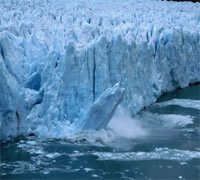
Global warming is a subject that is never far from the news, and yet there are very few places on the planet where evidence of climate change can be so clearly seen as in the ice fields of the south Andies in Argentina and Chile. The Perito Moreno glacier in southern Argentina is a particularly beautiful and arguably typical example. Until recently this ancient frozen leviathan was still advancing, one of only three in the world to do so. Now, things have changed, as we discovered when we visited the area. The glacier is found in the Parque Nacional Los Glaciares, a vast nature reserve stretching over one hundred miles along the Chilean border. I reached it by coach from El Calafate, a small village that exists largely for tourists and lies just 45 kilometres away around the milky blue Lago Argentino. One of the benefits of travelling from El Calafate was the great spectacle of glaciers and lakes as the coach approaches the park. The famed Patagonian wildlife was also on view as massive condors glided overhead and guanacos and the Emu-like Rheas scurried away. The highlight of this excursion was of course the glacier, and there really was nothing to prepare me for the sheer scale of this natural wonder. The photographs in various guidebooks just did not do it justice. My first view of it was from high up, after the coach had climbed part way up a nearby beech tree covered mountain and parked conveniently close to a path leading down to the same Lago Argentino we had driven alongside since leading El Calafate. Before heading down to the lake I joined my fellow passengers in donning a woolly cap and gloves, and stopped off at a small wooden café for a hot drink to fortify me against the freezing air rolling off the ice field. At the bottom of the mountain I boarded a ferry and headed out onto the deep blue waters. It was only when I was at water level that I could appreciate the scale of the wall of ice. It towered above my boat, which puttered along parallel to the glacier face at a respectful distance, necessary as from time to time chunks of ice the size of a house split from the body of the glacier and plunged into the lake. Typically, I usually missed this spectacle, turning in reaction to the deafening crack and boom as the ice splintered away and hit the water below, only to emerge as another enormous turquoise iceberg. Like many of my fellow passengers I was willing to brave the icy wind for the chance to capture on film the moment when one of these great boulders plummeted into the waters. Needless to say I was not quick enough to shoot this piece of the action, but it did serve as a timely reminder that this glacier is no longer advancing, a factor I pondered over while warming up in the ferry’s bar with a tipple made from Scotch whisky and a slowly melting chunk of Argentinean glacier ice. Further information All prices are in CAN$. No visa is required to visit Argentina for up to a 90 day period. Due to the colder climate in southern Patagonia it is best to visit the glaciers between February and April. Getting there: Daily flights from Buenos Aires to El Calafate airport, the town centre is 20 minute taxi ride away (costs around $9). Getting around: A taxi or tourist coach are the only practical ways to reach the glacier. Once at the glacier helpful signs indicate where the best vantage points are. It is advisable to shop around for the best/most appropriate tours at the numerous tour companies in El Calafate. Options include English language tours, boat rides on Lago Argentino and meal breaks. Prices start at around $34 for a full day trip (08:00 to 18:00 hours), including walking tour, boat ride and connections. Access to the national park costs an additional $7. Where to stay: Hosteria El Calafate, 1353 Av del Libertador, $39 per double room, Tel: 0054 2902 4911004; Kosten Aike, 1243 Gob Mayano, doubles from $115, Tel: 0054 2902 492424. Where to eat: Mi vierjo, 1111 Av del Libertador, sells inexpensive local dishes in friendly setting; La Posta, (at Los Alamos hotel), corner of Moyano and Bustilo, classy regional restaurant, relatively expensive. What to do: Aside from the Parque Nacional Los Glaciares, there are several activities available for visitors to El Calafate and the surrounding area, including fishing, boat trips and horse riding. Make comments about this article in The Canadian Blog.
|
|
|
|
|
||||||||||||||
|
Copyright © 2007 The Canadian. All rights reserved. | |
|
| |||||||||||||||||
 |
|||||||||||||||||||||