
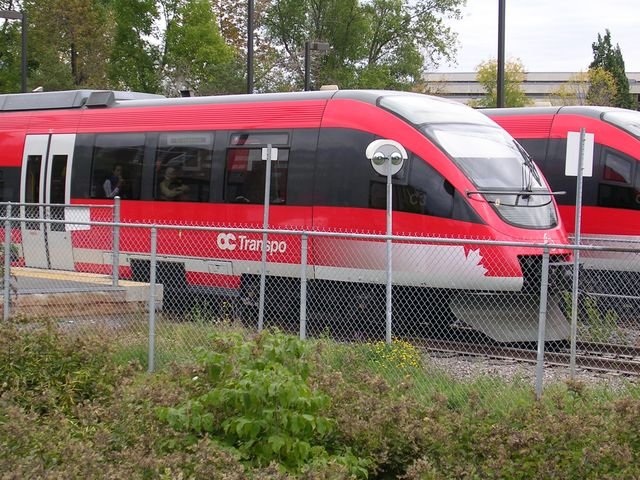


These projects can also serve as lessons to Ottawa as other cities find out what works well, and encounter unexpected challenges.
Below are summaries of projects ongoing in Vancouver, Edmonton, Calgary and the Region of Waterloo, as well as what planners learned as they worked through the design and construction.
VANCOUVER
Name: Evergreen Line
Cost: $1.4 billion ($583 million from the province, $417 from the federal government and $400 million from TransLink, the agency responsible for area transportation)
Length: 11 kilometres
Main contractor: Not awarded yet. Three teams were shortlisted from the request for qualifications: EL Partners, Kiewit/Flatiron Evergreen Line and SNC-Lavalin Inc.
Projected opening: 2016
Why: To connect Coquitlam to Vancouver, via Port Moody and Burnaby.
Lesson learned: In certain situations, automation is worth paying for upfront to save money and time down the line.
“There are no drivers on the trains … you pay more upfront on capital but save significantly on salaries. Also, we can run trains as low as 85 to 90 seconds between trains.†— Doug Kelsey, TransLink chief operating officer
EDMONTON
Name of line: North LRT to NAIT extension
Cost: $755 million ($500 million from the province, $100 million from the federal government. Balance funded by city from debt financing)
Length: 3.5 kilometres  
Main contractor: North Link Partnership, which is a joint venture between Graham Infrastructure and SNC-Lavalin.
Projected opening: 2014
Why: To tie in major destinations to the existing light-rail network (including post-secondary institutions, a hospital, residences)
Lesson learned: Capitalize on opportunities to make use of private-sector infrastructure.
“There was an office building being built here, and our tunnel had to go right underneath it. We actually hired (the contractor) to include that portion of the LRT tunnel in the construction of the office tower.
It worked out really well for all parties, but it did force our hand.†—Brad Smid, program manager for the North LRT extension.
CALGARY
Name: West LRT alignment
Cost: $1.4 billion. The initial budget was $700 million, but the city later moved several infrastructure development projects under the LRT umbrella and added a tunnel after public input.
Length: Eight kilometres
Main contractor: Joint venture led by SNC-Lavalin. Team also includes Graham Infrastructure, Cana Construction Ltd. and Enmax Power Services Corp.
Projected opening: 2013
Why: To link communities in southwest Calgary to the transit network. That area is expected to grow to a population of 120,000 in the next 20 years, up from 105,000.
Lesson learned: Land negotiations are expensive.
“The land costs were the one thing that ended up being over budget, and we won’t know the total of what those will be until all the land compensation boards and settlements are completed.†— Tara Norton-Merrin, City of Calgary transportation spokesperson
REGION OF WATERLOO
Name of line: N/A
Cost: $818 million ($300 million from the province, $265 million from the federal government, $253 million from the region through increasing property taxes over seven years)
Length: 19 kilometres of rail, 17 kilometres of roadway where buses drive in traffic but receive priority in the form of bypass shoulders, signal priority, and other measures.
Main contractor: Not awarded.
Projected opening: 2017
Why: Intensification. Projected population growth means the combined cities will need to account for the size of another Kitchener (around 200,000 people) in the next generation.
Lesson learned: Plan for all eventualities with land negotiations by starting the expropriation process at the same time that negotiations begin.
“We inform (owners) that our first step is to work and deal with them, but we can’t wait until the end of those negotiations to find out if they say yes or no to begin expropriation.†— Darshpreet Bhatti, acting director for the rapid transit plan.
Internet site reference:
http://www.obj.ca/Other/Special%20Reports/2012-07-05/article-3023084/LIGHT-RAIL-Systems-across-the-country/1