
Gay-themed Lit in Public School: An Impossibility?
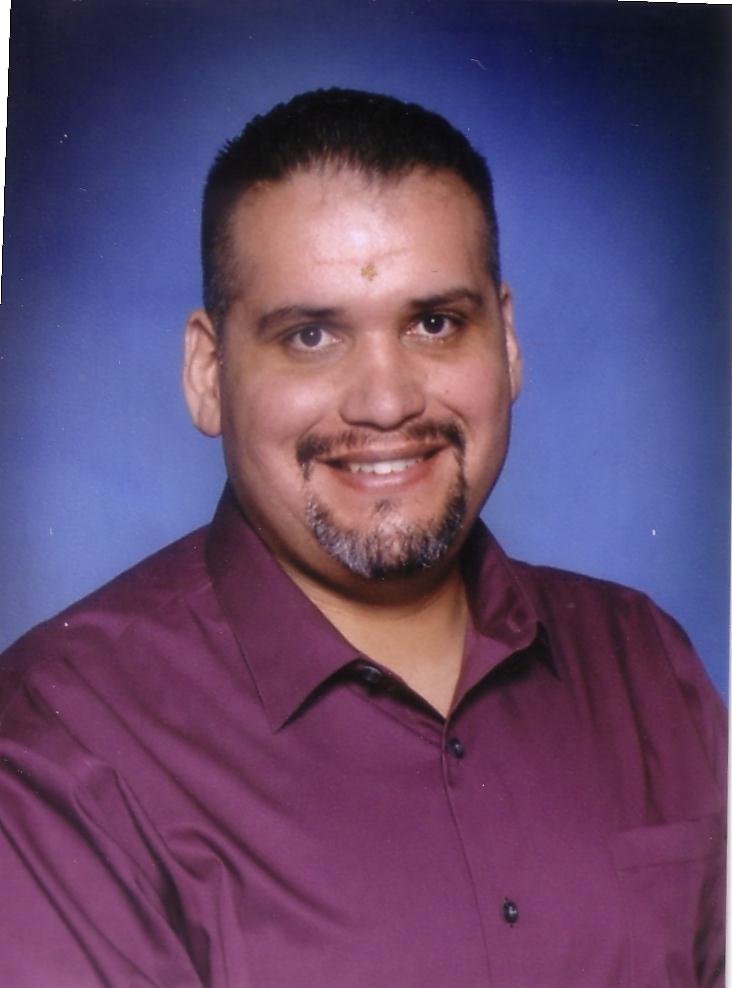





(CREGS) -- One day, my student’s mother came to me in mid June. School was almost out and she asked if she could speak with me. When I saw the mother coming toward me, I knew what she wanted to talk about…gay-themed children’s literature. I was ready though. She came close to my face and smiled and simply said, “Thank you.†I looked at her surprised and wondered what for. She murmured that her brother was gay with HIV and had no idea how to talk to her daughter about the topics. She thanked me again and said that I had made it so much easier for her. I had opened the doors of communication and she was eternally grateful. I smiled and told her she was welcome and that I was simply doing my job as an educator.
Seven years ago in 2003, I was contemplating whether or not I should implement new lessons. The month was June and Los Angeles Unified School District celebrates this month as “Gay and Lesbian Awareness Month.†During June, teachers are encouraged by the Los Angeles District to teach tolerance and diversity in education through children’s literature and lessons. The District encourages that those lessons too have gay themes within their content. Therefore, I decided to take on that role and be a social change agent.
But before I begin to tell you my story, let me detail some background about implementing gay themes in the classroom. During the 1980s and 1990s, multicultural education focused on inclusion of Asian, African-American, and/or Latino culture themes in the classroom. In 1992, gay culture was included as part of the multicultural education agenda for classrooms of the National Association of Multicultural Education (NAME, 2005). Today, teachers are encouraged by multicultural education scholars to implement a more diverse curriculum that incorporates gay-themed children’s literature (i.e. two-daddy or two-mommy families) in the elementary classroom. Unfortunately, many teachers are dissuaded to implement gay themes, usually by fears of retaliation or their own negative attitudes.
So, I began as a social change agent by implementing gay-themed children’s literature in June of 2002 to my third grade students. I was nervous, yet not by student questions, but more by having parents at the principal’s office the next morning. Consider the fact that my school was 95% of a minority population; surely, I believed parents would be upset and angry at my door, I presumptuously assumed. Nonetheless, I knew I could take on any student questions and I knew that I had the District’s and my school administration’s support.
The lessons I presented were simple. I used common gay-themed children’s literature. Many books are available at local libraries and on book-buying websites such as Amazon. However, the books are controversial to many and offensive to some. The books I read to my students were, but not limited to, And Tango Makes Three (Richardson & Parnell, 2005) and Asha’s Mums (Elwin & Paulse, 1990). The two books directly address non-nuclear families. In these books, the two-mommy or two-daddy families (or two-daddy analogy in Tango book) show that families can look differently, yet still have a deep sense of love and caring as is the “norm†among families.
The lessons began by reading the children’s books, usually on a rug, just as I would any other book. Children asked questions; usually comprehension questions about content. At first though, students’ questions had giggles and smirks, but eventually the giggles disappeared and meaningful discussions emerged. I found myself answering the best way I knew how… honestly and openly, as I had learned myself. Some people mistakenly believe gay-themed children’s literature deals with discussions about gay sex but the topic is never appropriate and never emerged during lessons. Nevertheless, I found that student questions were age-appropriate, so I answered age-appropriately too. One question, for example, was, “How can a boy or girl have two mommies?†And my answer was simple, “Sometimes there are two women who love each other and want to have children.†It was as easy and honest as that.
Once the books were read and the content discussed, the children went to their desks, wrote a summary, and drew a picture. By the end of June, the children had about ten different books within their Tolerance Bibliography that dealt with subjects from gay themes to disabilities. I told my students to keep their folders as a resource because they might want to go to their local library to checkout the books, buy them at a bookstore, or at our own school library. Unfortunately, many libraries lack these books and teachers are not willing or able to spend extra money on buying new, let alone, controversial materials.
One might wonder the purpose for implementing gay themes in the classroom. These were my reasons. First, I kept on hearing children using the word ‘gay’ in a derogatory manner. Anything and everything children did not like was called ‘gay.’ Second, I wanted children’s negative attitudes toward gay and lesbian people to change. Research suggests that implementing gay themes in the classroom may help change the negative attitudes that one possesses (Bowen & Bourgeois, 2001). In addition, research suggests that gay and lesbian people commit 33% of all suicides (Satterly & Dyson, 2005). Moreover, about 17 % of all US hate crimes are committed toward gays and lesbians (Ventura, Lambert, Bryant, & Pasupuleti, 2004). These astonishing aforementioned numbers made me realize I had to push for positive social change through implementing gay themes in the classroom.
During my years of implementing gay themes, I can say it was an amazing and rewarding experience. I never had any big problems. Perhaps one or two parents went to the administration, usually because they erroneously believed the topic was age-inappropriate. Nevertheless, I always had the support of my school administration and the District. Research suggests that because of a child’s psychosocial and cognitive developmental characteristics, early childhood and adolescence are appropriate times to introduce diverse multicultural education topics (Manning, 2000).
An ex-student of mine made me realize how important it was what I was doing for my students. One June day, this student, from before the days of implementing gay themes, came to visit. He looked around my room and saw that I had a rainbow pride/diversity flag displayed. He asked what the flag was for. I said that it was a diversity flag, which represents love for all people and cultures, and more specifically gay and lesbian pride. He looked at me, and simply asked why I had not taught ‘his’ class this. I had no answer for him. He said he wished I had taught gay themes to our class and admitted he had been harboring animosity towards a gay classmate. He said that if I had implemented gay themes then perhaps his attitudes would be different today. I was speechless.
As an educator, I finally have realized what a crucial service I am providing to my students and school culture, especially after dealing with my own issues of stigma. I now carry a message of tolerance and acceptance wherever I go. Gay themes in the classroom are very controversial, I know, but it is completely possible for them to be implemented successfully. To some it is scary and to others it is wrong. However, the reason for gay themes to be implemented is to stop the hatred and death, which is prevalent. For those who are apathetic about implementing gay themes in the classroom, think about the following thought: The implication is that a teacher negotiate his or her personal and religious beliefs with his or her professional role if he or she is to implement gay themes in the classroom (Goldstein, Collins, & Halder, 2007).
About the writer:
Gabriel Flores is a doctoral graduate with an EdD in educational leadership. He currently works as an elementary educator within the Los Angeles Unified School District. His interests include qualitative research and sexual orientation education inclusion within multicultural education programs. He currently works as adjunct faculty within the College of Education at the University of Phoenix.

Comments
There are 0 comments on this post