
Quebec Judge Piché could not have acted alone — That endangers our rights and freedoms
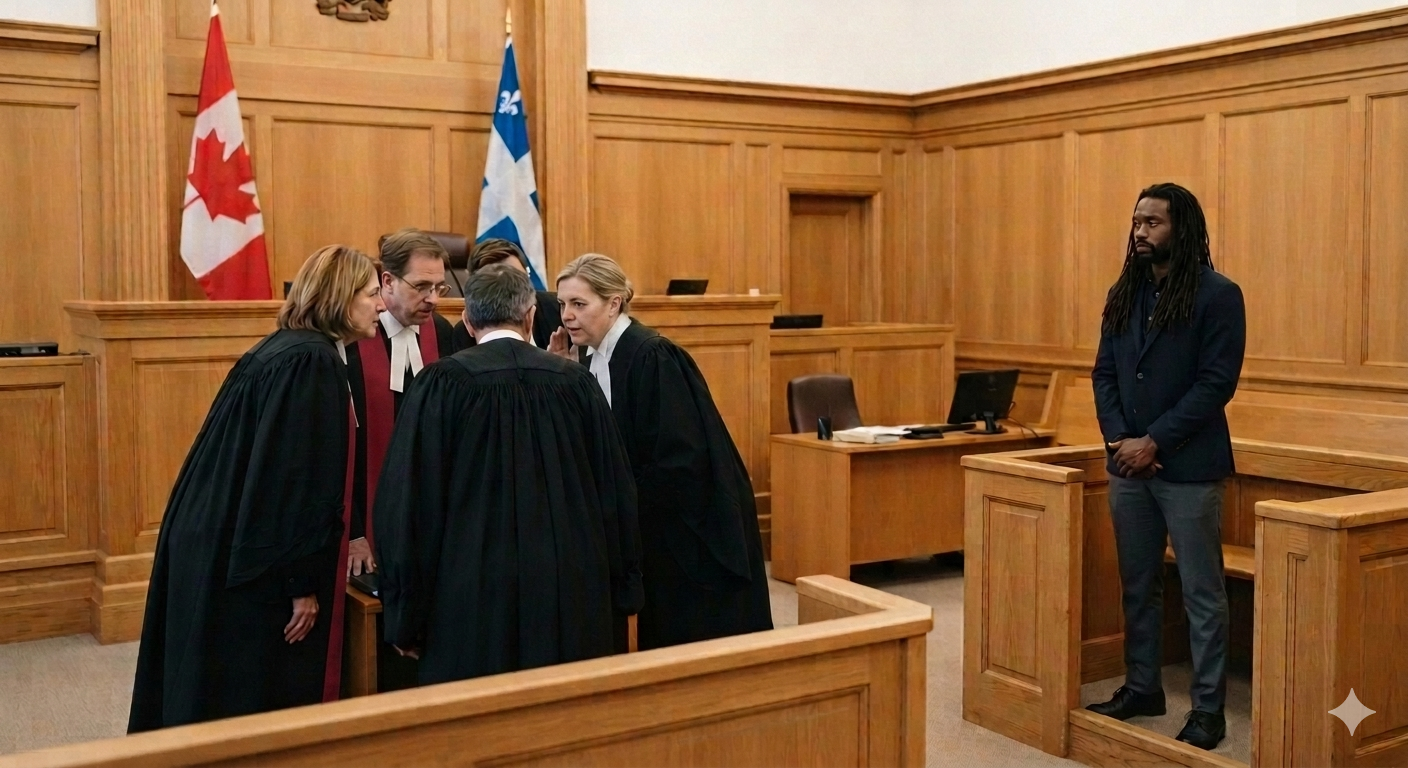



In the quiet, wood-panelled courtrooms of this country, we are asked to believe in a fundamental fiction: that the trial judge sits entirely alone. We are told that the judicial mind is a hermetically sealed chamber, immune to the pressures of bureaucracy, politics, or administrative orchestration. We are taught that when a gavel falls, it echoes solely the unalloyed letter of the law. Yet, the chilling trajectory unfolding in Carby-Samuels v. Ville de Gatineau suggests that this foundational faith is not merely misplaced—it is perilous to our democracy.
Perhaps even more unsettling than Judge Catherine Piché’s shocking intrusion against civil rights, the rule of law, and procedural fairness in this matter is a reality that any responsible observer can plainly see: this trial judge could not have acted alone. That is precisely what makes this case so gravely serious.
When a case is before a judge like Catherine Piché, the supposedly inviolable principle of judicial independence requires that the judge review the file completely free of external influences. The judicial review process in a single-judge case is supposed to be a solitary process. Yet, what we observe in the Piché ruling is the outcome of an apparent collusionary process among bad actors at the highest levels of the judiciary, involving Superior Court Chief Justice Anne-Marie Paquette as possibly only one of multiple collaborators.
An individual like Piché, equipped with an incredible academic pedigree and extensive experience, would not risk making such a highly irregular decision on her own that would put her career in immediate harm's way. She would have had to be assured by a whole bureaucracy that her wayward decision would be protected by the closing ranks of the most powerful figures in the judiciary.
The Administrative Maze and the Breakdown of Fairness
The mechanics of institutional complicity rarely announce themselves with a trumpet. They operate through docket management, the shuffling of assignments, and the subtle pressures applied when a self-represented litigant refuses to capitulate to municipal machinery. When previous judicial safeguards—such as those managed by Justice Hussain—refused to bend the knee to institutional vendettas, the administrative apparatus allegedly found other avenues to achieve a preferred outcome.
The targeted swapping and management of judicial personnel within the district point toward a coordinated effort to neutralize a $44,000 human rights claim endorsed by the Commission des droits de la personne et des droits de la jeunesse (CDPDJ). To see procedure weaponized to label a human rights claimant a vexatious litigant based on questionable factual assertions—such as disputing academic credentials—transcends ordinary legal error. It signals an active, systemic effort to immunize municipal actors from accountability.
Quebec’s Institutional Echoes
In light of the historic Charbonneau Commission, it is apparent that Quebec is no stranger to systemic corruption. The gravity of such an organized collusion within our highest legal halls would be tantamount to a criminal conspiracy as defined by the Canadian Criminal Code. When the administration of justice bends to protect institutional prestige or cover for targeted administrative maneuvers, public trust in the rule of law fractures.
We cannot simply shrug off these developments as an isolated local dispute in Gatineau. It serves as a stress test for procedural fairness across Canada. If the administrative machinery can orchestrate the silencing of a litigant through manipulated status orders, then judicial independence has been hollowed out from the inside. [3]
Urgency of Further Inquiry and Reading
A full, transparent public inquiry is urgently required to examine how files are transferred, how judges are assigned under Chief Justice Paquette’s purview, and where the boundaries of accountability lie.
For citizens who wish to explore the disturbing mechanics of this systemic breakdown in deeper detail, we urge you to examine the documented record and analysis provided in the just-released book You're Just A Nigger by Raymond Samuels.
Mr. Samuels lays out a meticulous case study of how the civil court environment can turn its immense weight against an individual seeking justice. Understanding this case is vital for anyone who believes that civil rights must apply equally to all, without exception.

Comments
There are 0 comments on this post