
Why Minnesota should just join Canada already
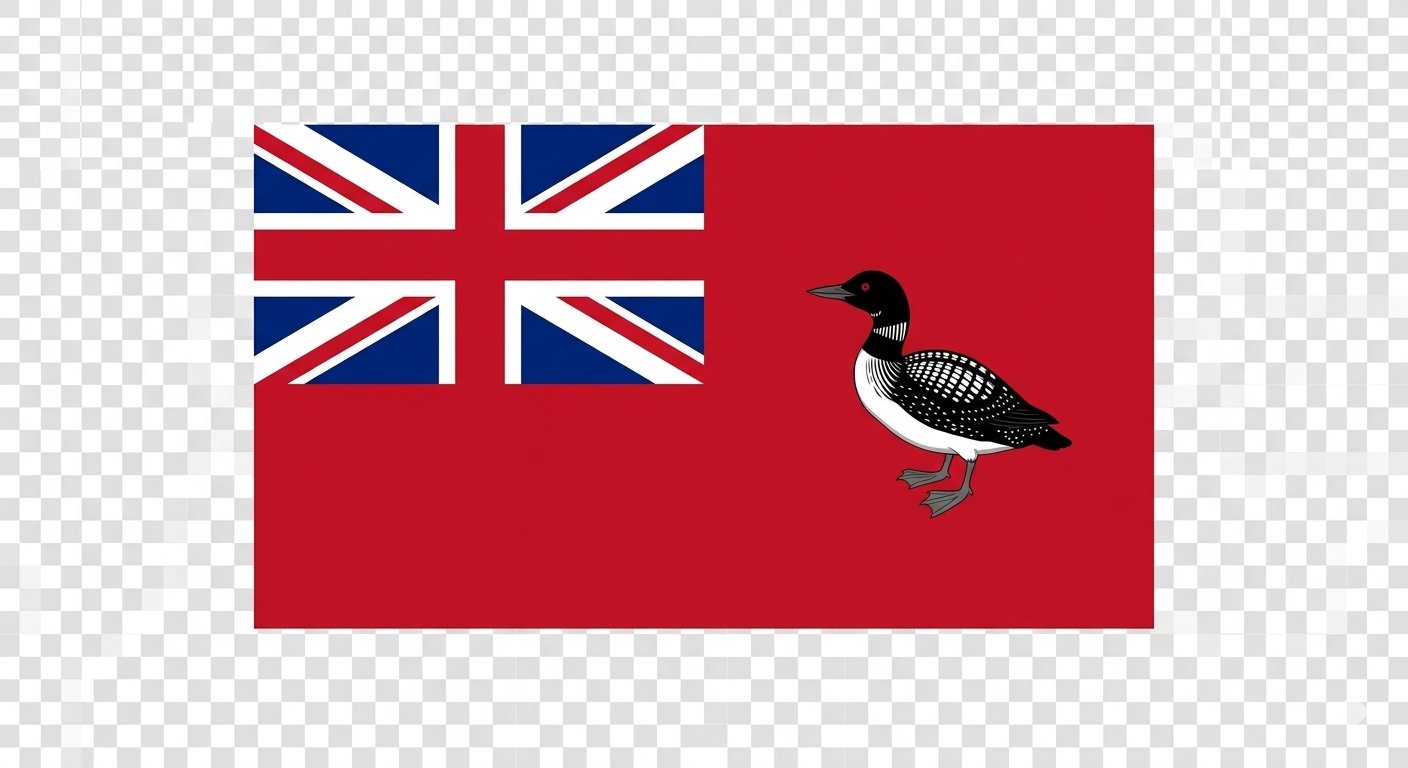



I. The Fracturing of the Union and the North Star's Dilemma
MINNEAPOLIS -- The political fault lines fracturing the United States have moved past the point of ordinary legislative gridlock. For residents of the North Star State, the view toward Washington, D.C., has become increasingly alienating. The traditional American experiment, built upon the foundation of federalism and shared civic virtue, feels less like a cooperative union and more like a forced marriage between irreconcilable cultures. As federal policy continues to swing wildly between ideological extremes, states like Minnesota—with deep-rooted traditions of robust civic participation, public education, and progressive social safety nets—are left exposed to continuous federal whiplash.
Amid mounting dismay over the federal policies, polarizing rhetoric, and volatile governance of the Trump administration, a provocative idea long treated as a boundary-waters punchline is gaining serious traction: the time has come for Minnesota to secede from the Union and petition to become Canada's eleventh province.
What began as satirical internet commentary has transformed into a symbol of genuine political exhaustion, earning serious coverage across major media outlets. Former Minnesota Governor Jesse Ventura thrust the concept back into the national spotlight by publicly suggesting the state explore joining its northern neighbour on CBC News. Ventura’s remarks—alongside the popular grassroots moniker "Minnetoba"—reignited a serious debate featured across Yahoo News and Newsweek. Regional policy analysts at MinnPost have noted that Minnesota’s unique progressive civic tradition makes imagining a peaceful regional realignment surprisingly compelling. This is no longer merely a thought experiment born of frustration; it is a rational evaluation of geopolitical alignment.
For decades, political scientists have noted that Minnesota exists as a progressive island in the American upper Midwest. It consistently boasts the highest voter turnout in the nation, prides itself on public infrastructure, and fosters a political climate heavily influenced by the progressive agrarian traditions of the Democratic-Farmer-Labor (DFL) party. Yet, under the current U.S. federal trajectory, this distinct civic culture is under constant siege. Every executive order from Washington threatens to dismantle local environmental protections, destabilize immigrant communities in urban centres like Minneapolis, and disrupt the economic certainty required for long-term planning. Minnesotans are forced to ask themselves a fundamental question: Why continue to tether the state's economic, social, and cultural future to a capital that seems fundamentally hostile to its way of life, when a stable, prosperous, and culturally synchronous alternative sits just past the 49th parallel?
II. Dismay Over Trump: The Catalyst for Realignment
The re-emergence of the "Minnetoba" conversation is directly correlated with the return of Donald Trump to the centre of American governance. For a state that values predictable administration, data-driven policymaking, and institutional stability, the current era of federal rule has induced profound dismay. The anxiety is felt across every sector of Minnesota society, from corporate boardrooms in the Twin Cities to family farms in the Red River Valley.
First and foremost is the threat of systemic economic destabilization through federal trade policy. The administration’s preference for weaponizing tariffs as a primary diplomatic and economic tool has created a landscape of permanent insecurity. Minnesota relies heavily on international trade, boasting an economy anchored by Fortune 500 giants like Target, 3M, General Mills, and UnitedHealth Group, alongside a massive agricultural export sector. When Washington unilaterally sparks trade conflicts, Minnesota’s farmers and manufacturers bear the immediate brunt of retaliatory measures. The unpredictability makes it nearly impossible for businesses to calculate capital expenditures, hire with confidence, or secure long-term contracts overseas.
Furthermore, federal immigration policies have caused deep social friction within the state. Minneapolis and St. Paul have historically served as welcoming hubs for diverse immigrant populations, including the nation's largest Somali and Hmong communities. These communities have integrated into the fabric of Minnesota's economy, filling crucial roles in healthcare, manufacturing, small business, and public service. The administration's aggressive immigration enforcement, characterized by sudden policy shifts, travel restrictions, and hostile federal rhetoric, has injected a climate of fear into these vital communities. Local municipal leaders find themselves in direct conflict with federal agencies, draining local resources to defend residents against what many view as inhumane and counterproductive federal mandates.
Environmental policy represents another arena of profound disagreement. Minnesota is defined by its natural landscape—its vast boreal forests, the Iron Range, and, most famously, its more than 10,000 lakes. The preservation of these ecosystems, particularly the Boundary Waters Canoe Area Wilderness, is an essential component of the state’s identity and tourism economy. The federal push to roll back clean water protections, streamline mining permits near fragile watersheds, and completely abandon global climate commitments directly undermines decades of state-level conservation work. Minnesotans watch helplessly as federal authorities auction off or compromise the safety of natural treasures that belong to the public, driven by an extractive economic philosophy that ignores regional ecological realities.
Finally, there is the exhaustion with the breakdown of civic norms. Minnesota's political history, though competitive, has long been characterized by a baseline of decency and respect for public institutions—a concept often referred to locally as "Minnesota Nice." The polarization emanating from the federal executive branch, dominated by personal attacks, the questioning of electoral legitimacy, and the deliberate stoking of cultural grievances, acts as a toxic pollutant in local civic life. It forces communities into artificial binaries and paralyzes state legislative bodies, rendering the normal processes of compromise and governance nearly impossible. The dismay is not merely about specific policy points; it is a systemic rejection of a broken political culture.
III. What Minnesota Stands to Gain
Secession is an undeniably radical step, but when weighed against the costs of remaining in a decaying union, the potential gains for Minnesota as a Canadian province are staggering. This transition would not be a retreat into isolation, but rather a profound upgrade in governance, economic security, and quality of life.
1. Insulation from Federal Volatility
By joining Canada, Minnesota would immediately remove itself from the chaotic pendulum swings of the American two-party system. Canada’s parliamentary system, while partisan, operates within a much narrower ideological band regarding the core functions of statehood. Major shifts in government do not result in the existential questioning of civil liberties, the sudden dismantling of environmental frameworks, or the weaponization of federal agencies against provinces. Minnesota would gain a stable, predictable constitutional umbrella, allowing provincial lawmakers to craft long-term strategies without the fear of federal sabotage every four years.
2. Seamless Economic Integration into Northern Corridors
As Canada's eleventh province, Minnesota would find itself at the centre of a massive, stable northern trade corridor. Erasing the international border along Ontario and Manitoba would eliminate customs bottlenecks and tariff threats overnight. Minnesota’s agricultural output—particularly corn, soybeans, and dairy—would flow smoothly into Canadian supply chains, while its advanced medical technology and clean-energy manufacturing sectors would gain unfettered access to a highly educated, wealthy domestic market.
The Twin Cities would naturally position themselves as the financial and corporate capital of central Canada, rivaling Toronto and Calgary. Rather than being treated as a regional Midwestern hub by coastal elite firms in New York or San Francisco, Minneapolis-St. Paul would become a premier, globally connected metropolitan locomotive driving Canadian innovation. Furthermore, the state’s mining operations on the Iron Range could coordinate directly with Canada’s robust resource sector, ensuring ethical, sustainable development of critical minerals necessary for the global green energy transition.
3. Universal Healthcare and Corporate Relief
One of the most immediate and life-changing benefits for everyday citizens would be the transition to a provincial single-payer healthcare system, aligned with the Canada Health Act. Minnesotans would no longer have to navigate the predatory complexities of private health insurance networks, face medical bankruptcy, or ration life-saving medications like insulin—a drug whose skyrocketing cost has been a point of major political contention in the state.
This shift would also provide an immense economic boost to Minnesota businesses. Under the American system, employers carry the massive financial and administrative burden of funding employee healthcare premiums, a cost that rises exponentially every year. Shifting this burden to a publicly funded provincial system would immediately free up billions of dollars in corporate capital. Local businesses could reinvest these savings directly into higher wages, research and development, and physical expansion, making Minnesota-based companies some of the most competitive in North America.
4. Absolute Protection of Civil Liberties
As the U.S. Supreme Court continues to roll back long-standing constitutional protections, civil liberties in America have become entirely dependent on geography and shifting state majorities. By integrating into Canada, Minnesota’s residents would secure the permanent protection of the Canadian Charter of Rights and Freedoms.
- Reproductive Rights: Access to abortion and comprehensive reproductive healthcare would be recognized as an essential medical service funded under the provincial health plan, permanently insulated from judicial activism or federal bans.
- LGBTQ+ Protections: Canada's robust, explicit national protections against discrimination based on gender identity and sexual orientation would apply uniformly, guaranteeing equal dignity under law.
- Voting Rights: Canada’s independent, non-partisan electoral management system ensures equal access to the ballot box, eliminating the voter suppression tactics, extreme gerrymandering, and politicized election administration that plague the American landscape.
5. Coordinated Environmental Stewardship
Minnesota's environmental goals align perfectly with Canada’s federal frameworks, particularly regarding climate change and conservation. As a province, Minnesota could implement comprehensive carbon-pricing mechanisms, invest heavily in its burgeoning wind and solar grids, and coordinate directly with Ontario and Manitoba to protect shared waterways like Lake of the Woods and Lake Superior. The Boundary Waters would finally receive seamless, international protection, safe from the whims of extraction-focused American administrations.
IV. Cultural and Social Synchronicity
Critics of secession often argue that moving across international lines is culturally jarring. For Minnesota, however, the transition would feel less like an exile and more like an overdue homecoming. The cultural barrier between Minnesota and Canada is virtually non-existent; in fact, the cultural gap between Minnesota and the American Deep South or the hyper-financialized East Coast is vastly wider than the gap between International Falls and Fort Frances.
The most obvious point of cultural connection is a shared relationship with the land and climate. Minnesotans do not merely endure the winter; they celebrate it. The state's lifestyle—centred around ice fishing, cross-country skiing, lake cabins, and outdoor recreation—is identical to the provincial cultures of Manitoba and Ontario. This shared climate has forged a common temperament: a resilient, community-focused mindset that understands that survival and prosperity in a harsh environment require mutual aid, public investment, and social cohesion.
This environment has translated directly into a shared passion that functions almost as a regional religion: hockey. Minnesota is officially recognized as the "State of Hockey," producing more NHL players and Olympic athletes than any other state in the Union. From backyard outdoor rinks to the high school state tournament that fills the Xcel Energy Center every March, hockey is woven into the DNA of the community. In the United States, hockey remains a niche sport competing against football and baseball; in Canada, it is a national cultural cornerstone. Minnesota joining Canada would represent the return of a hockey superpower to its rightful home.
Beyond sports and weather, there is the fundamental alignment of social values. The concept of "Minnesota Nice" is often caricatured as mere superficial politeness, but at its core, it represents a deep commitment to public decency, community safety, and a rejection of ostentatious individualism. This matches the foundational Canadian civic philosophy of "Peace, Order, and Good Government," which contrasts sharply with the American focus on individual liberty at the expense of collective well-being. Minnesotans instinctively favour ordered, clean, and safe communities where public infrastructure is maintained and the vulnerable are cared for. By joining Canada, Minnesota would finally align its geopolitical reality with its intrinsic moral and social framework.
V. Path Forward: From Satire to Sovereign Reality
To realize this vision, Minnesota must transition the conversation from a symbolic protest into an actionable political strategy. While legal purists will point out that the U.S. Constitution contains no explicit mechanism for state secession, and that historical precedents like Texas v. White established the union as "indissoluble," the reality of geopolitical borders is that they are ultimately defined by civic will and political consensus, not immutable laws. If a sovereign state consistently reaches a consensus that its association with a federal government has become destructive to its fundamental rights and prosperity, the path toward peaceful separation becomes a matter of international self-determination.
The process would begin at the grassroots level, transforming the cultural momentum of the "Minnetoba" movement into a formal legislative mandate. A coordinated campaign could push for a state-wide referendum—a ballot initiative asking citizens a straightforward question: "Should the State of Minnesota peacefully separate from the United States and petition to join the Dominion of Canada?"
A resounding "Yes" vote would create an undeniable democratic mandate, forcing state leaders to establish a formal Commission for Secession and Realignment. This body would be tasked with opening diplomatic dialogues with both Ottawa and Washington. In Canada, adding an eleventh province with an economic output larger than several current provinces combined would be viewed as an extraordinary asset. The Canadian federal parliament, utilizing the constitutional amendment processes, could formally vote to accept Minnesota's petition, outlining the transitionary framework for provincial status.
The negotiations with Washington would undoubtedly be complex, involving the division of federal assets, the assumption of a proportional share of the national debt, and the establishment of demilitarized, open-border travel agreements modeled after the European Union's Schengen Area. While critics will argue that Washington would never allow a state to depart, a sustained, peaceful, and legally disciplined movement built upon absolute democratic consensus would be incredibly difficult to suppress through force without completely destroying America's global standing as a democracy.
The world exists in an era where long-standing geopolitical assumptions are being shattered on a regular basis. The fiction that the United States must permanently remain a single, unified entity despite irreconcilable internal differences is a dangerous illusion that traps progressive communities in a cycle of perpetual political trauma. Minnesotans have spent years watching the federal government slide into an unpredictable, tariff-wielding, norm-destroying apparatus that fails to deliver basic economic and social security to its citizens.
Citizens do not have to accept this instability as a permanent fate. An alternative is visible. By looking north, by embracing its true cultural, economic, and environmental peers, Minnesota can chart a course toward stability, health, and prosperity. The time has come to stop joking about "Minnetoba" around the campfire and start building it. The state should flip the script and join Canada already.

Comments
There are 0 comments on this post