Quebec Election: Why Plamondon’s PQ 2.0 is poised for a spectacular self-destruction
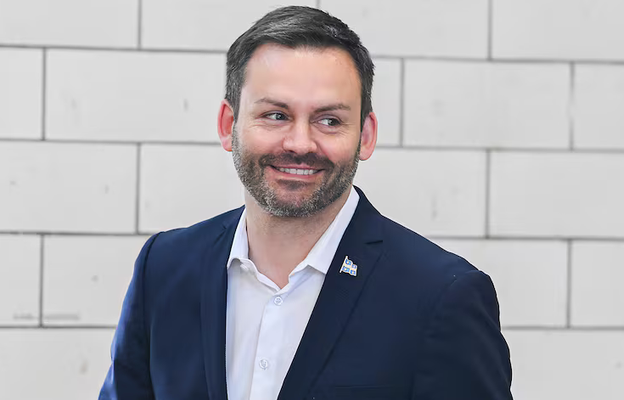
Following the provincial election, Paul St-Pierre Plamondon’s Parti Québécois has secured a minority government, fundamentally shifting the political landscape of Quebec. While the party faithful celebrate in the streets, wrapping themselves in fleur-de-lys flags and dusting off sovereignist manifestos from decades past, the broader electorate can breathe a collective sigh of relief. Quebecers avoided handing them a blank cheque. By denying the PQ a majority, voters pulled off an accidental stroke of political genius: they gave Plamondon just enough rope to hoist his own petard, setting the stage for the party to fail spectacularly in the full, unyielding glare of the public spotlight.
Instead of enduring four years of an unchecked, taxpayer-funded effort to divert money away from critical social programs and into dismantling the Canadian federation, Quebec has positioned this untested crew to expose their own incompetence. A minority parliament does not allow for ideological hiding places. It demands structural competence, endless legislative compromise, and day-to-day administrative grit—qualities this modern iteration of the PQ has spent years avoiding in favor of internet-friendly protest politics. By granting them the keys to the premier's office while withholding the power to lock out opposition oversight, the electorate has set up a controlled experiment in political gravity.
From Class to Crass: The Evolution of the PQ
To understand why this administration is doomed to unravel, one must examine the historical downgrade on display. The Parti Québécois was not always an engine for superficial culture-war grievances and online grandstanding. René Lévesque possessed genuine class, undeniable gravitas, and an intellectual depth that commanded respect from adversaries across the country. Even when his grand constitutional projects failed, Lévesque carried himself with the dignity of a statesman who understood the institutional weight of the National Assembly. Lévesque held a sincere vision of Quebec as an idyllic society—one built on progressivism, social democracy, and a genuine care for the collective identity of its people.
Even François Legault—for all his faults, late-stage policy panic, and his status as the ultimate hypocrite of modern Quebec politics—maintained a premier-like weight. Before the Coalition Avenir Québec (CAQ) dissolved under its own flip-flops, panicked subsidies, and intellectual contradictions, Legault at least looked like an executive who belonged in a parliament building before his house of cards collapsed.
In stark contrast, Plamondon’s political aesthetic does not project the image of a statesman. Instead, it resembles a bizarre fusion of The Dukes of Hazzard's Boss Hogg and Mr. Lahey from the Trailer Park Boys. The style is an awkward mix of loud, cartoonish bravado, backwoods strategy, and chaotic, shifting policy-making. Plamondon navigates the Blue Room with the unearned confidence of a regional boss convinced he has outsmarted everyone in the room, while projecting the paranoid energy of a trailer park supervisor constantly warning about impending storms from Ottawa.
While Lévesque was driven by a foundational idealism, Plamondon answers a very different calling. He doesn't genuinely care about the plight of the poor and the marginalized in Quebec, or even the long-term, organic health of the French language. All he cares about is crass power. He pursues separatism not as a noble social project, but as a vehicle for the advancement of the exclusionary and toxic objectives of Quebec's nationalist elites, weaponizing identity politics purely for political power. The current incarnation of the PQ has completely traded intellectual depth for pure bluster. They are an apparatus engineered strictly for opposition, completely unprepared for the unglamorous mechanics of running a minority government.
The Downfall Cocktail: Hubris, Inexperience, and Extremism
The collapse of this administration will not be driven by outside conspiracies, federal intervention, or media hostility—though Plamondon’s communications team will inevitably blame all three before their first legislative session concludes. It will be a self-inflicted unraveling brewed from three volatile ingredients:
1. Total Lack of Executive Experience
Running a disciplined, small-scale protest campaign from the sidelines is simple. When a party holds only a handful of seats, every press conference is a free shot, every viral video is hailed as a breakthrough, and no one expects a balanced provincial ledger. Managing a multi-billion-dollar provincial budget, negotiating with public sector unions, and managing critical infrastructure with a front bench that resembles a freshman seminar is another matter entirely. The PQ's bench strength is paper-thin, dominated by hyper-partisan strategists and academic theorists who have spent far more time drafting white papers on referendum logistics than understanding the operational bottlenecks of Quebec's healthcare system. The moment administrative reality lands on their desks, the gears will grind to a halt.
2. Massive, Trumpian Hubris and Obnoxious Rhetoric
Much like Donald Trump, Plamondon brings an over-inflated, arrogant certainty to the microphone. Watch for him to be utterly full of bravado and ideological rhetoric, strutting around and presenting himself as if he commands sweeping presidential authority despite only leading a fragile minority. He behaves as though a fractured electoral plurality represents an unassailable, historic mandate to upend the constitutional order, ignoring that a minority government is an explicit public instruction to negotiate and share power. This thin-skinned entitlement will fracture early and often. He enters office with absolutely no positive policy agenda to speak of, offering nothing other than spouting obnoxious rhetoric on separatism. The moment opposition parties refuse to rubber-stamp executive decrees, or a reporter presses for exact economic figures regarding a sovereignty roadmap, the premier's composure will buckle.
3. Political Extremism Out of Touch with Quebecers
The core miscalculation of the PQ 2.0 is an ideological obsession that most modern Quebecers have moved beyond. Citizens across Montreal, Quebec City, and the regions are focused on finding family doctors, managing inflation, securing affordable housing, and repairing failing schools. Voters opted for a minority PQ primarily out of sheer exhaustion with the CAQ's incompetence, not out of a sudden yearning for another polarizing referendum cycle. Yet the PQ remains determined to allocate public funds toward 1970s cultural battles and constitutional friction while vital public services operate under severe strain.
| Political Era / Party | Leadership Aesthetic | Administrative Style | Primary Focus |
|---|---|---|---|
| The Classic PQ (Lévesque) | Dignified, intellectual, institutional | High legislative discipline | Sovereignty through public democratic debate |
| The CAQ (Legault) | Paternalistic, populist, defensive | Erratic (subsidies, flip-flops) | Nationalist autonomy, cultural protectionism |
| The Modern PQ (Plamondon) | Cartoonish bravado, Trump-lite hubris | Inexperienced / Highly volatile | Immediate constitutional brinkmanship |
The Opposition Ambush: How the Trap is Sprung
Because Plamondon enters the National Assembly without a majority, he walks straight into a legislative minefield carefully prepared by three very different opposition forces: the Quebec Liberal Party (PLQ), Québec Solidaire (QS), and the Parti Conservateur du Québec (PCQ). Far from being a passive audience, these parties are actively coordinating their leverage to corner the PQ on every piece of legislation.
       ┌────────────────────────────────────────────────────────┐
       │             Parti Québécois (Minority)                 │
       │     Trapped between ideological base & governance      │
       └──────────────────────────┬─────────────────────────────┘
                                  │
         ┌────────────────────────┼────────────────────────┐
         ▼                        ▼                        ▼
┌──────────────────┐    ┌──────────────────┐    ┌──────────────────┐
│  Quebec Liberals │    │ Québec Solidaire │    │   Conservatives  │
│  (Milliard/PLQ)  │    │   (Ghazal/QS)    │    │  (Duhaime/PCQ)   │
│  Economic &      │    │  Social Justice  │    │  Fiscal & Tax    │
│  Federalist Veto │    │  & Left Wedge    │    │  Populist Wedge  │
└──────────────────┘    └──────────────────┘    └──────────────────┘
The Liberal Squeeze: The Federalist and Economic Veto
Under Leader Charles Milliard, the Quebec Liberal Party has reclaimed its role as the Official Opposition and the unapologetic federalist voice in the legislature [CBC News cbc.ca]. The Liberals know exactly where the PQ is most vulnerable: the treasury. Milliard's caucus is positioning itself to introduce sweeping amendments to every budgetary measure, daring the PQ to spend public funds on preliminary referendum apparatuses, sovereignty impact studies, or costly diplomatic posturing.
By demanding strict fiscal oversight, investments in infrastructure, and protections for public services, the Liberals intend to force Plamondon into a brutal binary choice: strip out all taxpayer-funded separatist projects to pass a budget, or trigger an early election on the hill of constitutional obsession. If Plamondon folds and concessions are made, he alienates the hardline sovereignist base that put him in power; if he refuses to compromise and the government falls, the Liberals will campaign on the message that the PQ chose political vanity over economic stability.
The Québec Solidaire Wedge: Exposing the Progressive Facade
For years, the PQ has courted left-leaning voters by pretending to be a progressive alternative to the CAQ. Québec Solidaire, co-led by Ruba Ghazal, has zero intention of letting that illusion survive [Montreal Gazette montrealgazette.com]. QS intends to test Plamondon’s progressive credentials on every social and environmental file, demanding real action on climate transition, tenant protections, healthcare staffing ratios, and public transit funding.
QS will introduce bold private members’ bills that force the PQ caucus to take recorded votes on wealth taxes, corporate subsidies, and social housing investments. Plamondon cannot easily support these measures without alienating regional voters, nor can he vote against them alongside the right without completely unmasking his populist rhetoric. By systematically demonstrating that the PQ prioritizes nationalist posturing over social justice, QS plans to pull progressive sovereignists back into its camp.
The Conservative Flank: The Anti-Establishment Hammer
On the opposite flank sits Éric Duhaime and the Parti Conservateur du Québec, entering the National Assembly determined to act as a legislative guard dog [Battlefords NOW battlefordsnow.com]. Duhaime’s strategy targets the PQ’s big-government, state-interventionist instincts. The Conservatives will relentlessly attack any new regulatory burdens, bureaucratization, or identity-driven legal mandates, framing the PQ as out-of-touch elites who want to police everyday life and raise the cost of living.
The PCQ will force debates on reducing fuel taxes, curbing government spending, and decentralizing regional authority. This puts Plamondon in direct conflict with his own suburban and rural voter base, where voters supported the PQ to punish the CAQ, not to endorse bureaucratic growth. Duhaime will exploit every misstep, siphoning populist and nationalist voters away from the PQ whenever the government attempts to impose centralized mandates.
The Fatal Disconnect: The Trump-Carney Moment
Expect Plamondon to eventually show just how profoundly out of touch he is with the people of Quebec through his clumsy handling of international and economic relations. Driven by his desperate desire to be taken seriously as a global player with "presidential" clout, he is highly likely to spend his energy seeking to cultivate relations with Donald Trump and his inner circle—mistakenly believing that proximity to Mar-a-Lago grants him sovereign legitimacy.
Concurrently, expect him to arrogantly snub serious economic minds, most notably Mark Carney and the traditional financial establishment. This exact moment, when it inevitably arrives, will expose the absolute bankruptcy of the PQ’s economic strategy. By turning away from sound fiscal planning and cozying up to unstable, foreign populist rhetoric just to score cheap separatist points, Plamondon will cross a line that the pragmatic Quebec public cannot tolerate. It is precisely at this juncture that the grand illusion will crack, and the PQ will begin to unravel for good.
The Unraveling of the Sovereignist Mirage
Trapped in this triangular vice and blinded by international delusion, Plamondon’s room for maneuver is practically nonexistent. A premier operating with magnanimity and diplomatic tact might navigate these competing interests through careful coalition-building. But Plamondon’s signature combination of Boss Hogg bluster, Mr. Lahey chaos, and thin-skinned volatility makes that impossible. Every committee meeting will become a flashpoint; every confidence vote will be treated like an existential crisis.
The tragedy of the modern PQ is its conviction that sheer will and moral superiority can substitute for parliamentary math. Just like the CAQ before them, who promised a nationalist renaissance only to leave behind policy whiplash, public sector labor strife, and institutional gridlock, the PQ 2.0 is hurtling toward self-destruction. They have spent years promising that sovereignty is a cure-all for provincial ailments, but the day-to-day realities of a minority assembly will demonstrate the limits of their platform.
The opposition parties do not need to stage an aggressive coup; they only need to hold the line, enforce accountability, and let Plamondon's hubris do the heavy lifting. Once the rhetoric runs dry, the taxpayer-funded promotional tours are voted down in committee, and the public grows weary of manufactured drama, the illusion will collapse. Quebec is set to witness a loud, arrogant, and inevitable unraveling—and this time, the voters made sure the safety net was completely removed..

Comments
There are 0 comments on this post