
U.S. Presidential Campaign 2028: Can an unlikely alliance salvage a shattered Republican Party?
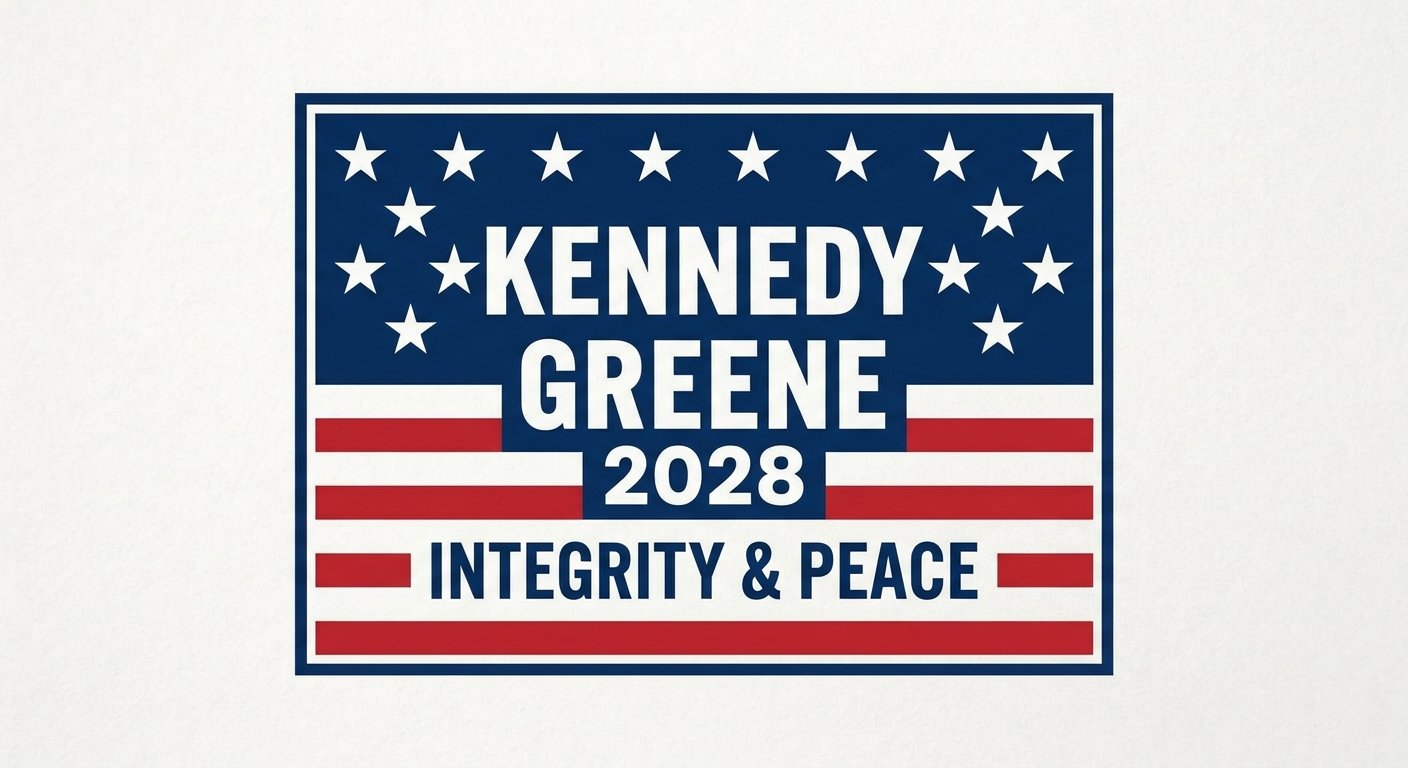
OTTAWA — Following the devastating tectonic shifts of the 2026 midterm elections, the Republican Party lies in ruins. The sweeping Democratic majorities in both the Senate and the House of Representatives have left the American conservative movement facing an existential crisis of faith, forcing an urgent, painful, and uncomfortable reckoning. The old guard has failed. The immediate post-election landscape is defined not by a confident march toward the next presidential cycle, but by a desperate, fractured search for a new direction.
Yet, amid the rubble of a collapsed political apparatus, an unexpected and highly unconventional blueprint for conservative survival is quietly gaining traction in heterodox circles. It is a hypothetical scenario that once would have been dismissed as pure political fiction: a formal rapprochement between U.S. Health and Human Services Secretary Robert F. Kennedy Jr. and former Representative Marjorie Taylor Greene.
On its face, the pairing seems entirely contradictory, even absurd. One is the scion of America’s most famous liberal dynasty; the other is a firebrand populist who came to define the sharpest edges of congressional friction. But in a world where the traditional rules of politics have been entirely rewritten by an exhausted and cynical electorate, this specific alliance offers something the fractured American right desperately craves: an unyielding platform committed to domestic institutional integrity and strict non-interventionism abroad. More importantly, it offers a message carried by individuals who can preach it with a brand of authentic outsider credibility that traditional contenders simply cannot match.
The Post-2026 Landscape: A Party in Search of a Soul
To understand why such a radical realignment is even being discussed, one must look at the sheer scale of the Republican defeat in the midterms. The previous strategy—a volatile mix of corporate deregulation, traditional hawkish posturing disguised as America-First isolation, and highly combustible social grievances—ran headfirst into a wall of voter fatigue. The electorate did not merely vote for Democratic policies; they voted for a cessation of ideological chaos.
The standard response from the Republican establishment has been a predictable retreat to familiar territory. Factions within the party are already attempting to engineer a restoration, whispering about a return to disciplined, focus-grouped conservatism. But this diagnosis completely misunderstands the mood of the American public. The appetite for an anti-establishment overhaul has not diminished; rather, voters rejected the specific, chaotic delivery mechanism of that overhaul.
This is where the concept of a Kennedy-Greene ticket shifts from a provocative op-ed thought experiment into a serious structural framework. The foundation of a Kennedy-Greene truce relies on an aggressive, calculated pivot away from the exhausting culture wars that voters soundly rejected at the ballot box. Instead, the ticket would anchor itself on two immovable, universally comprehensible pillars: an absolute war on domestic institutional corruption, and a total rejection of foreign military entanglements.
The First Pillar: Restoring Institutional Integrity
For Robert F. Kennedy Jr., the core mission of his modern political life has never been about traditional partisan dominance. It has been about the restoration of institutional integrity. His "Make America Healthy Again" (MAHA) movement is, at its fundamental heart, a sophisticated crusade against corporate capture.
   [ Corporate Lobbying & Special Interests ]
                       │
                       ▼
         [ Capture of Federal Agencies ]
         (FDA, EPA, CDC, USDA, etc.)
                       │
                       ▼
       [ Public Trust & Health Collapse ]
                       │
       =================================
       │  THE KENNEDY INTEGRITY REFORM  │
       =================================
                       │
       ┌───────────────┴───────────────┐
       ▼                               ▼
[ Absolute Transparency ]     [ Separation of Monopolies ]
• Ban corporate funding        • Aggressive anti-trust
• Purge conflicted officials   • Consumer-first accountability
By framing the systemic corruption of federal regulatory agencies, agricultural giants, and pharmaceutical conglomerates as a direct assault on public trust, Kennedy brings a refined, consumer-protection element to the populist movement. When Kennedy speaks about the Food and Drug Administration (FDA) or the Environmental Protection Agency (EPA), he does not use the standard conservative vocabulary of "burning down the deep state." Instead, he speaks the language of a seasoned environmental attorney exposing a corrupt board of directors.
This distinction is vital. It transforms anti-establishment fervor from a destructive impulse into a constructive governance model. It is an appeal that transcends traditional party lines, speaking directly to suburban moderates, independent voters, and disaffected Democrats who are deeply cynical about government efficiency but eager for corporate accountability. Kennedy’s brand of integrity promises a government that works for the citizen, not the lobbyist.
The Second Pillar: The Peace Dividend and Non-Intervention
While Kennedy anchors the internal reform of the state, Marjorie Taylor Greene provides the heavy, unyielding anchor for the party’s anti-interventionist flank. Her long-standing, fierce opposition to overseas spending, foreign aid, and open-ended military commitments aligns perfectly with a weary American electorate that is thoroughly exhausted by global conflicts.
For years, the American working class has borne the disproportionate burden of foreign policy adventures engineered by Washington think tanks. Greene’s political identity is inextricably linked to the refusal to fund overseas wars while domestic infrastructure crumbles, American border security remains compromised, and small-town economies decay.
In a post-midterm environment where the financial strains of global commitments are felt at every supermarket checkout counter, a disciplined focus on economic nationalism and domestic rebuilding is no longer a fringe position. It is a mainstream economic necessity. By uniting her fierce defensive populism with Kennedy’s idealistic reformism, the ticket creates a comprehensive "Peace and Health" platform. It reassures the traditional, blue-collar populist base that the Republican Party will not retreat into the corporate-backed, nation-building neoconservatism of the early 2000s.
The Credibility Deficit of the Establishment Contenders
What makes this hypothetical ticket uniquely potent is not just the conceptual strength of the platform itself, but the stark, unforgiving contrast it draws against mainstream Republican contenders. Figures currently jockeying for control of the post-collapse GOP—most notably Vice President JD Vance and high-profile foreign policy establishment figures like Senator Marco Rubio—carry a distinct, incurable credibility deficit on these precise issues.
Consider the political positioning of these figures:
| Potential Contender | Stance on Institutional Integrity | Stance on Foreign Intervention | The Authenticity Hurdle |
|---|---|---|---|
| Marco Rubio | Traditional corporate backing; tied to conventional party donor networks. | Historically hawkish; favors active global projection and internationalist entanglements. | Represents the exact brand of interventionist foreign policy that a weary electorate has rejected. |
| JD Vance | Employs sharp anti-corporate rhetoric, but remains bound to tech-billionaire donors. | Shifts between isolationism and strategic intervention based on executive calculation. | Visibly tied to the traditional executive power structure and shifting party elite calculations. |
| The Kennedy / Greene Ticket | Record of personal sacrifice; explicitly anti-corporate and anti-lobbyist. | Uncompromising, absolute opposition to overseas military funding and foreign entanglements. | Sincerity is validated by the heavy political prices both have paid for their heterodox views. |
When JD Vance attempts to preach corporate reform or anti-intervention, it frequently lands as politically opportunistic—a calculated, focus-grouped pivot designed to capture a mood rather than a deeply held, unshakeable conviction. His political trajectory is viewed through the lens of ambition, leaving voters to wonder which principles would be sacrificed in the name of party unity or executive expediency.
Marco Rubio presents an even greater contradiction for a reformed GOP. As a traditional standard-bearer of the party’s foreign policy establishment, Rubio represents the exact consensus that viewed global stability through the lens of American military dominance. When establishment figures of his cohort attempt to adopt a populist veneer, the seams are glaringly visible. They cannot convincingly rail against a system they spent decades building, protecting, and funding.
The Scar Tissue of Authenticity
Kennedy and Greene, by contrast, possess a political commodity that cannot be manufactured by consultants: they have paid a tangible, painful personal price for their heterodox views.
Kennedy’s decades-long journey has seen him exiled from his own dynastic political family, mocked by the mainstream media apparatus, and relegated to the political wilderness for challenging the orthodoxy of the scientific and corporate establishments. Whether one agrees with his specific conclusions or not, it is impossible to argue that his positions are the result of political convenience. His scars are his credentials.
       [ CONVENTIONAL POLITICIANS ]              [ THE OUTSIDER REALIGNMENT ]
       • Focus-grouped platforms                 • Uncompromising core convictions
       • Deeply tied to donor classes            • Explicitly exiled by establishments
       • Calculated ideological shifts           • Scars of political cost as credentials
                   │                                         │
                   ▼                                         ▼
         ( Perceived Opportunism )                 ( Perceived Authenticity )
Similarly, Greene’s tumultuous career is defined by her willingness to break entirely with her own party’s leadership. Her high-profile, bitter separation from the traditional congressional hierarchy and her subsequent political isolation were not the moves of a careerist looking for an easy path to power. To a deeply cynical electorate that views Washington as a monochrome swamp of self-preserving actors, this willingness to self-destruct for a cause acts as a rare guarantee of intent.
They can look voters in the eye and pitch a platform of radical government integrity and global restraint because they are clearly not the architects, nor the beneficiaries, of the system that just failed the American people.
Overcoming the Structural Hurdles
To suggest that a Kennedy-Greene ticket would face a smooth path to the nomination would be an exercise in naive idealism. The structural obstacles to such a realignment are monumental.
The traditional Republican donor class—the real estate tycoons, Wall Street executives, and defense sector contributors—would view a Kennedy-Greene platform as an existential threat to their business models. Funding would dry up instantly through conventional channels. The institutional remnants of the Republican National Committee would view this alliance as a hostile takeover by political heretics, likely triggering a bureaucratic civil war within the party machinery.
Furthermore, the ticket would have to navigate intense skepticism from the media. Every past controversial statement, every unorthodox scientific theory, and every public mistake made by both individuals would be weaponized by an adversarial press corps. The campaign would be subjected to a level of scrutiny designed to induce an immediate collapse.
However, the traditional gatekeepers of American politics are weaker today than at any point in modern history. The 2026 midterms demonstrated that traditional campaign spending and conventional endorsements can no longer insulate a flawed strategy from public rejection. A Kennedy-Greene campaign would bypass the crumbling traditional infrastructure entirely.
By leveraging alternative media ecosystems—long-form podcasts, independent digital networks, and direct-to-consumer communication channels—they could build a decentralized, hyper-efficient fundraising and mobilization apparatus. They would not need the permission of the party elite because they would be speaking directly to an electorate that has already tuned the elite out.
The Path to a Durable American Populism
Ultimately, the utility of a hypothetical Kennedy-Greene realignment lies in its ability to solve the core mathematical and spiritual dilemma facing the post-2026 Republican Party. The party cannot win future national elections by simply repeating the slogans of the past, nor can it win by retreating into a sterile, establishment-approved version of conservatism that inspires no one.
It must find a way to preserve the raw, anti-establishment energy, the working-class advocacy, and the deep skepticism of centralized power that defined the populist revolution, while stripping away the erratic, unstable elements that drove moderate and suburban voters into the arms of the Democratic Party.
By fusing Robert F. Kennedy Jr.’s idealistic, legally rigorous crusade for corporate accountability and public health with Marjorie Taylor Greene’s fierce, uncompromising commitment to ending foreign military entanglements, this unlikely partnership offers a stabilized, structured, and profoundly serious framework for a reinvented conservative movement. It is a vision of a government that protects its citizens at home, minds its own business abroad, and operates with a fundamental integrity that money cannot buy. In an era of managed decline and institutional rot, that is a platform that might just have the power to rebuild a broken party—and rewrite the future of American governance.

Comments
There are 0 comments on this post