
Judge Catherine Piche's attack on civil rights proves that Quebec's courtrooms need TV cameras
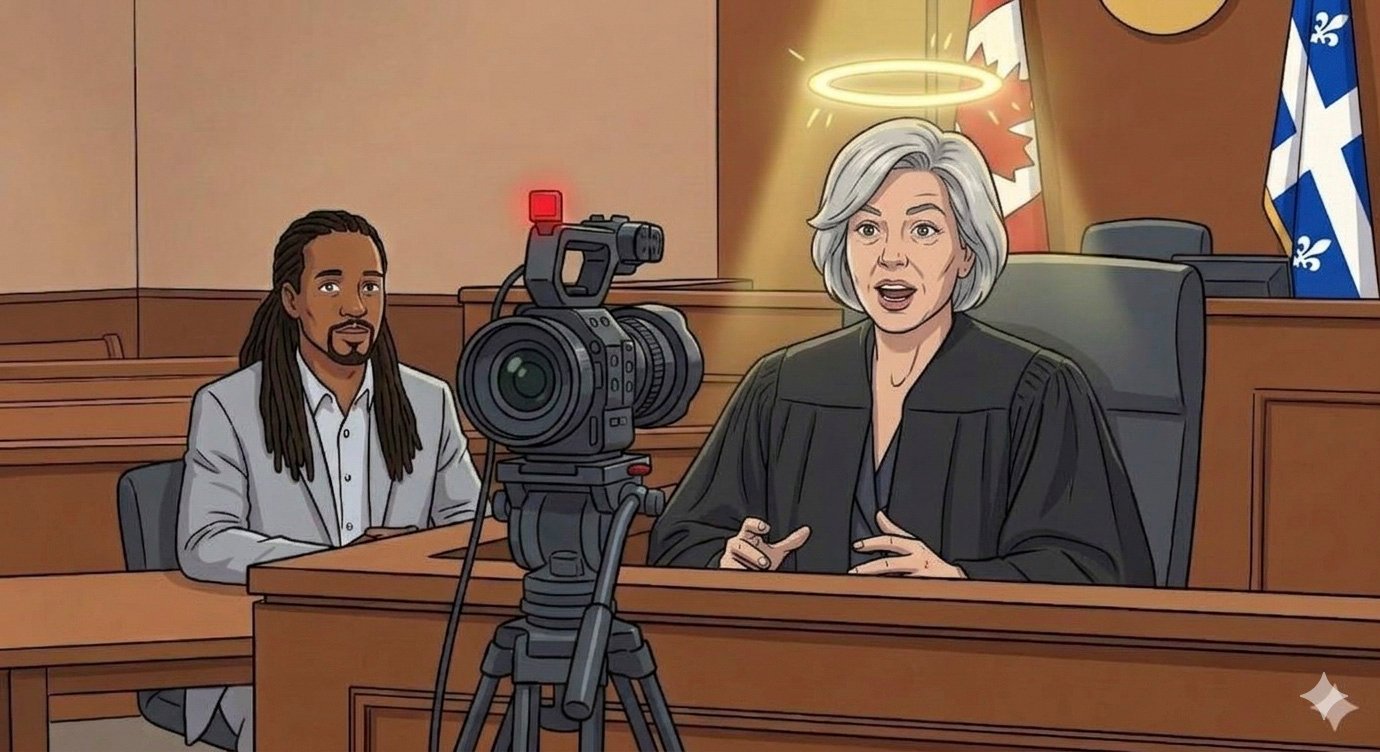



GATINEAU - Justice
must not only be done; it must be seen to be done. In Quebec, however,
the administration of justice too often occurs behind closed doors,
shielded from the public eye by an antiquated ban on broadcast cameras.
The recent and disturbing allegations emerging from the case of Carby-Samuels v. Ville de Gatineau et al.
serve as a stark wake-up call. If the reports regarding Justice
Catherine Piché’s conduct are accurate, they represent a calculated
attack on civil rights that demands immediate, televised transparency.
To
the public, Justice Piché is often portrayed through high-profile,
socially progressive cases—such as her recent landmark ruling
prioritizing a patient’s right to medical assistance in dying over a
palliative care home’s religious objections. But critics argue this
public image acts as a public relations charade designed to conceal a
verifiably unethical reality. In the Carby-Samuels
matter, the allegations move far beyond simple errors in interpreting
law or facts. Instead, they point to a deliberate deception: a
calculated decision to falsify a litigant's background and subject them
to public ridicule, an offence that ought to immediately disqualify any
judge from presiding over a case.
The
courtroom dynamic described by Raymond Carby-Samuels, a Black human
rights claimant, exposes the dangerous asymmetry of Quebec's legal
system. According to filings, Gatineau’s legal counsel actively urged
Justice Piché to strip Mr. Carby-Samuels of his human rights claims in a
separate Quebec Human Rights Tribunal proceeding. This push was
allegedly based upon case law that Gatineau's lawyer professed existed,
but deliberately chose never to show the self-represented litigant.
Worse still, the city's lawyer reportedly emphasized to the judge that
they could act with impunity because "no one was going to find out
anyway," banking on an absolute lack of public support for the litigant,
alongside the court's manufactured dismissal of his university
diplomas.
This
is the outrageous behaviour and profound disregard to which everyday
Quebecers are exposed. The entire system operates on the cynical premise
that the court has nothing to fear from an ordinary citizen when
compared to a more economically powerful proponent. In this case, the
City of Gatineau and its police department are able to tap into the
public treasury without the consent of taxpayers, utilizing endless
funding to perpetrate a self-serving agenda that seeks to embolden and
protect the activities of racist cops.
When
a government-appointed apparatus can weaponize vexatious litigant
orders, deny English interpretation services, and mock a citizen's
credentials behind closed doors, the public's trust in the integrity of
the judiciary evaporates. How can anyone trust the integrity of such a
judge?
The
solution is as clear as it is urgent. Introducing TV cameras to
Quebec’s courtrooms will point a blinding light directly at this
institutional corruption. In doing so, broadcasting these proceedings
will not only educate the public on the realities of the legal system,
but it will finally keep judges and government-appointed lawyers honest
by ensuring they can no longer conceal their toxic activities in
secrecy.
The author is a freelance columnist covering legal affairs and civil liberties.

Comments
There are 0 comments on this post