
Stellantis plant should be sold to new Canadian automobile consortium
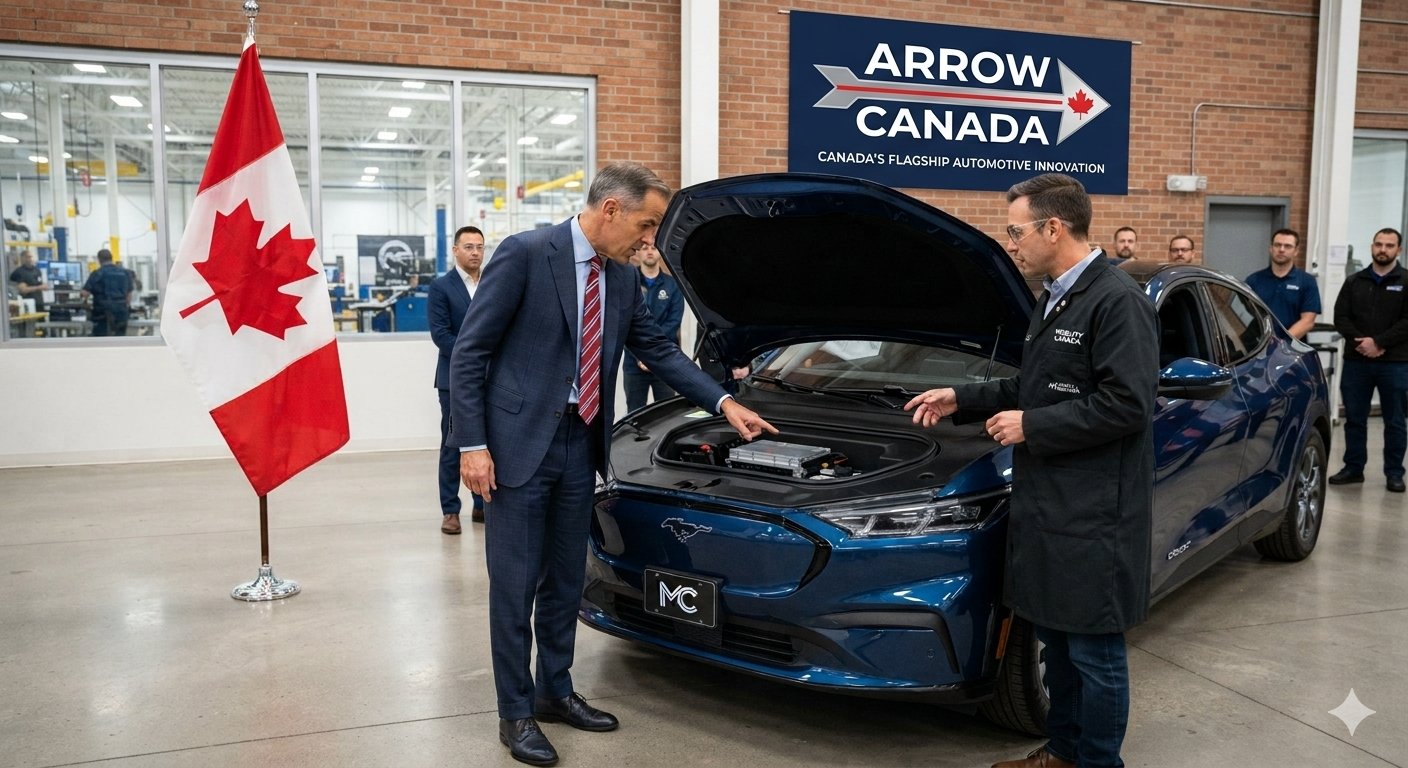

The Brampton Assembly Plant should not be sold off piecemeal to a defence vehicle manufacturer; instead, Canada must seize this moment of industrial crisis to acquire the facility and establish it as the manufacturing and research anchor of a sovereign, made-in-Canada automobile consortium.
When news broke that auto giant Stellantis had signed a memorandum of understanding to potentially sell its sprawling Brampton Assembly Plant to Roshel—an Ontario-based defence contractor manufacturing armoured tactical vehicles—the reaction across Ontario's industrial corridor was one of stunned disbelief. Over 2,000 autoworkers represented by Unifor, who had patiently endured layoffs under the corporate promise of a massive plant retooling, were suddenly left staring into an abyss of broken pledges and stalled contract negotiations, as detailed in recent reporting by CBC News.
The impasse has revealed a glaring, systemic vulnerability in Canada’s industrial architecture: after more than a century of building automobiles, our manufacturing economy remains entirely beholden to foreign boardrooms in Detroit, Paris, Tokyo, and Seoul.
Rather than allowing this three-million-square-foot asset to drift into niche military fabrication or slip into permanent industrial dormancy, the federal government must step into the breach. Prime Minister Mark Carney's government has an unprecedented opportunity to fundamentally reshape the nation's economic landscape. By establishing a new Crown corporation tasked with anchoring a broad-based Canadian automotive consortium, Ottawa can purchase and operate the Brampton plant. By treating our auto industry with the same sovereign resolve once shown when public capital rescued critical national infrastructure, Canada can finally chart its own course from branch-plant dependency to technological self-determination.
The Brampton Standoff and the Broken Promise of the Branch Plant
The crisis unfolding in Brampton is the culmination of decades of misplaced trust in multinational corporate allegiance. For years, Canadian taxpayers have handed billions in federal and provincial subsidies to global automakers. These multi-billion-dollar packages were consistently justified to the public as necessary investments to "secure mandates," modernise local tooling, and ensure generational employment for skilled assembly workers.
Yet, when global supply chains twitch, consumer appetites wobble, or head offices in Europe and the United States decide to cut costs, Canadian facilities are routinely placed on the sacrificial altar. Stellantis idled the Brampton facility in late 2023 with assurances that it would be upgraded for modern vehicle lines, including platforms for the Jeep brand. Instead of seeing retooling teams walk through the turnstiles, autoworkers discovered that the factory's destiny was being negotiated away behind closed doors to an armoured vehicle builder.
While Roshel produces admirable defence technology, an armoured vehicle manufacturer cannot absorb the scale, the workforce, or the extensive Tier-1 and Tier-2 supplier network built to sustain a high-volume passenger automobile facility. For Unifor Local 1285, the move is an unacceptable retreat from solemn commitments. For Canada as a whole, it represents another humiliating episode in which a sovereign nation builds cars for the entire world, yet owns none of the brands, controls none of the patents, and maintains zero authority over whether the factory gates stay open tomorrow morning.
A Century of Almosts: The Lessons of Canada's Automotive Past
Canada’s dream of an independent automotive sector is not a romantic delusion invented yesterday; it is an unfinished national ambition that dates back over a hundred years. Time and again, Canadian engineers, industrialists, and visionaries have proven that this country possesses the technical capability to build world-beating vehicles. What has always failed is sustained institutional nerve, commercial independence, and long-term capital backing.
At the turn of the twentieth century, Canadian carriage builder Robert McLaughlin founded the McLaughlin Motor Car Company in Oshawa. McLaughlin cars were widely regarded as more luxurious and mechanically refined than the American models on which their engines were initially based. Yet, lacking independent capitalisation and caught in the gravitational pull of Wall Street, McLaughlin was eventually swallowed whole, merging into what became General Motors of Canada. Oshawa remained an assembly titan, but the equity, executive control, and corporate destiny moved across the border.
The postwar decades deepened this branch-plant model. While the 1965 Canada-United States Automotive Products Agreement (the Auto Pact) brought immense manufacturing volume to Southern Ontario, it codified Canada's role as a secondary factory floor rather than an owner of indigenous design.
When domestic entrepreneurial initiatives did emerge, they were starved of the structural scale necessary to survive against foreign monopolies. In the 1970s, New Brunswick witnessed the brief, turbulent saga of the Bricklin SV-1—a safety-oriented sports car featuring futuristic gull-wing doors and advanced composite materials. Conceived by entrepreneur Malcolm Bricklin and financed heavily by the provincial government, the venture ultimately collapsed into receivership amid cash-flow shortages, quality-control hurdles, and political infighting. The moral drawn by cautious commentators was that Canada simply could not compete in passenger car manufacturing. But the true lesson of the Bricklin was far simpler: an under-capitalised boutique sports car without a broad, diversified consortium and domestic supply integration cannot stand alone against entrenched corporate giants.
Perhaps the deepest wound in Canadian industrial history remains the legendary cancellation of the Avro Canada CF-105 Arrow in 1959. Avro Canada was not merely an aircraft manufacturer; it was an industrial ecosystem employing tens of thousands of scientists, designers, and machinists in Malton, just minutes from the modern Brampton plant. The Arrow was years ahead of anything flying in the West. When the federal government scrapped the project on "Black Friday," citing escalating costs, the destruction went beyond metal: Canada suffered an unprecedented intellectual brain drain, with its finest engineers departing for NASA and British aerospace firms. It demonstrated the tragic cost of abandoning sovereign engineering ambitions just as they reach maturity.
In recent years, Canada's automotive parts sector has openly acknowledged this historical deficit through initiatives like Project Arrow, spearheaded by the Automotive Parts Manufacturers' Association (APMA). Conceived explicitly as an homage to the Avro Arrow, Project Arrow brought together dozens of Canadian suppliers, software developers, and universities to design and assemble a fully Canadian, zero-emissions electric concept vehicle from scratch. The project demonstrated unequivocally that 97% of a high-tech modern automobile—including cutting-edge battery management, telematics, lightweight chassis engineering, and autonomous software—can be engineered and built right here in Canada.
Yet, as the APMA itself has often noted, Project Arrow was engineered as a dynamic calling card to attract global contract bids, not as a retail commercial marque. It proved the hardware exists. What remains missing is the commercial vehicle to scale it into mass production. The Brampton plant provides the exact brick-and-mortar reality that Project Arrow never had.
The Crown Corporation Blueprint: Learning from Public Infrastructure
The most frequent objection to creating a Canadian automotive manufacturer is cost and risk: Canadians should not gamble public dollars on vehicle production. But that argument rings hollow in light of the country's economic history.
When private capital retreated from the Trans Mountain pipeline expansion in British Columbia, threatening an essential conduit for Canadian resource exports, the former Trudeau government did not shrug its shoulders and let the asset dissolve. It took the radical, decisive step of buying the pipeline for billions of public dollars, assuming direct financial and operational responsibility to guarantee that a critical piece of the national logistics network reached completion.
If it was justifiable for Ottawa to intervene and deploy state capital to protect the energy transport network of Western Canada, how can the federal government justify standing idly by while the cornerstone of Central Canada's advanced manufacturing economy is dismantled?
To execute this transition effectively, the Carney government should establish a dedicated Crown corporation—tentatively named Mobility Canada—to systematically guide advanced research, development, and long-term industrial scaling. This Crown corporation would act as a powerful vehicle to marshal private capital from Canada’s massive institutional investors, such as the Canada Pension Plan Investment Board (CPPIB), OMERS, and the Caisse de dépôt et placement du Québec (CDPQ).
Crucially, to jumpstart this ecosystem, the Crown corporation must be empowered to provide low-interest loans, capital guarantees, and co-investment frameworks to would-be private investors and domestic parts suppliers. This mitigates the early-stage risk that typically scares off traditional venture capital, allowing Canadian businesses to scale up operations without fear of being crushed by foreign monopolies.
The auto industry is not merely a collection of private commercial marques; it is the technological bedrock of modern industrial society. It drives material science, advanced robotics, artificial intelligence, battery chemistry, and high-precision machining. Allowing Brampton to shutter or scale down into an assembly shop for specialized military gear means surrendering the very industrial capabilities that allow an advanced economy to retain top-tier engineering talent.
Ottawa must show the same structural resolve it demonstrated in energy infrastructure. The state does not need to manage every minor function on the assembly line; rather, it should act through a Crown corporation as the catalytic anchor investor in a public-private national consortium.
Architecture of the New Consortium
What would a truly Canadian automotive manufacturer look like under this model? It would combine the financial stewardship of a Crown corporation with the agility of our world-renowned parts sector and the expertise of our labour movement.
- Tier-1 Industrial Leadership: Canada already boasts global automotive manufacturing titans. Companies like Magna International, Linamar, and Martinrea started in Ontario machine shops and grew into international conglomerates that design and build complete vehicle modules, powertrains, and chassis systems for Porsche, Ford, BMW, and Mercedes-Benz. A domestic consortium would give these Canadian companies an equity stake in a flagship domestic OEM (Original Example Manufacturer), ending their exclusive status as subcontractors to foreign corporate giants.
- A Partnership with Labour: In standard corporate buyouts, workers are treated as balance-sheet liabilities to be trimmed. In a Canadian consortium, Unifor Local 1285 autoworkers must be elevated to foundational stakeholders. Implementing European-style co-determination models—where labour holds board seats and profit-sharing equity—would ensure that production stability, safety, wage dignity, and shop-floor innovation are aligned with corporate survival.
- Focused Market Entry: The consortium must not attempt to go toe-to-toe with global automotive giants across every single passenger vehicle segment on day one. Instead, it should target defined, commercially viable niches where Canada has distinct geographical and market requirements: rugged all-weather fleet utility vehicles, public transit shuttles, government procurement fleets, and pragmatic consumer electric crossovers designed specifically for severe winter climates. By leveraging public procurement across municipal, provincial, and federal fleets, the consortium could guarantee a baseline level of annual production demand from the moment the assembly line powers on.
The Brampton Facility as a Living R&D Campus
A modern automotive facility is no longer just a place where welders solder stamped sheet metal together. In the 21st century, an auto factory is an advanced computer laboratory wrapped inside an industrial envelope.
Under the guidance of the new Crown corporation, acquiring the Brampton plant would allow Canada to create a unified Advanced Mobility Research and Manufacturing Campus. Rather than shipping our best automotive software developers, battery chemists, and mechanical engineering graduates from universities like Waterloo, Toronto, McMaster, and Ontario Tech to Silicon Valley or Munich, Brampton could house an indigenous R&D laboratory directly integrated into the factory floor.
Every layer of the domestic value chain could intersect at the site:
- Critical Minerals and Battery Integration: Canada holds substantial reserves of nickel, lithium, cobalt, and graphite. But extracting raw minerals is meaningless if we merely ship rocks south and buy back expensive foreign batteries. A domestic automaker provides an immediate, captive consumer for the battery gigafactories currently rising across Ontario and Quebec.
- Software and Autonomous Systems: Modern vehicle value is driven by software-defined architectures, operating systems, and intelligent safety controls. A Canadian consortium would retain the intellectual property rights to its software rather than licensing foreign systems, keeping the highest-margin economic activities inside the country.
- Circular Green Manufacturing: Retooling Brampton with low-carbon steel, lightweight aluminium casting, and closed-loop battery recycling would establish the facility as a global benchmark for clean automotive manufacturing, perfectly aligning with national decarbonisation goals.
Overcoming the Sceptics: Scale, Capital, and Execution
Sceptics will assert that the automotive industry is brutally difficult, marked by razor-thin margins, vicious competition, and massive capital expenditures. They will point to struggling international EV startups as proof that building a car company from the ground up is financial suicide.
These warnings are accurate for under-capitalised startups trying to build brand-new factories in greenfield cornfields while learning manufacturing from scratch. But the Brampton proposition is fundamentally different:
- Turnkey Physical Infrastructure: The Brampton site is an existing, world-class, three-million-square-foot advanced manufacturing facility with rail links, electrical grid capacity, stamping operations, and paint infrastructure already in place. The hardest physical barrier to entry is already solved.
- A Ready-to-Work Labor Pool: Unlike a Silicon Valley venture trying to recruit assembly workers who have never touched a torque wrench, Brampton comes equipped with a generational workforce of thousands of trained, highly disciplined autoworkers who understand precision manufacturing at scale.
- Immediate Strategic Independence: Relying entirely on foreign automakers leaves Canada hostage to trade renegotiations, protectionist American domestic policy, and foreign political shifts. An indigenous automaker guarantees domestic manufacturing capacity regardless of which political party rules in Washington or what multinational CEOs decide in European executive suites.
The real risk is not the financial investment required to launch a Canadian manufacturer; the true risk is the economic cost of continued passivity. If Canada does nothing, the Brampton plant will cease to be a volume car manufacturer. The skilled assembly workforce will disperse, supplier contracts will wither, billions in downstream economic activity will vanish, and the next generation of engineers will once again leave the country to seek opportunities abroad.
The Turning Point for Canadian Industry
The impasse between Stellantis and Unifor is not just an ordinary labour dispute, and the proposed sale to Roshel is not an ordinary commercial transaction. It is a historic crossroad for Canada’s industrial future.
For over a century, Canada has been satisfied with building other nations’ ideas, assembling other nations’ cars, and absorbing the shocks whenever foreign corporations decide our workers are expendable. We have celebrated the ghost of the Avro Arrow in television documentaries while refusing to build sovereign champions in our own time. We have marveled at the design ingenuity of Project Arrow while leaving it parked on exhibition carpets as a conceptual showpiece.
The idled Brampton Assembly Plant gives this country a rare, fleeting second chance.
By intervening with the capital, ambition, and structural backing of a new Crown corporation under the Carney government, Canada can protect thousands of middle-class industrial jobs, secure domestic supply chains, and reclaim ownership of our economic future. It is time to stop subsidising foreign boardrooms to manage our factories. It is time for Canada to buy the plant, back our workers, and build our own car.

Comments
There are 0 comments on this post