
The $1.50 Dilemma: Is Real Canadian Superstore’s budget bread actually a deal?
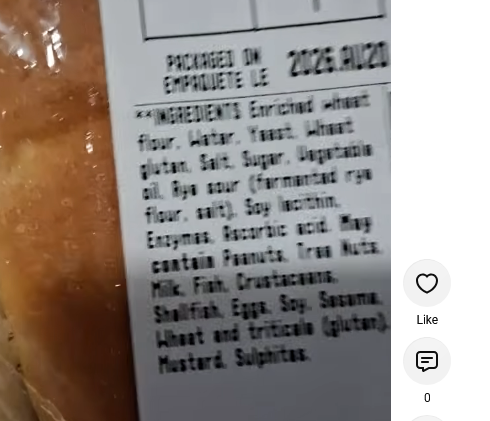
In an era where an artisanal sourdough loaf can easily clear the seven-dollar mark, walking down the bakery aisle of the Real Canadian Superstore feels like stepping into a time machine. There, stacked in unassuming brown paper bags, sits the $1.50 crusty bread. The price tag alone is enough to make any budget-conscious shopper pause. It is undeniably a good price, and a quick glance at the label reveals a major marketing win: no traditional chemical preservatives like calcium propionate. From a strict shelf-life perspective, this offers a clean, attractive label that is increasingly rare for a commercial loaf at this price tier. But once you slice into it, the reality of a buck-fifty loaf sets in.
To understand why this bread behaves the way it does, one must look closely at the ingredient list. The label reveals a baseline corporate formula: enriched wheat flour, water, yeast, wheat gluten, salt, sugar, vegetable oil, rye sour, soy lecithin, enzymes, and ascorbic acid. While the lack of chemical preservation is a major plus for anyone trying to avoid artificial additives, the quality of the raw ingredients used is definitely far from premium.
The primary culprit behind the loaf’s limitations is the enriched wheat flour. During industrial milling, wheat is stripped of its fiber-rich bran and nutrient-dense germ, leaving behind only the starchy endosperm. In Canada, it is mandatory to fortify this refined flour with B vitamins and iron to replace what was lost, but the physical structure cannot be replaced. Because the natural fibers are gone, the bread consists of highly refined, fast-digesting carbohydrates. The physical result is a crumb that somehow manages to be both light and dry without feeling dense. It tears apart easily enough, but the mouthfeel is parched. Instead of relying on a slow, natural fermentation process to develop moisture and structure, the industrial bakery injects isolated wheat gluten into the mix. This builds an artificially strong, elastic protein network that traps a massive amount of gas, forcing a heavy, starchy flour to expand into an airy, inflated loaf.
The lack of traditional culinary care is further managed by a suite of processing shortcuts. Because factory bread is rushed through production in a matter of hours, it completely bypasses the long fermentation window required to develop complex organic acids and deep flavor. To trick the palate, the manufacturer adds rye sour (fermented rye flour and salt). This dehydrated powder acts as a flavor mimic, injecting a hint of simulated tanginess into the dough to mask what would otherwise be a completely tasteless crumb. Meanwhile, sugar is added to give the industrial yeast an immediate, easily digestible fuel source to maximize gas production, while vegetable oil coats the gluten strands to keep the crumb soft.
The physical mechanics of the loaf are held together by modern industrial processing aids. The formula utilizes soy lecithin, a fatty emulsifier extracted from raw soybeans that helps bind water and fats seamlessly. In commercial baking, soy lecithin improves machineability, ensuring the sticky, automated dough moves through giant factory equipment smoothly without tearing. Following it are enzymes and ascorbic acid, which function as clean-label dough conditioners. Amylase enzymes break down complex flour starches into simple sugars for the yeast to eat, while proteases relax the gluten structure so the dough can expand effortlessly. The ascorbic acid (Vitamin C) acts as an oxidizing agent that strengthens the gluten network, allowing the dough to hold its shape better and rise significantly higher in industrial pans without deflating. Because enzymes are structurally altered and neutralized during the baking process, they do not have to be explicitly named under Canadian labeling laws, allowing the product to maintain its pristine "no preservative" status while functioning like a highly engineered factory food.
Nutritionally, this refined profile carries distinct health trade-offs. The absolute lack of dietary fiber means your body breaks down these carbohydrates rapidly, which can lead to quick blood sugar spikes and poor long-term satiety. Furthermore, for anyone with severe food allergies, the packaging features an extensive, catch-all cross-contamination warning. The "May Contain" statement flags an exhaustive list of major allergens: peanuts, tree nuts, milk, fish, crustaceans, shellfish, eggs, soy, sesame, mustard, wheat, triticale, and sulphites. While perfectly safe for the general public, this massive list highlights that the bread is produced in a sprawling, multi-use industrial facility where automated lines handle vast rotations of diverse grocery products, sacrificing small-batch isolation for mass-market affordability.
Because of this specific, airy texture, the loaf's utility in the kitchen is highly limited. It is too light for a good French toast; the flimsy, starchy crumb simply collapses under the weight of an egg custard soak, turning into a soggy mess rather than a custardy breakfast luxury. It also completely lacks the structural backbone and flavor profile required for a simple, single-cheese sandwich. However, the loaf can be salvaged if you purposefully elevate the interior ingredients. Skipping the plastic-wrapped processed slices and pairing this dry loaf with a premium blend of one-year-old white cheddar, mozzarella, or Gruyère transforms it into a highly respectable, gooey grilled cheese. The rich fats and sharp flavors of these real cheeses do the heavy lifting that the bland, budget crumb cannot, while the dry exterior crisps up beautifully in a buttered skillet.
Ultimately, this loaf represents the classic grocery store compromise. It is not a bad value for the price, making it an affordable, basic staple with the welcome benefit of being free of standard chemical shelf-life extenders. However, because it relies on low-cost, refined ingredients and completely bypasses a true, deep ferment, it is not a particularly flavourful bread either. It is the kind of bread that doesn't just invite toppings; it demands them. Eating a slice plain is a chore, transforming the loaf into a vehicle that requires a generous slathering of butter just to restore basic moisture.
If you are looking for an exceptional, artisan culinary experience, you won't find it here. Rating this bread a 5.9 overall feels exactly right. It lands just slightly above average by sheer virtue of its unbeatable price tag and clean-looking ingredient list—but if you have a tub of butter, some quality real cheese, and a tight budget, it gets the job done.

Comments
There are 0 comments on this post