
Quebec Election: PQ projects the racism and fascism of a morally bankrupt elite
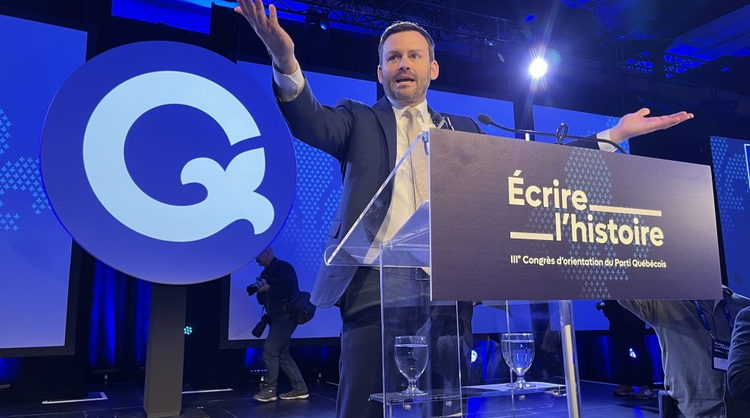

The political discourse in Quebec has long been carefully curated around a singular, existential struggle: the preservation of the French language and a distinct cultural identity. However, a deeper examination of the province's power structures reveals that this linguistic defence mechanism has been weaponised by a nationalist elite to enforce a rigid, exclusionary social order. Under the guise of progressive social democracy and cultural protection, the Parti Québécois (PQ) and its ideological allies have engineered a system that actively marginalises visible and other minorities. By marrying ethno-nationalist gatekeeping with popular public initiatives, the PQ employs a strategy with dark historical precedents, using social policy platforms to gain mainstream legitimacy for an essentially repressive, exclusionary agenda.
This political manoeuvring mirrors the tactics of 20th-century European nationalist movements, which famously adopted the rhetoric of "national socialism" to broaden their appeal. Historically, authoritarian and fascist movements recognised that overt xenophobia rarely secures a democratic majority on its own; to capture the working and middle classes, they hitched ethno-nationalism to promises of state-sponsored social welfare. The PQ employs a modern iteration of this dynamic. By framing themselves as champions of the welfare state—advocating for healthcare, education, and workers' rights—they build a broad base of popular support. This mandate is then converted into political capital used to systematically deny access to justice and oppress minority communities, effectively turning public systems into discriminatory mechanisms: welfare and protection for the preferred group, paired with institutional disenfranchisement for the marginalised.
At the heart of the opposition of Quebec’s elites to Canadian multiculturalism is not a threat to the French language, as they officially state, but racism. The ruling class does not want a society run by French language speakers who are Black, South Asian, East Asian, or Slavic. Instead, they seek to construct a society defined strictly by the racial appearance of people who ethnographically resemble the rulers of New France. This racial gatekeeping is encoded into the fleur-de-lis, transforming it into a symbol of exclusion. In actual fact, it is the Maple Leaf that serves as the chosen symbol of a francophone identity that historically embraced a multicultural reality. Pierre Elliott Trudeau's championing of Canadian multiculturalism was inspired by the original pluralism embraced by early Canadian francophones, who mixed with Indigenous populations out of necessity. The French identity in Canada would have died long ago if the original settlers had harboured the kind of racism that the PQ now brands as necessary for "cultural survival."
A foundational element of this ideology is the steadfast denial of systemic racism by the PQ and other nationalist elites. This refusal to acknowledge deeply entrenched biases is not merely a political stance; it is symptomatic of a fascistic ideological framework that cannot tolerate any critique of the dominant culture's moral supremacy. For French-speaking Quebecers who belong to visible minorities, or those who lack a traditional, ancestral Québécois surname, the reality of this systemic exclusion is undeniable.
To navigate Quebec’s public sphere is to confront a glaring disconnect between a diverse population and its cultural output. There is an undeniable but unspoken view among Quebec's elites on what a Quebecer is supposed to look like. While it is not the explicit representation of the blonde, fair-skinned, and blue-eyed projection of "Aryans" seen in Nazi Germany, this exclusionary baseline is clearly discernible among those who run the show in Quebec. From the leadership of major political parties to the faces anchoring the nightly news, advertising billboards, and popular culture, the visual landscape reinforces a homogenous archetype of who truly belongs. Those who fall outside this narrow mold are expected to defer to an authority system that demands assimilation while offering no genuine representation in return.
The systematic exclusion of visible minorities, language minorities, and Indigenous communities highlights the compounding layers of this state-sanctioned marginalisation. While visible minorities face racial gatekeeping and language minorities are targeted by aggressive legislative restrictions that cut off access to vital services, Indigenous communities find their ancestral sovereignty and distinct cultural rights completely submerged under the monolithic umbrella of Quebec nationalism. By treating English speakers and First Nations as uniform threats to the francophone majority rather than foundational pillars of the land's history, the political elite justifies a hierarchy of citizenship.
The perils of challenging this established order are clearly illustrated by the treatment of prominent minority figures who ascended within Quebec's institutions. The experiences of past figures, such as the former Black president of the Commission des droits de la personne et des droits de la jeunesse (CDPDJ) and the former Black leader of the Quebec Liberal Party, serve as stark reminders of institutional limits. When visible minority leaders attempt to address systemic biases or advocate for a more inclusive definition of Quebec identity, they frequently face intense institutional pushback, political isolation, and public scrutiny. Their trajectories demonstrate what happens when minority leaders forget the unwritten boundaries set by the ruling elite: participation is permitted, but structural disruption is not tolerated.
To sustain this system across generations, the PQ has increasingly relied on the mass indoctrination of youth in Quebec. In a manner echoing how far-right European movements historically tapped into disaffected demographics, the PQ exploits young people's lack of personal, historical knowledge of the past. By introducing curated curriculum frameworks and aggressively controlling the historical narrative through political propaganda, the party creates counterfeit images of reality that it projects as absolute, factual representation. They reframe Quebec’s history into a tale of perpetual, exclusive grievance, entirely erasing the historical contributions and presence of cultural, linguistic, and Indigenous minorities. This weaponization of history shields young people from alternative perspectives, ensuring they view minority populations, religious symbols, and immigrants not as fellow citizens, but as existential threats to the nation.
The recent growth and political rehabilitation of the PQ testify to a broader failure among federalist and centrist politicians who have allowed themselves to be blinded by this propaganda. Rather than offering a robust, pluralistic alternative, many political leaders have capitulated to identity politics, adopting milder versions of exclusionary policies—such as restrictive secularism laws—out of fear of alienating the majority electorate. Quebec stands at a critical juncture. The narrative that language preservation requires the subjugation of visible minorities, language minorities, and Indigenous communities is a false choice designed to maintain the hegemony of a traditional political elite. Until Quebec's history is taught truthfully and its institutions genuinely reflect its diverse populace, the promise of a truly equal and democratic society will remain unfulfilled.
About the author: Raymond Samuels is the author of You're Just A Nigger which critically explores Quebec politics.

Comments
There are 0 comments on this post