
Why Canada must re-arm on a 1939 footing to confront an unconstrained Superpower

The fibreglass hulls of the submarines at West Edmonton Mall were dragged out of the world’s largest indoor amusement park decades ago, yet in the high-stakes, transactional theatre of modern American diplomacy, those defunct shopping mall attractions have suddenly become the defining metaphor for Canada’s systemic vulnerability.
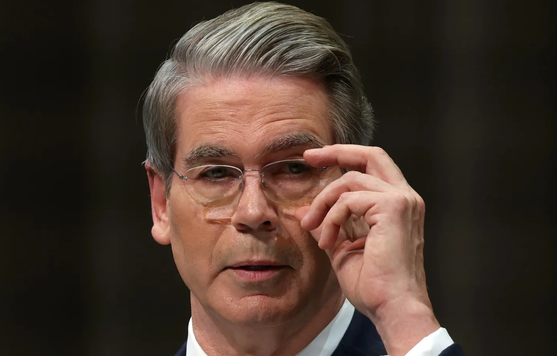
When Scott Bessent, Donald Trump’s Treasury Secretary, took to the airwaves to dismiss the brewing U.S.-Canada trade war, he did so with a smirk. Laughing off Ottawa’s diplomatic pushback, Bessent questioned Canada's ability to respond to a serious geopolitical escalation: “What are they going to do, take their two submarines from the Edmonton Mall and sic them on us?”.
To casual viewers, it was a late-night talk show quip, a bit of political theatre meant to ease the anxieties of American consumers worried about supply chain disruptions. But in the architecture of statecraft, this was classic “kidding on the square”—the practice of using a veneer of folksy humour to deliver a sharp, adversarial truth. It is the language of an aggressive neighbour prodding your perimeter, testing your psychological resolve, and openly measuring your ability to defend your own territory while simultaneously squeezing your economy.
Behind the laughter lies an existential warning that Canada can no longer afford to ignore: the United States administration does not respect a neighbour it deems militarily defenceless, and it is prepared to exploit that weakness by any means necessary. For a Canadian political establishment raised on the comfortable myth of an unbreakable continental partnership, Bessent’s joke is a fire bell in the night. It signals that to survive an era of unconstrained American coercion, Canada must rapidly expand its national territorial defence and army personnel, placing its society on a mobilised military footing reminiscent of the existential threat posed by Nazi Germany in the late 1930s.
The Architecture of Unconstrained Power
The fundamental mistake of successive Canadian governments has been the belief that international relations are permanently governed by rules, treaties, and mutual affection. For decades, Ottawa has treated defence spending as a secondary priority—a polite chore to be managed just enough to keep NATO or NORAD officials from becoming overly confrontational at annual summits. We operated under the assumption that our vast trade integration, our shared culture, and our historical alliance bought us a permanent umbrella of security.
The current administration in Washington has shattered that illusion. Donald Trump has never made a secret of his disdain for the post-war rules-based international order. He has openly, repeatedly presented himself as a leader entirely unconstrained by international law, multilateral treaties, or traditional diplomatic etiquette. In his worldview, international law is not a sacred framework to be upheld; it is a weapon used by the weak to try and restrain the strong. To a regime that views global politics through a purely transactional, zero-sum lens, treaties are merely pieces of paper to be torn up the moment they no longer serve immediate American interests.
When a superpower explicitly untethers itself from the constraints of international law, the entire landscape of diplomacy changes. Negotiations are no longer exercises in finding mutual benefit or adhering to stable trade frameworks. Instead, they become exercises in raw power projection. In this environment, economic leverage and military capability are entirely fungible. If Washington knows that Canada possesses no meaningful capacity to project force or defend its vast territorial sovereignty, it will use that vacuum as leverage to extract devastating concessions at the trade table. You cannot negotiate an equitable economic treaty with a neighbour that views your military as a punchline.
Diplomacy as a Smokescreen
Canadians have historically comforted themselves with the idea that even during intense disputes, civilised nations do not mix trade negotiations with existential military threats. This comfort is historically illiterate. The modern American regime has consistently demonstrated that it views military aggression and intimidation not as a final, tragic failure of diplomacy, but as a standard tactical tool to be deployed in the midst of supposedly peaceful negotiations.
One need only look back at the United States’ historical actions regarding Iran to see this doctrine in its purest form. While Washington was publicly engaged in complex diplomatic signalling and supposedly maintaining open channels for an ongoing negotiation process, it simultaneously executed targeted, high-profile military strikes against Iranian state targets. This was not a breakdown of talks; it was the deliberate use of sudden violence to shift the parameters of the talks themselves.
This transactional, muscle-flexing approach completely discards traditional notions of ethical statecraft. It is an operational philosophy that shares an uncomfortable lineage with the psychological deception of the historical blitzkrieg doctrine. Classic blitzkrieg was never merely about fast tanks; it was a comprehensive political and military strategy designed to keep an opponent distracted, confused, and self-soothing with diplomatic talks, only to launch a sudden, overwhelming strike that caught them entirely off guard.
When Scott Bessent mocks Canada’s defence capabilities while American trade representatives demand sweeping concessions, it is the same playbook. The humour is designed to make Canada feel small, to lower our expectations, and to distract us from the reality that our sovereignty is being systematically hollowed out. It is a psychological blitzkrieg meant to paralyse Canadian policymakers into believing that resistance is futile because our military is nothing more than a shopping mall exhibit.
The 1939 Blueprint: A Miracle of Rapid Mobilisation
When the Nazi war machine began tearing up international treaties and rewriting European borders through raw intimidation in the 1930s, the free world learned a brutal lesson: you cannot reason with an unconstrained actor from a position of absolute weakness. Democratic nations that hesitated to re-arm were quickly overwhelmed or forced into humiliating capitulations.
Canada’s current posture leaves the nation completely exposed to this style of coercion. Though recent efforts have tried to correct course, the Canadian Armed Forces (CAF) remain locked in what military officials have long termed a personnel "death spiral," struggling with severe operational gaps and a massive training backlog.
Fortunately, history provides Canada with a precise blueprint for rapid, society-wide mobilisation. When Canada declared war on Germany in September 1939, the nation was staggeringly unprepared. The Permanent Active Militia—Canada's regular army—possessed a mere 4,261 permanent force soldiers. The country had almost no modern tanks, no tactical air support, and a military infrastructure that had withered under decades of peacetime apathy. Yet, facing the total war footprint of Nazi aggression, the country achieved an industrial and human miracle that reshaped global history.
In September 1939 alone, over 58,000 Canadian men and women rushed to enlist, overwhelming recruitment offices. Over the course of the conflict, out of a total national population of just 11.5 million people, nearly 1.1 million Canadians stepped forward to serve in uniform. This massive scaling of human power was matched by an equally stunning transformation of the nation's industrial fabric.
The exponential growth of the navy during this period remains one of the greatest organisational feats in Canadian history. In 1939, the Royal Canadian Navy (RCN) was a tiny, secondary force consisting of just 13 vessels and roughly 3,500 sailors. It was viewed by international observers as little more than a coastal police force. However, by unleashing wartime procurement protocols and shifting the entire economy to a total military footing, Canadian shipyards began launching a new warship every single week. By 1945, the RCN had expanded fifty-fold into a massive armada of over 400 warships and 95,000 personnel. Through sheer national will, Canada built the third-largest navy on Earth, securing the critical lifeline of the Atlantic.
Putting Canada on a War Footing
If Canada is to survive the current chilling turn in continental relations, our response cannot be limited to polite diplomatic memos or frantic trips by cabinet ministers to schmooze with American governors. While the federal government has faced immense pressure to fast-track its timeline to hit the NATO 2% GDP defence expenditure benchmark, this incremental progress is vastly outpaced by the threat. The only language a transactional regime understands is the language of capability and resolve. Canada must initiate a rapid, historic expansion of its national territorial defence and army personnel, matching its systemic footing to the scale of an existential emergency.
Transitioning to a modern version of a 1939 mobilisation requires a fundamental overhaul of our national priorities:
- Total Mobilisation of Manpower: Canada must aggressively scale up army personnel through historic, fast-tracked training pipelines and a vastly expanded, combat-ready domestic reserve force. The current targets for Canadian Armed Forces recruitment are peacetime metrics; we must aim for a sweeping mobilisation that eliminates recruitment bottlenecks and expands our footprint across every province.
- War-Footing Procurement: The agonizingly slow, decades-long equipment purchasing cycles managed by the federal bureaucracy must be replaced with emergency wartime procurement protocols. To prevent critical resource dependencies, Canada must rapidly fast-track domestic production of ammunition, advanced drone fleets, and air-defence batteries.
- Securing the Sovereign Perimeter: Territorial defence must be hyper-focused on securing our vast Arctic frontier and maritime borders. As the Arctic ice melts and foreign superpowers eye our northern passages, we must transform a historic security vacuum into an impenetrable shield, establishing permanent, heavily fortified operational bases to protect the Northwest Passage.
- Revitalising Subsurface Capability: If American officials want to joke about our submarines, the response should be the immediate, fast-tracked acquisition of a modern, combat-capable submarine fleet able to operate under the Arctic ice. This would immediately signal to both Washington and Moscow that Canadian waters are patrolled by Canadian steel.
Earning Respect at the Bargaining Table
This is not a call for militarism for its own sake, nor is it a naive suggestion that Canada could win a conventional conflict with the United States. Rather, it is an acknowledgment of the fundamental rules of asymmetric diplomacy. When dealing with a neighbour that openly states it is not bound by international law, your only shield is to make your subjugation too expensive, too complicated, and too politically disruptive to attempt.
A rapidly re-arming Canada changes the entire psychology of a trade war. When American negotiators look across the table, they will no longer see a nation that can be easily bullied into economic submission through a few television appearances and a tariff threat. They will see a nation that takes its own survival seriously. They will see an ally that commands respect because it possesses the hard power necessary to secure its own borders, thereby removing the American excuse that they must intervene to protect their northern flank.
Complacency has been the great luxury of the Canadian experience, a quiet drug that allowed us to feel morally superior while outsourcing our survival to the Pentagon. But the luxury of complacency died the moment Washington began using our military weakness as a punchline to justify economic warfare.
The submarines at West Edmonton Mall were a joke. But the defence of this country is not. If Canada does not rapidly build an army capable of commanding the respect of the unconstrained superpower to our south, we will soon find that we have no sovereignty left to defend.

Comments
There are 0 comments on this post