
Gatineau says police can commit no wrong and demand denial of court access to victims of violence
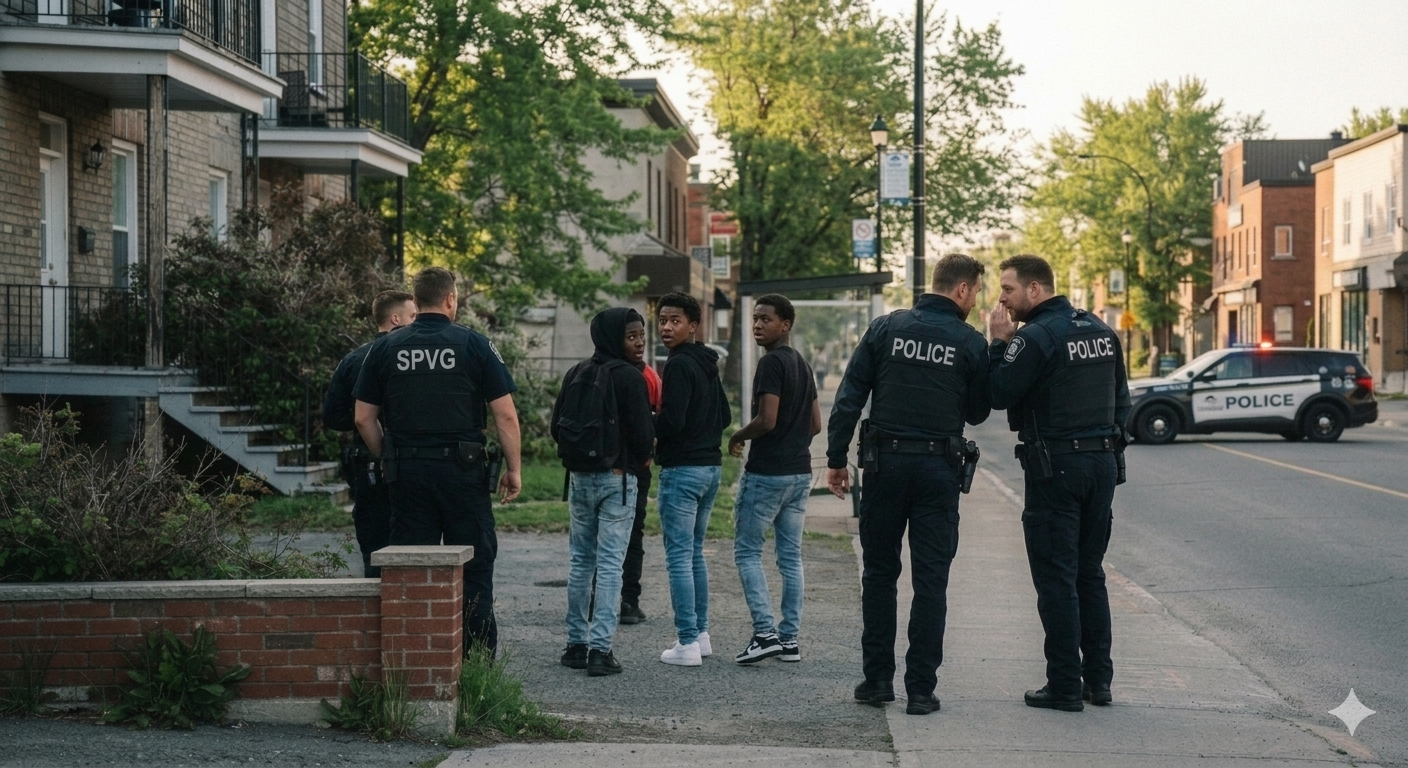



The Illusion of Accountability in Western Quebec
In a healthy constitutional democracy, the rule of law hinges on a clear and unyielding contract. Citizens grant the state a monopoly on the legitimate use of coercive force. In return, the state guarantees that this power will be rigorously checked by independent oversight, statutory human rights frameworks, and open access to the courts. When state actors abuse this power, the legal system is designed to provide immediate recourse to the victim, ensuring that arbitrary violence is penalised and corrected.
However, within the legal department of the City of Gatineau, a far more dangerous legal precedent is being engineered—one that aims to dismantle the foundational principles of municipal accountability in Canada.
On May 28, 2026, a chilling legal philosophy was formally articulated in a public courtroom. Me Mathieu Daponte, appearing not as an isolated private litigator representing a corporate interest, but as an official agent of the City of Gatineau and a representative of the Crown, laid bare a defensive strategy designed to silence systemic complaints of police brutality and racial profiling. The immediate target of this legal manoeuvre was Mr. Raymond Carby-Samuels, a Black citizen who has spent years navigating provincial human rights mechanisms seeking recourse for documented abuses.
The core of the argument presented by municipal counsel, stripped of its technical legalese, introduces an authoritarian standard for civil rights in Quebec: if a victim of police violence is deemed "not nice," their constitutional protections are effectively nullified. This is not standard courtroom advocacy. It represents an administrative declaration of war against both the Canadian Charter of Rights and Freedoms and the Quebec Charter of Human Rights and Freedoms. By weaponising the subjective concept of civility, the Gatineau administration is attempting to establish a municipal fiefdom where fundamental rights are treated as a privilege granted to the compliant, rather than an inherent guarantee for all.
The Three Pillars of Institutional Erasure
The legal position advanced by Me Daponte on behalf of the City of Gatineau is built upon three destructive messages. Together, they create an institutional engine designed to deny citizens their right to hold state actors accountable in a court of law.
1. The Erasure of Statutory Rights
The first message conveyed by the Crown’s representative is that Black citizens do not possess an unconditional right to lodge formal complaints against state actors. This holds true even when a citizen carefully seeks to rely on an independent investigation by an official agency, such as the Commission des droits de la personne et des droits de la jeunesse (CDPDJ).
By asserting that a victim's perceived demeanour or written tone can invalidate a human rights claim, the City of Gatineau removes the objective merits of police misconduct from the legal equation. The institutional message is explicit: if you are a victim of racial profiling, your trauma, your evidence, and your reliance on provincial human rights mechanisms mean nothing if the state can subjectively classify your pursuit of justice as abrasive or discourteous.
2. The Nullification of Judicial Precedent
The second message directly attacks the principle of stare decisis and the authority of the judiciary. Me Daponte’s arguments implied that past judicial decisions rendered by the Quebec Court of Appeal—including historic rulings that penalised the Gatineau Police with $18,000 awards for systemic abuse—can be effectively disregarded if the municipality decides the complainant lacked a pleasant disposition.
This approach attempts to retroactively erase established jurisprudence. It signals that physical violence, psychological intimidation, and unlawful detention sustained by citizens at the hands of police can be wiped clean by the state, provided the legal department can successfully assassinate the character of the victim.
3. The Rejection of Statutory Vetting
The third message undermines the authority of the province’s civil rights infrastructure. When the City of Gatineau argues that complaints should be thrown out based on tone, it states that the rigorous vetting processes of the CDPDJ are irrelevant.
The CDPDJ does not advance claims to the Human Rights Tribunal lightly; cases are subjected to extensive investigation, witness interviews, and evidentiary analysis. Rejecting this state-vetted process tells municipal police forces that they are insulated from statutory scrutiny. It reassures abusive officers that no matter how much evidence a provincial agency amasses against them, the city’s legal department will deploy public funds to ensure those findings never result in structural accountability.
The Cost of Impunity: The Case of Officer Shawn Mahar
These legal arguments do not exist in an abstract vacuum; they serve a specific, functional purpose: protecting abusive actors within the state apparatus from consequence. The reality of Gatineau’s legal philosophy is reflected in its systemic retention of police officers with documented records of violence.
Consider the career of Gatineau Police Officer Shawn Mahar. In 2014, Officer Mahar was subject to a highly publicised summary conviction for assault. In a healthy democratic municipality, an officer convicted of criminal violence would be stripped of their badge, or at the very least, removed from roles involving direct public interaction. Instead, the City of Gatineau kept Officer Mahar on the force.
Predictably, this environment of institutional immunity led to further harm. Protected by the municipal shield, Mahar went on to perpetrate multiple offences against Mr. Carby-Samuels. These actions were egregious enough to prompt the CDPDJ to intervene, culminating in a historic $44,000 racial profiling and civil rights claim filed in the Quebec Human Rights Tribunal.
When Me Daponte stood up on May 28, 2026, to argue that complaints from individuals who are "not nice" should be dismissed, he was directly protecting this legacy of state-sanctioned violence. The strategy protects the city from financial liability while shielding officers like Mahar, ensuring they can continue patrolling the streets with the full knowledge that the municipality will defend them at any cost.
A Municipal Declaration of War on the Charter
The broader implications of Gatineau's legal defence extend far beyond the borders of western Quebec. The fifth and most damaging message sent to Gatineau taxpayers and all Canadians is that the Quebec Charter’s anti-discrimination laws do not apply to the City of Gatineau. The city has effectively declared that it operates above constitutional law, actively oppressing the legal mechanisms designed to protect vulnerable populations from state overreach.
This behaviour is an open invitation to municipal police forces across Canada to ignore constitutional limitations. If Gatineau succeeds in establishing that a citizen's tone or perceived "niceness" can invalidate a human rights claim, it provides a blueprint for every predatory police department in the country.
An officer could engage in explicit racial profiling, use unlawful physical force, and violate a citizen's rights, secure in the knowledge that if the victim reacts with natural anger, the municipality can use that response to dismiss the lawsuit. This completely flips the purpose of the Charters: instead of restricting the power of the state, it forces citizens to audition for their rights by demonstrating absolute submission to the very authorities abusing them.
The Silence of the Fourth Estate
Perhaps the most troubling aspect of this authoritarian shift is the lack of national media attention. The City of Gatineau is engaging in blatant state overreach, yet it has escaped the intense national scrutiny such actions demand. This silence points to a broader crisis within the Canadian media landscape.
The press is meant to serve as the Fourth Estate—a vital check on government abuse, institutional corruption, and corporate overreach. However, the corporate concentration of media outlets, budget cuts, and a growing reliance on official press releases have compromised this watchdog role.
When a municipality can argue that Black citizens have no right to complain about police brutality, and it is treated as a routine local legal matter rather than a national constitutional crisis, the media is failing in its civic duty. This lack of coverage allows authoritarian tactics to thrive in mid-sized cities like Gatineau, away from the national spotlight, until they become deeply embedded in our legal system.
Conclusion: A Call for Constitutional Resistance
The City of Gatineau’s legal strategy under Mayor Maude Marquis-Bissonnette is an attack on the foundational principles of Canadian democracy. We must reject the absurd idea that a citizen's right to be free from racial profiling and police violence depends on how politely they ask for justice. Human rights are not conditional on etiquette; they are absolute, unalienable, and designed specifically to protect individuals when the state is at its most hostile.
Gatineau taxpayers must ask themselves why their public funds are being used to defend officers with criminal assault convictions and to dismantle civil rights protections in court. Canadians must realise that if the Charter can be ignored in Gatineau, it can be ignored anywhere.
The authoritarian tactics deployed on May 28, 2026, must be met with clear resistance from legal experts, civil rights organisations, and the public. It is time to shine a bright light on Gatineau’s legal overreach and reassert a fundamental truth: human rights belong to everyone, and no municipality has the power to take them away.

Comments
There are 0 comments on this post