
Canada Needs to Get Proactive Against Trump’s Interference in Alberta and Quebec Politics
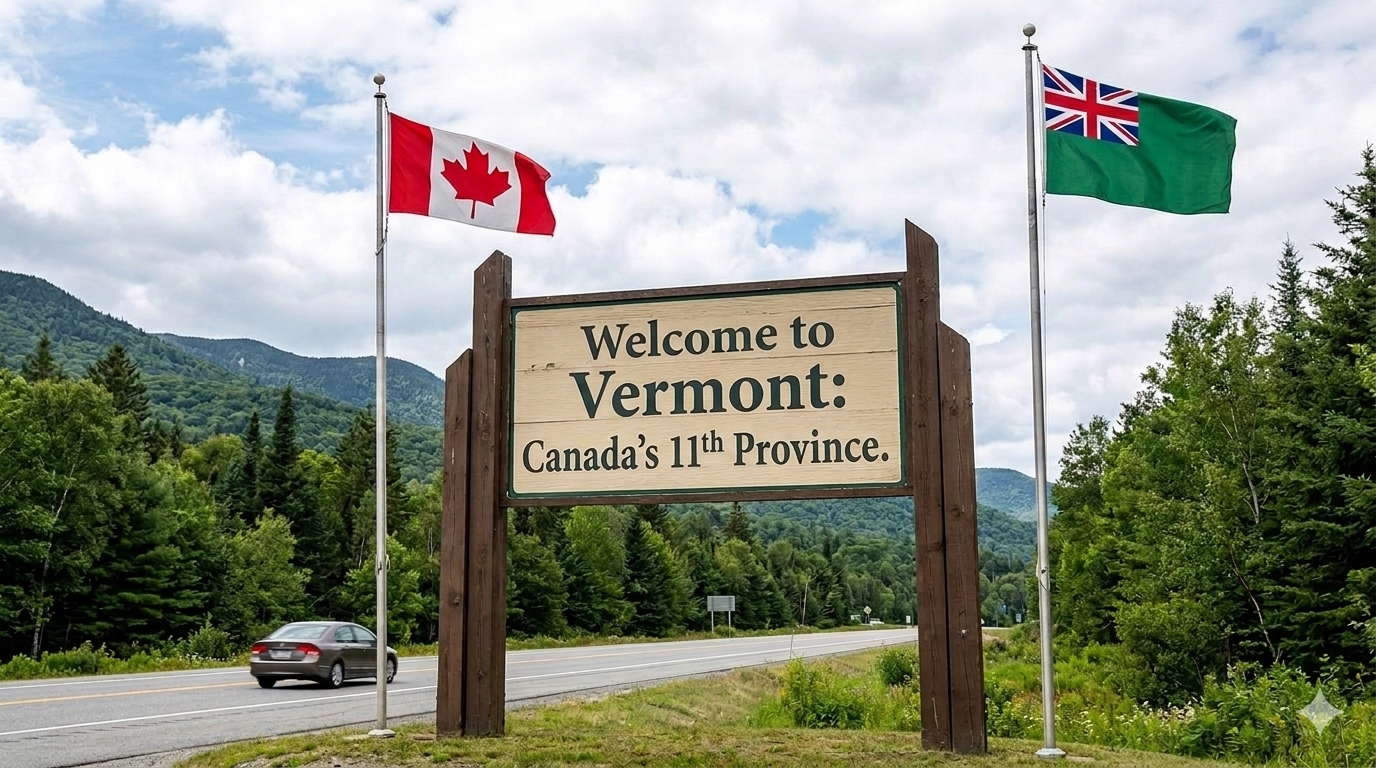



OTTAWA -- To stop external political interference and economic coercion targeting provinces like Alberta and Quebec, Canada must move past defensive punchlines and build a hard-nosed, sub-national democratic defence starting right across the border.
When faced with Washington's provocative rhetoric—such as suggestions of making Canada a "51st state"—Canadian politicians initially deflected with viral satire. Green Party Leader Elizabeth May quipped that California, Oregon, and Washington should instead join Canada as new provinces, while Ontario Premier Doug Ford joked about making a counteroffer to buy Alaska and Minnesota. But treating foreign pressure as mere theatre projects weakness. Canada cannot afford to laugh off real efforts to seduce regional reactionaries or fracture national unity. It is time to turn that satire into a proactive strategy. If Washington continues to openly interfere in our domestic politics, Canada must reciprocate by aggressively courting like-minded American citizens and their governors to view Canada as a viable, stable alternative.
Weaponising the Satire: The West Coast, New England, and Alaska
Joking about annexing American Pacific states or purchasing U.S. territory highlights a deep anxiety, but it can be weaponised into an offensive diplomatic doctrine. If external actors exploit regional economic vulnerabilities and identity politics in Canada to build leverage, Ottawa must actively project its own values into the United States to build deep, protective counter-alliances.
- Activating the Cascadia and Border Links: May’s nod to the progressive Cascadia concept and Ford’s Alaska retort shouldn't just be jokes. Canada should directly market its stability, legal frameworks, and standard of living to American states feeling alienated by Washington's federal overreach.
- Targeting Regional Alliances: Instead of waiting for external forces to court provincial separatists or energy discontent, Canadian leaders should aggressively court blue-state governors and border populations who share Canada’s approach to climate, trade, and democratic norms.
- Economic Realities as a Magnet: Sovereignty is maintained through structural integration. Real alignment—such as Quebec’s existing carbon market ties with California—proves that Canada can leverage its policy stability to pull powerful U.S. states into its orbit, neutralising federal hostility from Washington.
The New England Frontline: Vermont and Maine
Securing our eastern and northeastern flank requires treating U.S. border states as independent diplomatic partners and actively seducing their populations with the benefits of aligned Canadian interests.
- The Vermont Anchor: Vermont shares deep historical and cultural affinities with Quebec. Deepening direct economic, environmental, and cultural integration creates a regional firewall against external attempts to destabilise eastern provincial identity.
- The Maine Gateway: Maine serves as a critical conduit for energy and cross-border commerce. Open, institutionalised dialogue shields Alberta’s resource corridors by convincing Maine leadership that their economic survival relies on a strong, uncompromised Canadian partner.
Reciprocating the Interference: A New Paradigm for Canadian Foreign Policy
Canada must stop fighting with one hand tied behind its back by treating U.S. political meddling as a one-way street. By openly replicating the very tactics directed at our provinces, Ottawa can foster democratic sub-national alliances that encourage like-minded American communities in New England, the Pacific Northwest, and beyond to loosen their ties to Washington D.C. and pivot toward a cooperative, integrated alliance with Canada. True national defence in the twenty-first century is no longer just about holding the line at our geographic border; it is about projecting our values outward, fracturing the internal consensus of hostile federal powers, and proving to our neighbours that a stable, progressive alternative is right next door.

Comments
There are 0 comments on this post