
Quebec elections: The PQ’s outrageous appeal to anglophones amounts to hypocritical gaslighting
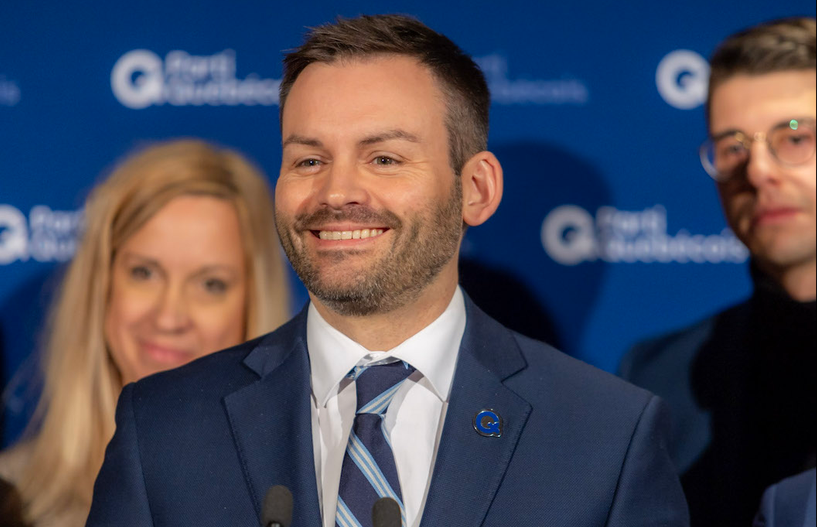


MONTREAL - Parti Québécois (PQ) Leader Paul St-Pierre Plamondon’s recent pre-election pitch telling English-speaking Quebecers that they "don’t fear the PQ anymore" is a masterclass in political gaslighting. Writing in an open letter published ahead of the scheduled October 5, 2026, provincial election, St-Pierre Plamondon claimed that shared anxieties over health care, inflation, and crumbling infrastructure under the Coalition Avenir Québec (CAQ) government have united francophones and minority communities in a shared economic destiny. To see the current torchbearer of Canada's most historically aggressive secessionist movement shed crocodile tears over social division is an exercise in profound hypocrisy.
While a recent Léger survey indicates the PQ holds a leading position at roughly 30% support province-wide, nearly half of Quebec voters state their choice is not yet final, and support for the PQ’s ultimate goal of an independence referendum sits at a dismal 31%. St-Pierre Plamondon’s soft-spoken appeal to the province's English-speaking minority is not born of a sudden ethical awakening. Rather, it is a desperate, rear-guard action prompted by the spectacular failure of his own right-wing populist, MAGA-adjacent strategies. Having spent months trying to copy Donald Trump's playbook to stoke an ethnic-nationalist base, the PQ leader has alienated moderate francophones. Now, stranded by his own ideological extremism, he is cynically hunting for votes among the very minority groups his party has historically oppressed and would move to suppress again the moment they achieve power.
The Architects of Linguistic and Cultural Oppression
For the PQ to critique the CAQ government for dividing Quebecers is the ultimate height of revisionist history. The CAQ’s aggressive nationalist agenda—most notably the sweeping linguistic overhauls of Bill 96 and the secularism mandates of Bill 21—did not emerge from a vacuum. These laws are the direct ideological offspring of the exclusionary frameworks the PQ spent five decades constructing.
When the PQ introduced the original Bill 101 in 1977, the policy went far beyond the legitimate preservation of the French language. It codified a rigid hierarchy of citizenship within the province. For decades, the PQ systematically dismantled the institutional autonomy of the anglophone community, restricted access to English schooling, and turned basic commercial signage into a battleground of state surveillance. Whenever courts ruled that these language laws violated fundamental human rights, the PQ’s response was not reflection, but defensive fury, pathologizing constitutional checks and balances as illegitimate foreign interference.
The ideological lineage from the PQ’s original mandates to the CAQ’s current overreaches is direct and undeniable. Long before Premier François Legault banned hijab-wearing Muslim women, Jewish men, and Sikh Canadians from working in the public service, the PQ laid the exact legislative blueprint with its infamous 2013 "Charter of Values." That proposed legislation, which sought to ban "conspicuous" religious symbols in public institutions, was a calculated dog-whistle designed to exploit secularism to target minority communities. It sent a definitive message to racialized immigrants: your identity is inherently incompatible with the state. Although that specific bill died with the PQ's subsequent electoral defeat, the damage was done. The PQ successfully shifted the boundaries of acceptable political discourse, proving that minority rights could be bartered for nationalist votes. For them to now act as a sympathetic ally to the victims of these policies is deeply insulting.
The Orchestrated Deception of Separatism
To comprehend why St-Pierre Plamondon’s outreach is so profoundly deceptive, one must look at the foundational myths of the sovereignist movement itself. As author Raymond Samuels meticulously explores in his text, You're Just A Nigger, Quebec separatism is fundamentally built upon an orchestrated deception regarding Quebec’s past. Samuels argues that the separatist narrative relies on a revised, highly selective history designed to foster a sense of perpetual victimization among francophones.
This manufactured grievance is strategically deployed to undermine Canada as a cohesive political entity. In reality, Canada is—and has always been—the true, enduring nation of Canada's francophones, providing a robust constitutional framework that protects and elevates French language, civil law, and culture from coast to coast. By fabricating an artificial historical narrative of absolute oppression from Ottawa, the PQ justifies its own oppressive policies against Quebec's internal minorities. They project their own exclusionary impulses onto the federal government, hiding the fact that Quebec’s anglophones, allophones, and Indigenous populations are the ones actually facing systemic, state-sanctioned marginalization within the province.
The primary casualty of this ideological strategy has been the Canadian concept of multiculturalism. Enshrined in the Canadian Charter of Rights and Freedoms, multiculturalism treats diversity as a core national strength, providing structural space for individuals to maintain their heritage while fully participating in civic life. The PQ, however, has spent decades aggressively attacking multiculturalism, pathologizing it as a federal conspiracy designed to dilute French culture. In its place, the party pioneered "interculturalism"—a model that explicitly demands the cultural and linguistic assimilation of newcomers into a dominant francophone core. Under the guise of protecting a fragile culture, the PQ transformed the state into an instrument of cultural conformity. For the PQ, pluralism is not an asset; it is an administrative problem to be managed through legislative coercion.
Systemic Racism and the Weaponization of Language
Perhaps the most insidious aspect of the PQ's legacy is the way its linguistic and cultural policies have emboldened and institutionalized systemic racism, particularly against Black Quebecers. The linguistic debate in Quebec has never been entirely about communication; it has been routinely used as a proxy for racial and ethnic exclusion.
In the complex tug-of-war between Quebec nationalism and Canadian federalism, racialized and immigrant communities have consistently been caught in the crossfire. During the lead-up to the 1995 referendum, the rhetoric grew explicitly xenophobic, culminating in Jacques Parizeau’s infamous declaration that the sovereignist cause was defeated by "money and ethnic votes." This was not an isolated slip of the tongue; it was the manifestation of an ideology that divides the province into nous (the authentic, white, francophone majority) and les autres (the racialized and linguistic minorities who are viewed as a permanent fifth column).
By framing the French language as a culture under constant, existential siege, the PQ created a defensive political climate that systematically denies the existence of systemic racism. When language protection becomes the supreme moral virtue of the state, any critique of state institutions—whether it be the police, the healthcare system, or the judiciary—is immediately dismissed as "Quebec bashing." This defensive posture has had catastrophic consequences for racialized communities across the province.
Consider the current political landscape in 2026. The provincial government, now under Premier Christine Fréchette, continues to stonewall any official acknowledgment of systemic racism. When 16 police officers at Montréal-Nord’s Station 39 were investigated for horrific, discriminatory behaviour—including allegations of collecting pieces of locs cut from Black citizens during interventions as "trophies"—the premier flatly refused to call the issue systemic.
This institutional denial is directly sustained by the nationalist consensus the PQ spent decades building. By defining racism as purely individual and unconscious, nationalist politicians insulate the state's structures from accountability. For Black Quebecers, this means that documented, pervasive crises—such as severe disparities in employment, discriminatory wage gaps, rampant racial profiling by police, and chronic underfunding in community services—are swept under the rug. The language laws championing cultural uniformity have effectively served as a shield, protecting discriminatory institutional arrangements from the oversight of both the Canadian Human Rights Act and broader civil rights scrutiny.
The Failed MAGA Gamble and Political Panic
The sudden pivot by Paul St-Pierre Plamondon to court Quebec anglophones is more than just standard political opportunism; it is a desperate, rear-guard action born of a failed ideological gamble. Behind the smooth prose of his open letter lies the distinct aroma of political panic. St-Pierre Plamondon’s soft-spoken appeal to the province's English-speaking minority is a direct consequence of his disastrous attempts to import right-wing populist, MAGA-style tactics into Quebec—an ideological flirtation that has backfired spectacularly and threatened to sink his party's fortunes just as the provincial election cycle heats up.
Over the last few years, St-Pierre Plamondon has increasingly borrowed from the Donald Trump playbook, attempting to weaponize grievances and culture-war anxieties to stoke the PQ’s nationalist base. From launching highly publicized, aggressive campaigns demanding drastic cuts to immigration numbers to adopting a deeply polarizing "us versus them" rhetoric regarding western values and border control, the PQ leader sought to ride the global wave of right-wing populism. Prominent nationalist columnists aligned with this movement even openly mused about how a second Trump administration in Washington might be more open to "redefining state borders," suggesting an independent Quebec could offer the U.S. a favorable energy and military agreement in exchange for recognition.
St-Pierre Plamondon calculated that a harder, more aggressive edge would distinguish the PQ from the CAQ and consolidate the nationalist right. Instead, this open embrace of MAGA-adjacent political styling alienated moderate, soft-sovereignist francophones who view American-style populism with deep distaste. Rather than expanding the party's tent, St-Pierre Plamondon’s hardline rhetoric effectively boxed the PQ into a political corner, flattening their upward momentum and forcing a frantic strategic recalibration. With recent polls showing that 69% of Quebecers would vote "No" to separation, the PQ leader realized his hardline strategy had hit a hard ceiling.
The current outreach to anglophones is the cynical result of that failure. Having burned bridges with moderate voters, the PQ leader is now hunting for votes in the most unlikely of places, calculating that the community's profound frustration with the CAQ’s linguistic overreach might make them vulnerable to manipulation. It is an act of sheer political desperation: trying to harvest the ballots of a community he spent months implicitly demonizing through populist rhetoric.
A Transactional Ruse: The Threat of a PQ Victory
The anglophone and minority communities of Quebec must see this charm offensive for exactly what it is—a temporary, transactional ruse. St-Pierre Plamondon does not want a partnership; he wants a ladder. The moment those votes are secured and a PQ majority is established, the mask of inclusivity will be discarded with terrifying speed.
The foundational architecture of the PQ has not changed. The party remains an explicit vehicle for ethnic-nationalist mobilization, and its ultimate goal is the engineering of a sovereign, monocultural state. In his open letter, St-Pierre Plamondon conveniently omitted any mention of his ironclad promise to hold a third referendum on independence within his very first mandate. He expects minority voters to believe that their rights would be fully protected in a sovereign Quebec, even as his party rejects the very constitutional mechanisms—like the Canadian Charter of Rights and Freedoms—that currently guarantee those protections.
In the event of a PQ victory, the very anglophones and minorities currently being patronized with crocodile tears would immediately find themselves back in the crosshairs. A revitalized PQ government, emboldened by power, would undoubtedly move to implement even more draconian language laws, further restrict access to English-language healthcare and education, and use state machinery to enforce cultural conformity. Anglophones are essentially being asked to fund their own political marginalization. St-Pierre Plamondon’s MAGA-inspired gamble failed to capture the broader electorate, and his sudden affection for Quebec's minorities is merely the frantic scrambling of a politician who realizes his ideological extremism has left him stranded.
Conclusion: A Legacy That Cannot Be Rebranded
The Parti Québécois cannot undo fifty years of exclusionary politics with a single, well-crafted op-ed in the English-language press. Anglophones, allophones, Indigenous peoples, and Black Quebecers have long memories because they have carried the structural scars of the PQ's legislative legacy for generations. They remember the referendum nights, the exclusionary charters, the systematic dismantling of their school boards, and the persistent denial of the racism they face daily on the streets of Montreal.
Canada’s strength has always been its capacity to build a society where multiple identities can flourish simultaneously, protected by an unyielding framework of universal human rights. The PQ’s vision has always been the absolute antithesis of that promise—a monocultural state built on a revised history of grievance, where minorities are tolerated only to the extent that they completely assimilate.
Paul St-Pierre Plamondon’s appeal to anglophones is not an act of statesmanship; it is an act of historical and political gaslighting. Quebec’s minorities do not need the patronizing reassurances of a separatist leader's crocodile tears. They need a government that recognizes diversity as an intrinsic value, acknowledges the reality of systemic racism, and respects the constitutional rights of all citizens, regardless of the language they speak or the colour of their skin.
To truly unmask this agenda and explore the structural manipulation of history driving Quebec nationalism ahead of the fall vote, readers are urged to buy a copy of Raymond Samuels’ groundbreaking book, You're Just A Nigger, available now on Amazon. Until the PQ fundamentally abandons its exclusionary, nationalist dogma, its appeals to the communities it spent its entire existence marginalizing will remain exactly what they are: completely and utterly outrageous.

Comments
There are 0 comments on this post