
Our Canadian Stars, not in America




Canadian celebrities... 1. Sloan Coming hard out of the vibrant East Coast music scene in Halifax, Nova Scotia, Sloan was a rare young band with both alt-rock credibility and classic-rock chops. Their debut EP, Peppermint, was an independent hit in Canada in 1992, and the band was quickly signed by big-ticket label Geffen. Geffen released Sloan’s successful first full-length album, Smeared, that same year. Famous Canadians 2. SCTV By the time the early ‘80s rolled around, and original Saturday Night Live stars like
There should be no shame in being a big fish in Canada’s small pond. Though the Great White North is a relatively modest-sized country in terms of population, being a celebrity amongst 30 million people is no small accomplishment.
But so many Canadians have struck it big in the United States -- think Jim Carrey, Shania Twain, Keanu Reeves, Celine Dion -- that Canadians can take it personally when a favoured son or daughter is snubbed by the American market. The following six Canadians were prime potential exports in their day, but of course Americans missed the boat when it came to embracing them.
Breaking point: After establishing a loyal Canadian audience, Sloan justifiably expected their second album to be promoted aggressively by Geffen in the United States. Twice Removed was later rated as the best Canadian album of all-time by a Canadian music magazine and the emergence of modern rock in the U.S. in the early ‘90s seemed to indicate that the band’s timing was perfect. But the album was inexplicably ignored by Geffen in the States and Sloan left the label abruptly. The band's subsequent albums were released on small, independent labels.
Consolation prize: After battling break-up rumours in 1995, Sloan has served as the most consistently critically acclaimed and commercially popular Canadian band of the past decade. The opening police siren and power chords of their biggest hit, “Money City Maniacs,†can be heard in beer commercials and hockey arenas across the land.
One of Canada’s biggest bands fails to make it big across the border…
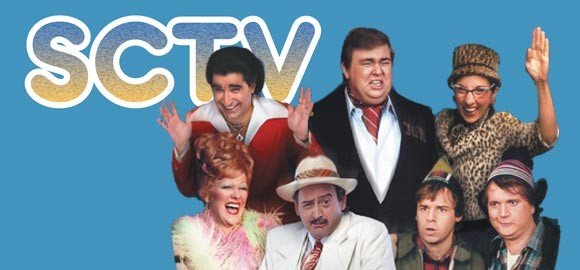
Breaking point: SCTV aired in Canada for four years before NBC decided to pick it up in 1981. In possession of the best comedic team on the continent, the network decided not to let anyone see it. Aired at 12:30 a.m., SCTV was guaranteed an audience made exclusively of drunk college kids and unemployed insomniacs. Emmy voters, recognizing the brilliant offbeat humour, awarded it 15 nominations over its two-year run. Too bad NBC never gave it an opportunity to develop a following.
Consolation prize: SCTV, which stopped playing for good in 1984, is recognized as the finest comedy show to ever come out of Canada, and remains a cult favourite in the U.S. (in fact, classic episodes have been re-aired on NBC in recent years). And the fact that almost every major cast member found success during their post-SCTV careers is tribute to the remarkable talent of this group.
3. The Tragically Hip
This bar-band extraordinaire came roaring out of Kingston, Ontario, in 1989 with their first full-length album, Up to Here, featuring the bluesy masterpiece “New Orleans Is Sinking.†With each subsequent recording, the Hip -- led by eccentric lead singer Gordon Downie -- built on their local legend. The band hammered out a “rootsy†groove while Downie riffed poignantly (“Wheat Kingsâ€) and weirdly (“Poetsâ€) about everything that crossed his fertile mind.
Breaking point: The Hip had reached God-like status in Canada by 1995, and it seemed that the only next logical step was infiltration of the mighty American market. Coming off of their finest album, 1994’s powerhouse Day for Night, the Hip were booked as Saturday Night Live’s musical guest after some arm-twisting by fellow Canuck Dan Ackroyd. The Hip played two of their best all-time tunes, “Grace, Too†and “Nautical Disaster†with characteristic intensity, but to no avail. The album failed to crack even the nether regions of the American charts, and their chance at worldwide success passed.
Consolation prize: The Hip is on the front line of all-time Canadian rock legends -- right up there with more internationally successful artists like Neil Young and Joni Mitchell. Although the quality of the Hip's work has dipped a bit, the band's fearsome back catalogue makes them a great live value. And although they haven’t cracked most of America, the Hip remains a big draw in major American border towns like Detroit and Buffalo.
A deserving actor and a talented director are still waiting for their big American breaks…
Canadian talent
4. Bruce Greenwood
Bruce Greenwood’s acting talent made him a longtime favourite of several Canadian directors, including Atom Egoyan. But the Quebec native spent the better part of his 20s and 30s honing his craft in the theatre and a wide range of TV fare, ranging from St. Elsewhere to Danger Bay. This seemed odd considering his rare combination of acting chops and striking leading-man good looks. Greenwood earned respect, but was generally ignored as possible Hollywood star material.
Breaking point: Greenwood caught a break when he was cast as the rugged hero of Egoyan’s Best Picture-nominated The Sweet Hereafter in 1997. Although the movie was an ensemble piece, Greenwood’s performance stood out among a stellar cast. With a role costarring Ashley Judd in the 1999 hit thriller Double Jeopardy at only 43 years old, he seemed to be on the verge of deserved Hollywood stardom. Instead, he fell back into more tangential roles that he had been more inclined to take in the past.
Consolation prize: While Greenwood hasn’t fulfilled his leading man potential, he has carved out a niche as a well-respected and well-hired character actor in both Canadian and American films. He played prominent supporting roles in major North American box-office hits, including Eight Below (2006), Capote (2005), which won Philip Seymour Hoffman an Oscar, and I, Robot (2004).
5. Atom Egoyan
The Egyptian-born Egoyan was born to Armenian parents who brought him to Western Canada when he was a child. He developed a love for filmmaking and after directing several short films, Egoyan returned to Armenia in 1993 to film Calender, which won him plaudits from art-house aficionados. But it was his next few films, Exotica (1994) and The Sweet Hereafter (1997), a haunting and resonant movie about loss, that illustrated Egoyan as a rare directorial talent.
Breaking point: The Sweet Hereafter was universally lauded and Egoyan’s surprise Oscar nomination for Best Director seemed to herald his arrival into the first rank of the world’s directors. But even with Oscar on board, this great movie couldn’t move past the $3.5-million mark at the box office, and his fine follow up -- Felicia’s Journey in 1999 -- didn’t generate receipts or any fevered excitement. Momentum slowed and the quality of Egoyan’s films began to drift.
Consolation prize: Egoyan remains one of Canada’s most successful and respected directors. He was made an Officer of the Order of Canada in 1999. Despite the uneven nature of his recent work, he still possesses a great deal of talent and is likely to produce more great work, as evidenced by the major worldwide talent (think Kevin Bacon and Colin Firth in 2005’s Where The Truth Lies) still clamouring to work with him.
A sketch-comedy show that never appealed to our American neighbours…
Canadian Comedy
6. The Kids in the Hall
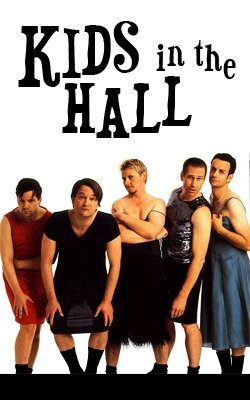
This five-man comedy troupe caught the eye of SNL kingpin Lorne Michaels, who promptly offered to produce a half-hour sketch show devoted to The Kids’ surreal humour. From 1989 to 1995, the odd sketch comedy -- recurring skits pursued themes like crushing people between your fingers and seducing hot white trash via Toronto Maple Leaf hockey games -- struck a chord with young viewers in Canada. Yet, the show was less successful in the United States, where CBS censored the more risqué moments.
Breaking point: In 1996, The Kids produced the full-length feature film Brain Candy, a series of sketches even more brazenly hilarious than their TV show. It seemed possible that Americans, without the skewering shield of the censors, might justly embrace The Kids in the Hall as the hoser heirs to Monty Python. But the movie was just too weird and off-kilter for mainstream American audiences to digest; it grossed only $2.6 million at the box office, with most of that in Canada, and the cast members went their separate ways.
Consolation prize: Like the SCTV cast, each member of The Kids in the Hall found success on his own (though to a lesser degree than their predecessors), from directing to appearing in American sitcoms. Still popular in syndication and adored by each new generation of university students, the cast of The Kids in the Hall embarked on a wildly successful comeback tour in 2000.
Making it big
Canadians are justly mystified as to why these six artists failed to become stars in the United States. But that bewilderment is mitigated by a continued sense of ownership. In an increasingly uniform North American entertainment market, Canadians can appreciate having actors, TV shows and musicians that truly represent the country -- unspoiled and undiscovered by American attention.
Internet site reference: http://ca.askmen.com/daily/austin_150/169_fashion_style.html

Comments
There are 0 comments on this post