
Useful technology knowledge: The origin of plasma TV
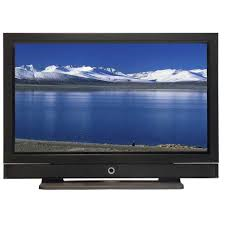


A plasma TV, also known as a plasma display panel (PDP), is a popular design of flat panel display used in large televisions with screen sizes of 30 inches and above. It is the latest innovation in TV display technology. A plasma display panel provides the best flat panel display with high quality images and large screen sizes that can be viewed in any light or environmental condition. Many people consider plasma display a recent invention but the technology can be traced back to 1964 when the first prototype was developed at the University of Illinois.
The plasma technology
Plasma screens are basically made of groups of cells called pixels which are also made up of 3 sub-pixels of three different colours namely green, red, and blue. The technology uses a plasma etching system which is a type of plasma processing mainly used in fabricating integrated circuits. The process involves shooting a gas mixture of glow discharge or plasma towards a sample at very high speeds. The gas, which is in plasma state, reacts with phosphors in the TV panel’s sub-pixels to generate coloured light in red, green or blue. The phosphors used are similar to the ones in traditional Cathode Ray Tube (CRT) TVs and computer monitors. However, with plasma technology, the resulting display has richer and more dynamic colours than CRT monitors or TVs. This is because the system uses advanced electronics to make each individual sub-pixel in the plasma TV to produce billions of distinct colours to give perfect images in exceptional display.
Advantages of plasma over other display technologies
Other commonly used display technologies besides plasma and CRT include organic light emitting diodes or OLED, Digital Light Processing (DLP), and quantum dot display or QLED among others. In comparison with other types of display, plasma has an overall better picture quality since it is capable of generating a deeper black hue making it possible to have a more superior contrast ratio. Plasma televisions can also be viewed from wider angles than the traditional LCDs because plasma images are immune from distortions or degradations at high angles. Motion blurs in plasma televisions are less visible than in other TVs because plasma TVs have faster response times as well as high refresh rates. Overall, plasma televisions have a more superior performance and a better ability to display content in rapid motion.
History of plasma TV technology
Contrary to the popular belief about plasma television being a recent discovery, the first plasma display prototype was invented at the University of Illinois way back in July1964 by the university’s professors Gene Slottow and Donald Bitzer together with a graduate student called Robert Wilson. In the early sixties, the university had its own in-house computer network that used cathode ray television screens as computer monitors. A major problem with CRT screens was that they had to constantly refresh in order to display computer graphics although they worked okay with video and station broadcasts. This led the three inventors, who are currently listed on the plasma patent, to research further on the use of plasma display as a viable alternative to CRT based screens. In July 1964, the team exhibited the first ever plasma display panel that used a single cell. However, it took several decades and emergence of digital technology for a successful plasma television to become a reality. Today’s plasma TVs which use millions of cells to produce crystal clear displays in large sizes have become a reality thanks to the two University of Illinois professors, a graduate student, and a one cell plasma display.

Comments
There are 0 comments on this post