
How Justice Piché and the Gatineau Police used the courtroom to manifest anti-black racism
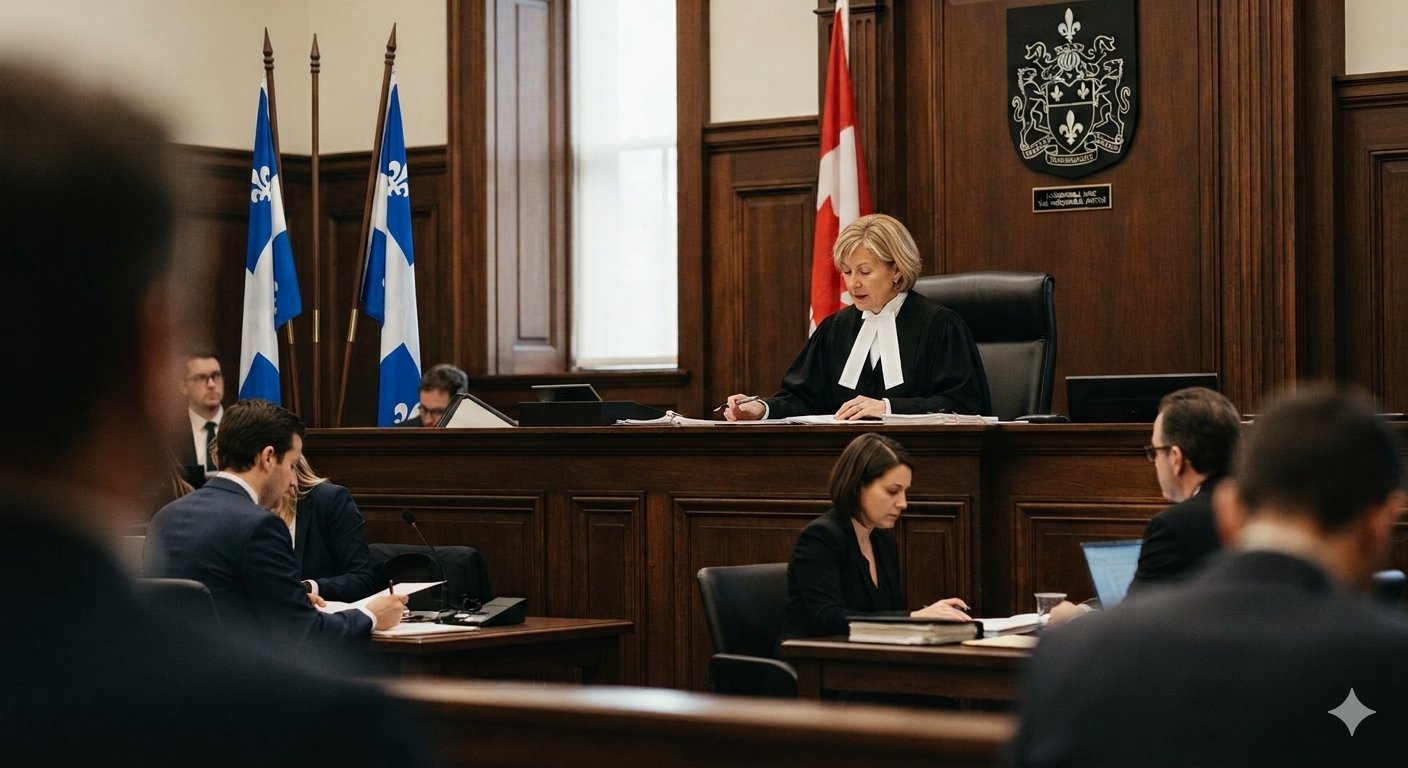

When a Black litigant steps into a Canadian courtroom to challenge systemic discrimination, the stakes extend far beyond the technical merits of a civil file. The forum is structurally intended to serve as a neutral ground where the unequal power dynamics of the outside world are neutralized by the blind application of the law. Yet, when analyzing the intersection of municipal defence strategies and judicial responses in cases alleging racial profiling by the Gatineau Police—specifically within File No. 550-17-012903-231 in the District of Gatineau—critiques frequently point to a harrowing inversion of this ideal. Rather than acting as a refuge, the courtroom can become an active theatre where institutional power is weaponized, and the vulnerability of the marginalized is transformed into an opportunity for state-sanctioned hostility.
The Visual and Emotional Inversion of the Bench
At the core of a just proceeding is the principle of judicial empathy—the capacity of a jurist to understand the structural realities of the litigants appearing before them. When a self-represented Black plaintiff discloses severe economic distress or the psychological toll of prolonged systemic exclusion, it is a moment of profound exposure.
In describing his own experience within this system before the Superior Court of Quebec, Mr. Samuels describes a chilling phenomenon where he observed that his open expression of economic distress was met not with solemnity, but with a visible confidence and satisfaction from both the bench and opposing counsel. To Mr. Samuels, this reaction was not an isolated judicial oversight, but rather a direct extension of the systemic hostility he had previously encountered outside the courtroom. Instead of offering the protections inherently owed to a vulnerable, self-represented litigant under the law, the court appeared to view his financial precarity as a tactical vulnerability—an opening to be exploited in order to systematically dismantle his legal standing and undermine his pursuit of accountability against the state. The courtroom ceased to be an arbiter of human rights and began to function as an enforcement mechanism, where the visible relief of institutional representatives signalled that the system had found its leverage to silence the complainant entirely.
The Complainant as an Effigy for Institutional Defiance
When a legal system systematically strips away procedural fairness from a Black litigant, the actions transcend the boundaries of a single dispute. In these highly charged environments, the individual plaintiff is frequently treated as an effigy—a proxy for all Black individuals who dare to complain about racism within public institutions. The institutional response becomes a calculated demonstration of deterrence. By weaponizing judicial procedures, denying standard evidentiary access, and ignoring established legal protections, state actors send a clear message to racialized communities regarding the consequences of seeking accountability.
This process relies heavily on a perceived sense of impunity. Operating within a closed ecosystem, representatives of the police and the presiding judiciary often appear confident that their actions will remain shielded from meaningful external review. Armed with a favourable, aggressive judgment, municipal forces like the Gatineau Police—represented by defensc counsel Mathieu Daponte—obtain a legal tool that can be used to legitimize future actions and suppress subsequent claims of racial profiling. The thought of successfully blocking a Black person from accessing courts, and punishing them precisely for raising the issue of racism, serves to reinforce an inner-institutional solidarity that stands in direct defiance of the protections guaranteed under the Quebec Charter of Human Rights and Freedoms.
The Deconstruction of Credibility and Administrative Accountability
To achieve a total institutional victory over a civil rights complainant, the legal strategy frequently shifts from defending the specific allegations of profiling to a total assassination of the plaintiff's character. In the judgment rendered on May 28, 2026, this manifested as a blatant disregard for factual accuracy, extending to the point where Justice Catherine Piché went so far as to declare that the appellant was "pretending" to have academic diplomas. This weaponization of a falsehood regarding educational background serves to feed an essentialized stereotype, treating a Black litigant's academic achievements as an intellectual "incongruity" or behavioral indictment. For professional jurists and municipal lawyers, executing such a narrative is remarkably easy when shielded by the inherent authority of the robe and the state's vast resources.
This systematic erasure of a litigant's rights is not merely the product of an isolated actor; it reflects a residual, deeply embedded anti-Black racism that permeates the administrative hierarchy. A judgment that relies on factual misrepresentation and procedural unfairness to protect a police force cannot exist without the tacit or explicit backing of judicial leadership. When the administrative heads of a court preside over what appears to be a targeted institutional vendetta—evidenced by the rush to declare the plaintiff a quarrelsome litigant under Article 55 C.C.P. immediately after Justice Hussain had previously refused to issue such an order—their silence or administrative shielding undermines the integrity of the entire judiciary. By failing to intervene or correct blatant abuses of power, the leadership validates a culture where the vindication of state authority is prioritized over the constitutional rights of the citizens it is sworn to protect.

Comments
There are 0 comments on this post