
Orange juice manufacturers mislead consumers
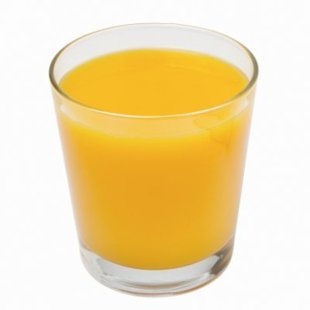
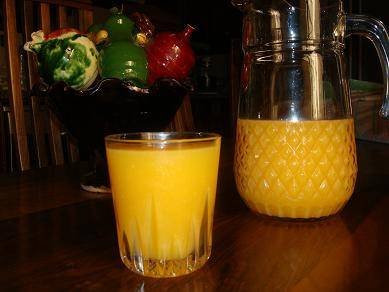


If you buy orange juice at the store, you may lean towards the kind that advertises itself as “100 percent juice†and “not made from concentrateâ€. But have you ever wondered why every glass of it tastes exactly the same? That’s because the flavour of store-bought orange juice has more to do with chemistry than nature. For industrially-produced orange juice, after the oranges are squeezed, the juice is stored in giant holding tanks and the oxygen is removed from them, which allows the liquid to keep for up to a year without spoiling. It also makes the juice completely flavourless. So the industry uses “flavour packs†to re-flavour the juice. According to Food Renegade: “Juice companies therefore hire flavor and fragrance companies ... to engineer flavor packs to add back to the juice to make it taste fresh. Flavor packs aren’t listed as an ingredient on the label because technically they are derived from orange essence and oil. Yet those in the industry will tell you that the flavor packs, whether made for reconstituted or pasteurized orange juice, resemble nothing found in nature.†Dr. Mercola adds: It may come as a surprise to learn that what you find in a carton of 100% pure, not from concentrate orange juice is nothing like what you'd get if you squeezed an orange into a glass in your own kitchen. Instead, many popular orange juice brands use a chemical process to create juice that tastes and smells like oranges! Alissa Hamilton J.D, PhD, a Food and Society Policy Fellow with the Institute for Agriculture and Trade Policy (IATP), explains the ins and outs of mass-produced juice in her book,
If you think about it, if the orange juice was really freshly squeezed and packaged as is, the flavoUr would vary from batch to batch, because not every orange tastes exactly the same. Some are sweeter; others more sour. Also, each juice brand has a particular flavour that is uniquely 'theirs,' and the reason for this may throw you for a loop.
Generally speaking, whenever you buy a beverage that consistently tastes the same, you can be sure it's made using a patented recipe. And that recipe includes added flavours that may or may not fit the definition of natural.
In a previous article, Alissa Hamilton explains how your orange juice is really made:"The technology of choice at the moment is aseptic storage, which involves stripping the juice of oxygen, a process known as "deaeration," so it doesn't oxidize in the million gallon tanks in which it can be kept for upwards of a year.
When the juice is stripped of oxygen it is also stripped of flavour-providing chemicals. Juice companies therefore hire flavour and fragrance companies, the same ones that formulate perfumes for Dior and Calvin Klein, to engineer flavour packs to add back to the juice to make it taste fresh."
The reason you don't see any mention on the label about added flavours is because these flavours are derived from orange essences and oils. However, the appearance of being natural doesn't necessarily mean it is. As Hamilton states:
"[T]hose in the industry will tell you that the flavour packs, whether made for reconstituted or pasteurized orange juice, resemble nothing found in nature."
The juice is also typically designed to appeal to the taste preferences of the market, and will therefore contain different flavour packs or chemicals depending on where it will eventually end up.
internet site reference:
http://articles.mercola.com/sites/articles/archive/2011/08/16/dirty-little-secret-orange-juice-is-artificially-flavored-to-taste-like-oranges.aspx?e_cid=20110816_DNL_art_1

Comments
There are 0 comments on this post