
Alzheimer’s: How to Manage Long-Term Care Settings
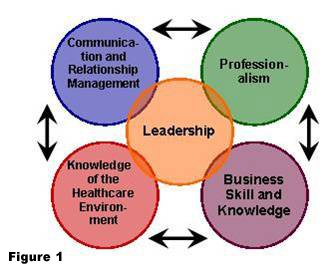


Managing the care of people living with Alzheimer’s and other dementias in long-term care facilities is becoming more difficult every day for several reasons. In years past it was possible and reasonable to house those diagnosed with Alzheimer’s with the general population and keep a close eye to prevent them from walking out the door. As more and more people with Alzheimer’s have been admitted and the demand for this specialized care has increased, it has become safer to accommodate them in a special unit where exits are kept locked to protect the residents. Even the most experienced and talented administrator can feel overwhelmed and lost in the sea of demands of maintaining a minimum quality of care.
The ongoing daily demands of providing care for people living with Alzheimer’s can also affect the ability of the nursing workforce to function effectively. A weakened immune system can leave them sick or unable to catch up on much-needed sleep. And the constant need to run from one resident’s needs to another leaves little time to eat or take scheduled breaks. The dedication is there, but the demands are often simply too great.
In order to provide a minimum of care for residents and at the same time monitor the nursing staff for sickness, burnout, and depression, an administrator must be vigilant in regard to their workforce. It is estimated that vision is 1% and alignment is 99% of the task (Rockefeller Habits). These are elements of achieving alignment:
· Align and drive performance of the management team. As goes the senior team, so goes the rest of the organization.
· Align middle management. Focus on a monthly implementation session in order to work closely with the middle management team.
· Align the workforce. Everyone must be heading in the same direction and know that that direction leads to paying attention to framework, language, and routines that work.
· Empower the team. Encourage every employee to make the kind of operating decisions that used to be reserved for department heads by sharing information, offering training, and providing employees ownership as important team members.
· An Alzheimer’s coach. This is a key management person who is trained to manage and maintain teams, align training with needs, coordinate interpersonal healthcare teams to lower costs and increase team performance, and much more. An Alzheimer’s Coach is the hub of the healthcare wheel.
No management team needs to stand alone and wonder every time government reimbursement rates are adjusted down yet one more time how it will affect the healthcare team and the level of care for residents. Few individuals are born with natural leadership skills; most have to acquire those skills on the job and in the classroom setting.
Reference:
Rockefeller Habits, retrieved from http://www.catalystconsultantsllc.com/wp-content/uploads/rhw_two-day_0601.pdf
About the writer:
E. G. Lord, former president of the Maine Gerontological Society in the State of Maine, currently is President and Professional Alzheimer’s Coach offering Alzheimer’s coaching and consulting through businesses at Remembering4You.com, and is a professor of Organizational Behaviour at several universities.
Dr. Lord has a Doctorate of Management in Organizational Leadership from the University of Phoenix. Her 10-year experience as a family caregiver originated with her husband who was diagnosed with Alzheimer’s in Jan. 2003. In that decade she has seen a daily influx of new Alzheimer’s cases. Dr. Lord realized there is an urgent need for a change in perspective with regards to providing individual and institutional care for individuals living with Alzheimer’s. She is married to Maj. Larry S. Potter, USAF retired, and lives in Mapleton, Maine. Dr. Lord is available for presentations, training, and Alzheimer’s coaching/consulting.

Comments
There are 0 comments on this post