
Planking for Beginners
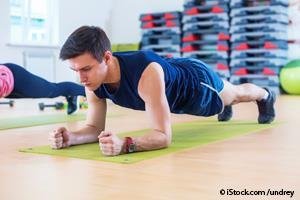
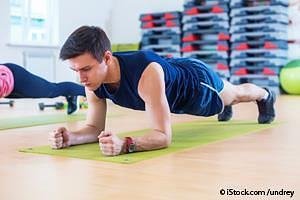


Exercise is one of the core
pillars of optimal health. It is an essential tool in your arsenal of
lifestyle choices if you want to reduce or eliminate medication,
improve your strength and flexibility or enjoy your everyday life with
more energy and vitality. It is relatively impossible to achieve optimal health without
exercise. Your body was designed for movement and it's never too late
to get started. No matter how old you are or how out of shape you think
you've become, today is the day you can start to improve your future. Of course, if you have an underlying medical condition, have an
injury or haven't exercised in a long time, you'll want to seek medical
advice from your physician. You may also want to explore a wide variety of different types of exercise to maximize your health benefits. These include strength training, core training, burst training and cardiovascular work. Most people think of just cardiovascular exercises when they consider a workout program, but strength, core and burst training are just as important to your overall health. In the video below, Jill Rodriguez, personal trainer at Mercola.com demonstrates planks for beginners. But first let's talk about why core strength is important and how to make it fun. Core strength
is so much more than strengthening your abs or having a flat stomach.
Your core muscles, those around the middle of your body, are like a
link in a chain of muscles. If you've experienced back pain in the past, you know that movement
in your arms or legs creates a ripple effect that's felt in your back
as well. Almost any movement you make requires the activation of your
core muscles. This means your core muscles don't just include your abdominal
muscles, but also those that cover your sides and your back. Pelvic
muscles and even your hip muscles all work together to keep you
upright, standing straight and pain-free.1 These muscles work together to provide your spine stability and strength. By definition, your spine is unstable. The small bones in your back
allow your body to twist, turn and bend. However, without strong
muscles to maintain an upright posture,
this flexibility becomes a liability and not an asset. Acting almost
like a corset, these muscles protect your back from injury and chronic
pain.2 Weak core muscles will also weaken the actions of your arms and
legs. No matter how much strength training you do to improve the power
in your legs or the ability of your arms to lift, with a weak core
foundation, you won't achieve your best results. Taken separately, there are many different benefits to improving
your core strength. Many of these fall under one of five different
categories. • Strength and Flexibility. The strength and stability of your back is the foundation of your ability to move and function every day.
Although opposite ends of muscle function, both are necessary to keep
you upright and stable, even over the bumpiest of terrains. Imagine
what riding in a roller coaster would be like if your back and core
muscles didn't keep your spine stable. • Reduce Back Pain. The source of your back pain
just may be a poor balance of strength in your core muscles or weak
core muscles that cannot adequately support your spine and body.
Studies support the recommendations to improve core strength in order
to prevent or treat back pain.3,4,5 • Improve Balance, Posture and Stability. Poor posture
is one trigger for both upper and lower back pain. Improving your core
strength may improve your posture by giving you the strength to stand
and walk correctly. This strength also translates to better balance and greater stability, a necessary ability as you grow older. • Improve Your Ability to Perform Daily Tasks Safely. Core strength improves your ability to lift, turn, twist, sit, stand and walk. Sitting
at your desk, working at your computer, making phone calls and doing
paperwork, can all make your back muscles stiff and sore if you don't
have the strength to sit with good posture.6 Daily tasks — such as carrying groceries, walking on icy sidewalks
or lifting children — are less likely to trigger an injury when your
core is strong.7
You'll be more likely to regain your balance and reduce the potential
for overtaxing accessory muscles your body engages when your core is
weak. • Better Athletic Performance. With
strong core muscles, the recreational and athletic activities you
enjoy become easier. Whether it's golf, jogging, rowing, fishing,
bowling, biking or baseball, these activities are powered by a strong
set of core muscles. Physical fitness and activity are important to both your overall
health and prevention of several health conditions. There is a large
body of evidence that much of the burden of ill health rests at the
door of a sedentary lifestyle.8 This ill-health is both physical and mental. Exercise and being physically fit reduces your stress level, improves your sleep, increases your energy level and reduces symptoms of anxiety and depression.9 All of these factors improve your self-esteem and make you feel proud of how you both look and feel about yourself. While these factors are important to your mental health, exercise
also has a significant impact on physical factors that play a role in
your ability to perform your daily activities and in reducing your
experience with pain and disease. Being physically fit promotes maintenance of a healthy weight, which in turns reduces your risk for type 2 diabetes, certain cancers, cardiovascular disease and stroke.10 Other physical conditions affected positively by exercise include a reduced risk of osteoporosis.11 One way to test your level of fitness is by using a plank test. If
you can hold a standard abdominal plank, described below, for two
minutes, then your overall physical fitness is off to a great start. You
may feel as if your current fitness level is not represented well if
you can't hold the plank, but it could be your core strength is a
problem and not your cardiovascular or extremity strength. However, since core strength is so integral to your overall fitness, it's important you incorporate planks in your fitness routine.
If physical fitness hasn't been a priority or you find it dull and
boring, you may benefit from some ideas on how to make it fun. Sometimes you just need to make exercise fun in order to make it a
habit in your life. Your first step is to stop negative self-talk, or
the little voice in your head that repeatedly says, "I hate this!" The
more you say it, the more likely it is you'll believe it. Find a
partner you can exercise with a couple times a week. Look for someone
motivated to making changes in their life and commit to each other to
show up and share your results. Set a challenge for yourself and a reward when you achieve it. For
instance, when you can do a two-minute abdominal plank, you'll buy
yourself a new MP3 player to listen to music while you're out walking. Music
is an important motivator. Think about how some tunes make you just
want to get up and dance and others can make you feel sad. Choose music that energizes you and keeps you motivated to move
forward. Music is also a great distraction when you're pushing to
maintain your plank for those last 30 seconds. Record your improvements as you progress. It can be difficult to see
improvements from day to day, but when you compare how long you've
held a plank between the first day of the month to the last day of the
month, it can motivate you to continue your work toward greater core
strength. You never "arrive" at a fitness level where you can stop and
rest on your laurels, but you do experience benefits and results from
the first week you start. Rodriguez says:12 "Planks are a great alternative to doing crunches. It improves
the strength of your core musculature; of your abdominals, lower back,
hips and shoulders. And it also improves posture and balance." In this eight-minute video,
Rodriguez demonstrates plank positions you can use as a beginner, and
includes variations to help you continue to improve your strength and
balance. Remember the idea is to gently stress your muscles and
connective tissue to improve your strength. This requires patience and
time. While you will see results within days, don't be tempted to increase
your level quickly or you may suffer an injury. Each of these
maneuvers can either be held for 30 to 60 seconds, or you may choose to
do 20 repetitions. Here are several beginner plank maneuvers that work
different muscle groups: • Basic Plank. Stand
approximately 3 feet from a wall. Press your hands into the wall,
elbows straight, weight on your toes and hold for 30 seconds. You may
also do this on the floor with your hands flat to the floor and knees
bent. • Up Down Plank. Start
on the floor on your knees in straight-arm position. Next, move to
your forearms, hold for two to three seconds and move back to a
straight arm position. Up and down is one repetition • Planks with Leg Raises. Start
on the floor with your knees bent and in the straight-arm position.
Pull one leg up toward the ceiling as if a string were pulling your leg
from behind the knee. Hold for one or two seconds and bring it back
down. Repeat with the other leg. This is one repetition. • Plank with Knee Crunch. Place
your hands flat on a chair or bench, placing your body in the plank
position, bearing your weight on your toes. Bring your right knee to
your right elbow and return to the start position. Repeat with your
left leg. This is one repetition. Rodriguez warns all planks must apply postural rules to reduce injury. These include: It may help to do your planks in front of a mirror, or ask a friend
to watch and give you feedback about your position, or film yourself
with your phone or camera to evaluate your plank position. When done
incorrectly you may put more stress on your lower back and may not
achieve the results you desire. Three of the most common mistakes happen when your hips are either
lower or higher than they should be, or when you look straight ahead
instead of 8 to 12 inches in front of you. Each of these changes in
position places strain on your back or your shoulders, making the
exercise much less effective. Remember, as you start, it may not look perfect. You just have to
work to make it look better than it did the last time. With each new
session you'll improve both your form and the benefits you experience.
Practice patience and you'll be rewarded.Why Core Strength Is so Important
Functional Benefits of Core Strength
An Overall Test of Your Fitness and Why It's Important
Make It Fun
Basic Plank Maneuvers
Don't Make These Common Mistakes
Get FREE Access to My Top Health and Fitness Tips
If you're not yet subscribed to my FREE newsletter, here's your chance. Millions of people are already onboard, and they can tell you how this newsletter has been absolutely instrumental in helping them reach their health and fitness goals. Don't miss out on this opportunity to improve your well-being! When you subscribe I guarantee you will:
- Be the first to hear about groundbreaking fitness news from health experts from all over the world
- Discover new exercise techniques and revolutionary fitness strategies that you can incorporate into your daily routine
- Learn to separate credible advice from bogus and potentially dangerous gimmicks that do nothing for your well-being
- Save money that you would otherwise spend on expensive pharmaceutical drugs and conventional treatment methods
- Gain unlimited access to my E-books that tackle a diverse range of topics that can help improve your overall health
Read More..
Comments
There are 0 comments on this post