
Ottawa shootings point to continued failures of Carney government
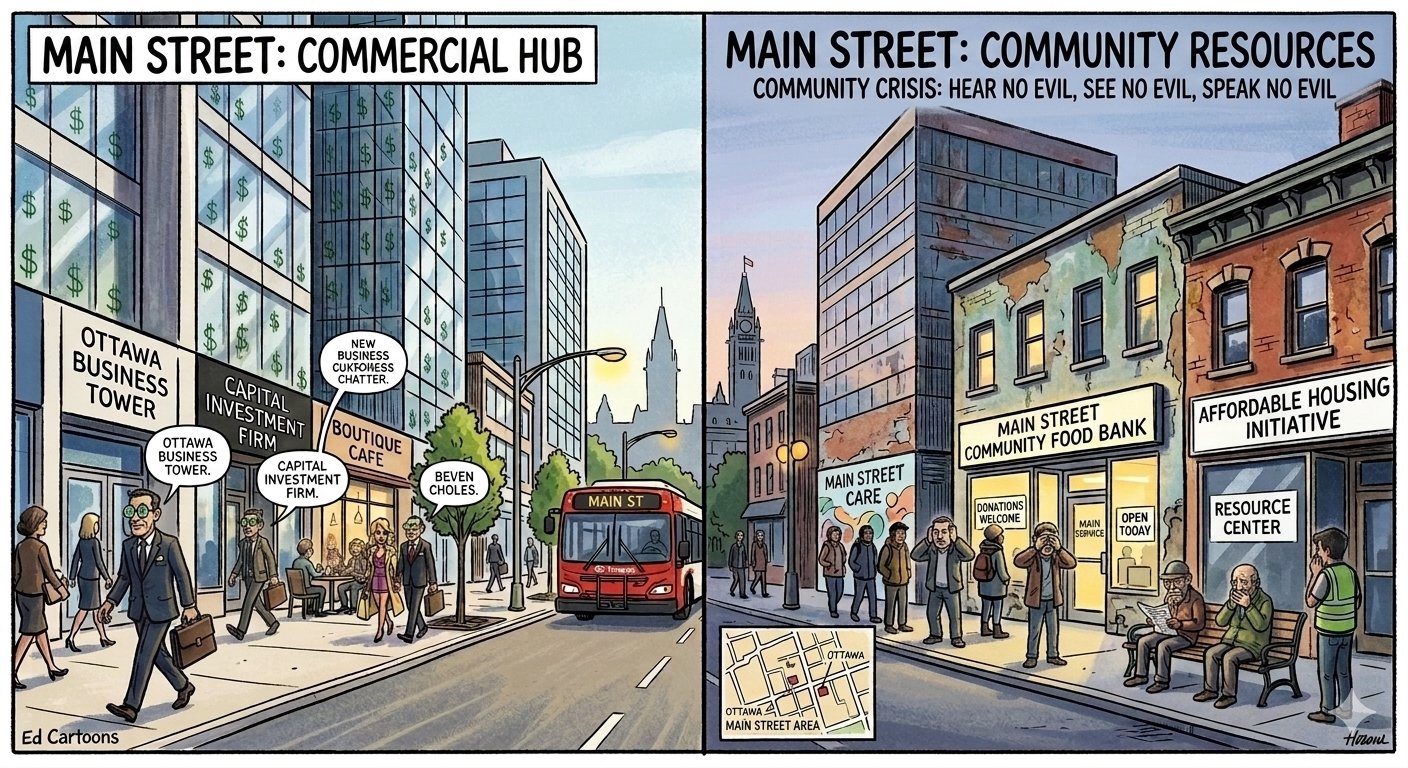


The early-morning gunfire that shattered the quiet of Ottawa’s east-end Vanier neighbourhood on August 5, 2026, leaving a teenage boy with serious gunshot wounds, should be viewed as a stark and urgent warning for the federal government. Yet, if history is any indication, the sirens on McArthur Avenue will likely be treated as just another localised policing matter rather than what they truly are: a grim symptom of a deeper, systemic rot. This shooting is not an isolated anomaly. Just weeks prior, a chaotic daytime confrontation on Merivale Road escalated into shots being fired directly into a moving vehicle, injuring a passenger. A month before that, residents on Fine Crescent in Pineview woke up to the sound of targeted gunfire striking a residential home.
Our streets are witnessing an unmistakable, accelerating surge in community violence. These events are not random acts of malice, nor can they be solved simply by pouring more resources into reactive policing. They are the predictable, downstream consequences of a federal government that has systematically failed to redress the compounding crises of structural poverty, acute housing insecurity, and a corrosive social despair gripping modern Canada. While ordinary Canadians struggle to manage basic survival, the administration of Prime Minister Mark Carney remains preoccupied with top-down, central planning, seemingly blind to the unravelling fabric of the very society they govern.
The Illusion of Macro-Development
The disconnect between official Ottawa and the reality of Canadian life has never been more pronounced. Step inside the halls of power, and the conversation is dominated by abstract economic modelling, long-term military jet procurement contracts, and sprawling, headline-grabbing "nation-building" infrastructure projects. The Carney government eagerly contemplates spending tens of billions of dollars on capital-intensive ventures, believing that economic health can be measured entirely by gross domestic product (GDP) metrics and corporate ledger balances.
Yet, this administration has fundamentally lost sight of a foundational truth: real nation-building does not begin with steel, concrete, or mass-procurement contracts. It begins with meeting the fundamental needs of the people who live here. A country can build all the transit corridors and procure all the defence machinery it wants, but if its citizens cannot afford groceries, if its youth are falling into the margins of criminal gang structures out of sheer economic hopelessness, and if its neighbourhoods are unsafe after dark, then that nation is not being built—it is hollowed out.
The current federal framework treats the domestic economy like an abstract puzzle to be assembled from the centre out. In this technocratic view, social stability is viewed as a natural byproduct of macro-economic engineering. The tragedy of the Carney era is the stubborn refusal to recognise that when you neglect the human infrastructure of a country, the physical infrastructure eventually collapses under the weight of societal decay.
The Historical Contrast: The Legacy of Tommy Douglas
To understand how far the current government has strayed from the best traditions of Canadian statecraft, one need only look back to the birth of the modern social safety net. When Tommy Douglas championed and fought for Canada’s universal healthcare system, his leadership recognised an exact and enduring principle: a nation’s strength is measured by the health, stability, and dignity of its population, not by the size of its industrial expenditures or corporate subsidies.
Douglas understood that true security is holistic. You cannot have a productive economy without a healthy workforce, and you cannot have a safe society without a baseline of human dignity. For the early architects of Canadian social democracy, public investment was meant to insulate the individual from the predatory whims of unregulated markets and structural poverty.
His legacy stands in sharp and unflattering contrast to the current paradigm in Ottawa. Under the Carney administration, human infrastructure has been entirely sidelined in favour of an elite consensus that prioritises global market integration over domestic well-being. Where Douglas saw citizens worthy of protection, the modern technocrat sees economic units to be shuffled across a spreadsheet. The universal social programmes that once bound Canadians together are fraying from underfunding and neglect, leaving a fractured populace to navigate an increasingly hostile economic landscape alone.
The Growing Crisis of Poverty and Homelessness
Today, the Carney government demonstrates a profound and disqualifying lack of focus on the structural root causes of domestic poverty. One need look no further than Canada’s exponentially growing homeless populations and structurally overburdened municipal shelter systems to see the tangible results of federal neglect. In cities across the country, tent encampments have shifted from temporary anomalies to permanent features of the urban landscape.
The math governing Canadian life no longer adds up for millions of people. While the federal government points to selective employment statistics, the reality on the ground is an epidemic of underemployment, stagnant wages, and an astronomical cost of living that has pushed the working class to the brink of ruin. When individuals are pushed out of the formal economy, when housing becomes a luxury asset rather than a basic human right, social cohesion is the first casualty.
The erosion of local social safety nets has left municipal governments to manage an unprecedented humanitarian crisis with entirely inadequate tools. Emergency shelters are permanently operating at maximum capacity, forcing frontline workers to turn away families and vulnerable youth into the cold. This systemic abandonment creates a vacuum. When the state abdicates its responsibility to provide safety, stability, and a path forward, criminal elements step in to exploit the vulnerable. The youth running the streets of Ottawa's east end are often the direct products of neighbourhoods that have been economically abandoned by their own government.
Reckless Immigration and the Strain on Cohesion
Compounding this widespread desperation are reckless, poorly managed immigration targets. Immigration has historically been a source of great strength for Canada, built on a carefully managed system that balanced economic needs with the capacity of domestic infrastructure to welcome and integrate newcomers with dignity. The Carney government, however, has abandoned this historic balance in favour of high-volume influxes designed primarily to suppress wage growth for corporate interests and artificially inflate aggregate GDP numbers.
Rather than promoting sustainable, integrated growth, these untargeted targets have severely strained municipal infrastructure, inflated urban housing markets entirely beyond the reach of both working-class Canadians and newcomers alike, and destabilised Canadian social cohesion. When a school district, a hospital network, or a municipal transit system is forced to absorb thousands of new users without a corresponding expansion of federal funding, the quality of care and service plummets for everyone.
The human cost of this policy is devastating. Newcomers arrive under the promise of a better life, only to find themselves trapped in substandard, predatory housing arrangements, working survival jobs that do not match their credentials, and competing for scarce social services. When public systems lack the capacity to integrate people properly, it breeds mutual alienation, fuels resentment, and deepens communal despair. The social friction points currently playing out in municipal corridors are the direct result of a federal policy that treats human beings as disposable inputs for macro-economic calculations.
The Managerial State and Predatory Overreach
Critics increasingly argue that this systemic unravelling is not merely accidental, nor is it a product of simple incompetence. Instead, a more unsettling pattern emerges: this chaos operates as a functional feature of a larger, managerial design. By eroding long-standing social stability and weakening the traditional institutions of family, community, and local economy, a state of perpetual crisis is manufactured.
Under this paradigm, predatory elements within Canada's sprawling bureaucratic and crown apparatus find repeated opportunities to expand their regulatory overreach. When communities are strong, self-reliant, and economically secure, they require very little top-down intervention. However, when society is atomised, fearful, and economically dependent, the state can step in to manage subsequent crises with top-down enforcement rather than genuine community care.
We see this in the way the federal government responds to rising crime. Rather than addressing the economic deprivation driving youth toward gangs, Ottawa opts for superficial announcements, expanded surveillance frameworks, and increased bureaucratic oversight. The goal of the managerial state is not to solve the problem—because solving the problem would mean reducing the size and scope of the bureaucracy—but rather to manage the decline in a way that consolidates its own institutional power.
A Call for a Total Inversion of Priorities
If Ottawa wishes to curb the rising tide of violence and restore safety to municipal neighbourhoods, it must completely invert its political priorities. The current approach is entirely unsustainable. Gun control measures, visual public relations campaigns, and corporate infrastructure announcements are hollow band-aids on a bleeding society. They do nothing to mend the broken lives and shattered communities that lie just beneath the surface of our capital city.
It is time for the Carney government to abandon its preoccupation with macro-construction and corporate-driven economic modelling. Canada must return to the foundational lesson of Canadian social democracy: a safe, prosperous country is built by investing in the welfare, security, and dignity of its people first.
Investing in people means building deeply affordable public housing, expanding mental health support systems, funding community-led youth mentorship initiatives, and ensuring that the basic cost of living is within reach for the average family. It means designing an immigration system that prioritises human dignity and infrastructural capacity over corporate profits. Most importantly, it means recognising that the true wealth of Canada is found not in the vaults of our financial centres or the procurement offices of national defence, but in the safety, peace, and stability of our local neighbourhoods. Until the federal government learns this lesson, the gunfire echoing through Ottawa will continue to grow louder.
Read more:
- Teenager treated for serious gunshot wounds after early-morning incident on McArthur Avenue in Vanier (August 5, 2026). CTV News Ottawa
- Shots fired into a moving vehicle during an altercation on Merivale Road (July 4, 2026). Ottawa Police Service Media Release
- Targeted early-morning gunfire strikes a residential home on Fine Crescent in Pineview (June 10, 2026). CityNews Ottawa

Comments
There are 0 comments on this post