
Why Canada needs to develop the Superpower capacity to defeat a U.S. military attack


To avoid being reduced to an economic vassal state, Ottawa must abandon the comfort of the American umbrella, embrace decentralized deterrence, and ground national security in community health and Indigenous territorial sovereignty.
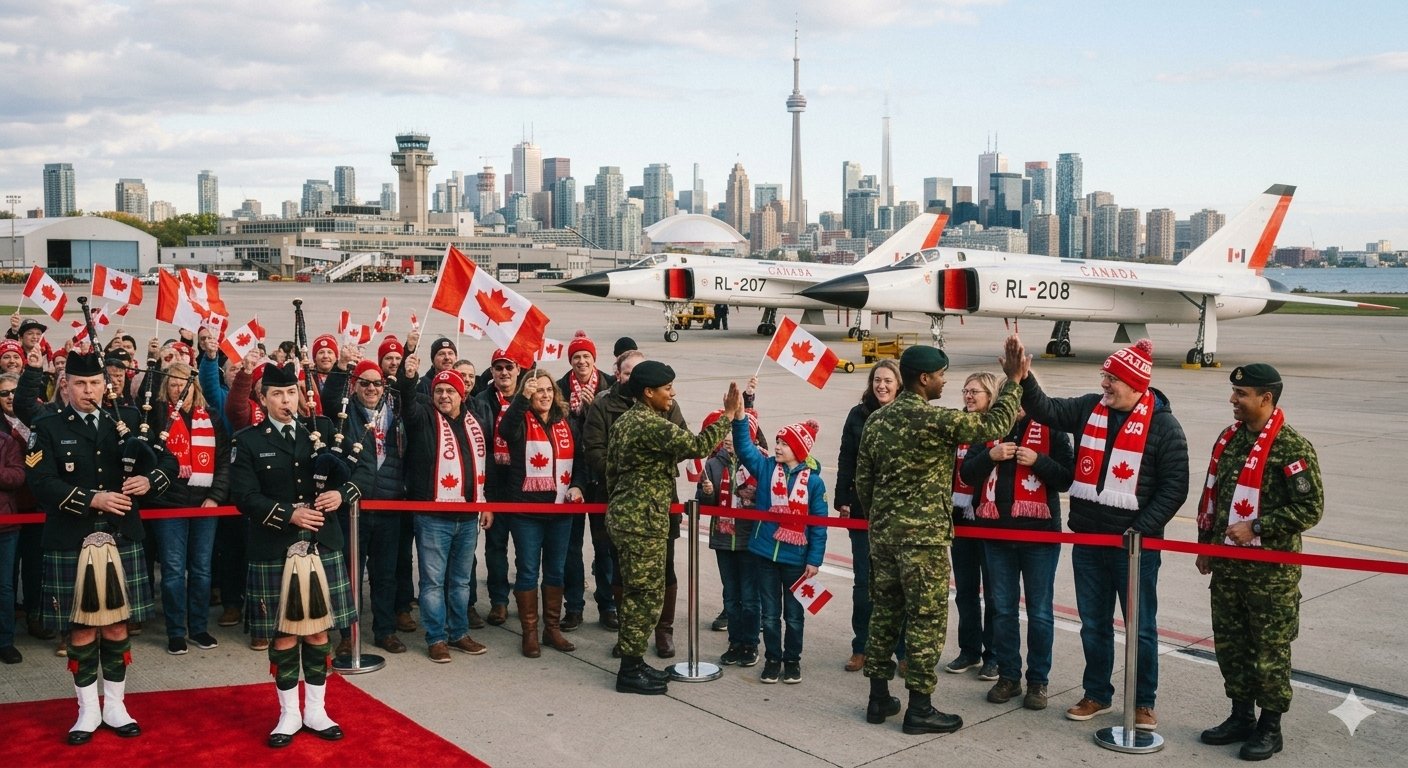
For generations, the cornerstone of Canadian foreign policy was an unwritten pact of proximity: Washington provided the continental shield, Ottawa maintained a modest conventional force, and both capitals operated within a predictable architecture of shared democratic norms. That architecture has collapsed. In an era dominated by hyper-nationalist rhetoric, trade ultimatums, and casual musings about northern annexation, Canada must confront an existential reality. Economic sovereignty cannot survive without credible hard power. If Ottawa cannot establish the physical leverage to defend its own territory, Canadian negotiators will inevitably be reduced to what Mark Carney has warned is the permanent subservience of a "vassal state".
Power respects power. A transactional Washington does not adjust its posture out of deference to international law or nostalgic sentiment; it calculates risks, costs, and counterweights. To establish an unyielding deterrent, Canada must break with outdated binational dependencies and construct a comprehensive, six-layer total-defence web—a decentralized force of roughly one million organized defenders.
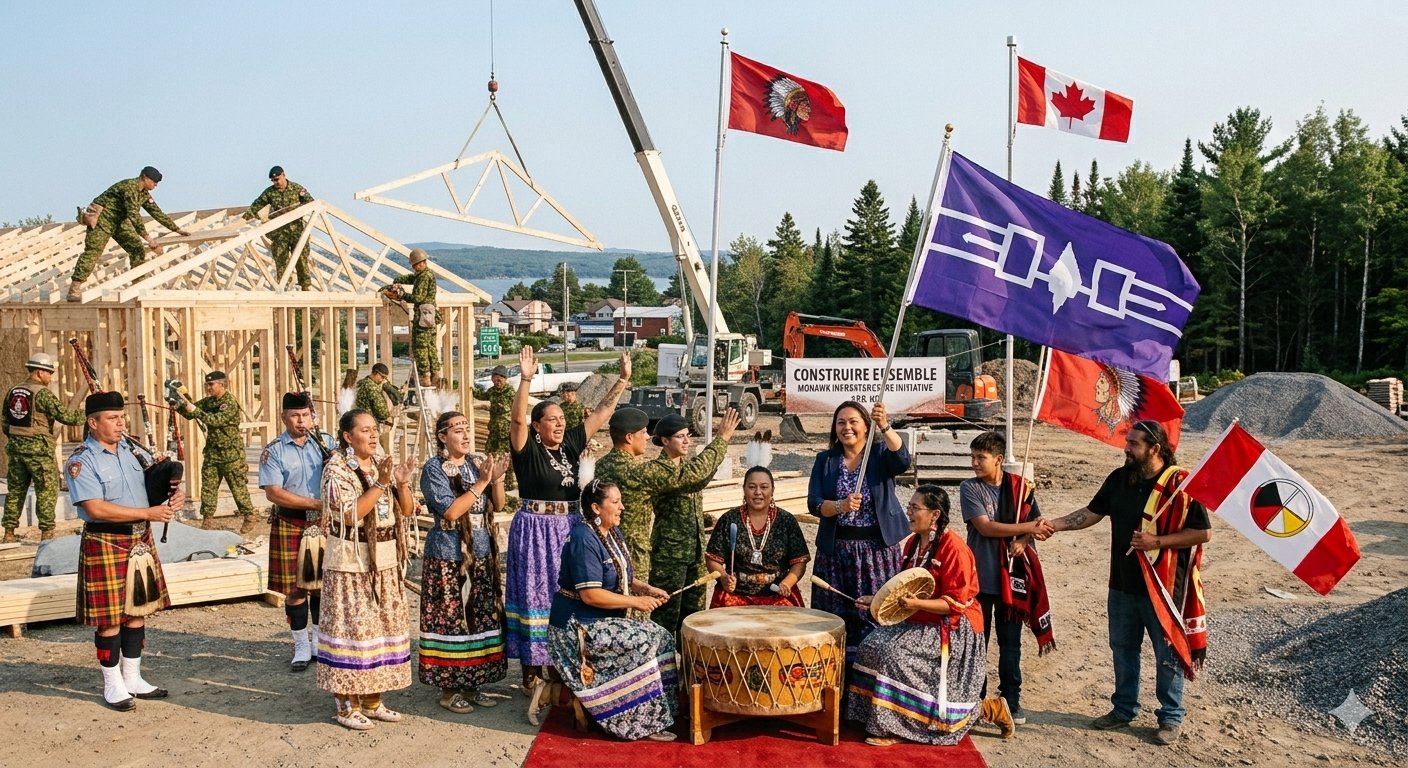
Central to this structural transformation is the Indigenous Sovereign Shield, an operational layer that bridges territorial defence with long-overdue restorative justice. Modern deterrence cannot be achieved through top-down mandates from Ottawa alone. By recognizing and equipping First Nations, Inuit, and Métis communities to exercise their inherent rights across their traditional lands, Canada activates an incomparable tactical advantage: generational knowledge of terrain, waterways, and Arctic corridors capable of denying an aggressor mobility through asymmetric attrition.
Crucially, this indigenous defence layer links operational preparedness directly to comprehensive community resilience. Military readiness is impossible in regions burdened by chronic underfunding, housing instability, or inadequate public health infrastructure. The Indigenous Sovereign Shield establishes integrated healthcare, trauma-informed care networks, and local food and water security protocols as primary pillars of national defence. In this framework, building modern medical facilities, training local medical responders, and ensuring community well-being are not merely social policies—they are the vital, non-negotiable requirements of an unbroken territorial defence.
I. The Illusion of the Shield
The global geopolitical landscape has fundamentally shifted, and with it, Canada’s longest-held security assumption has shattered. For over a century, Canadian defence policy rested on a comfortable premise: that our geographic proximity to the United States was our ultimate shield, and that our shared democratic values guaranteed our sovereignty. But we are no longer living in that world. In the current era of a transactional, hyper-nationalistic Washington, Ottawa must confront an uncomfortable, seemingly radical truth: Canada must develop a formidable military capability, not only to defend itself from a physical invasion, but to secure the basic leverage required to negotiate trade deals that do not reduce us to the status of a permanent economic protectorate.
To many, the notion of a U.S. military threat sounds like far-fetched fiction, the stuff of late-night alternative history forums. But as analysts at The Conversation observe, the risk of asymmetric coercion is no longer purely hypothetical. As the Trump administration actively deploys "MAGA" propaganda to condition the American electorate for an annexation of Canada "out of necessity"—even circulating disturbing maps depicting Canada as a conquered 51st state—the geopolitical reality demands cold-blooded realism.
These information campaigns mimic classical, dangerous 20th-century pre-war psychological conditioning, attempting to frame a peaceful neighbour as an adversary to lower the domestic barrier to aggression. Boundaries, trade agreements, and territorial sovereignty are no longer sacrosanct to an American political class that increasingly views foreign policy through a lens of raw leverage. Security dependency breeds political servitude; without hard power, our economic autonomy is an illusion.
The core lesson of this brave new world has been laid bare by Washington’s interactions with Beijing. China has effectively proven that modern America is no longer a society that leads from a sense of moral superiority or an enlightened system of values. The days of the United States acting as the principled "leader of the free world" are over. Instead, American leadership now operates on a much older, darker principle: it only respects other societies based upon the extent to which it regards them as having a formidable military capacity.
Power respects power. Conversely, a nation that relies purely on its "moral standing" while neglecting its hard power is viewed by the current American political elite not as a noble ally, but as a vulnerable dependent ripe for exploitation. When Washington looks across its northern border, it must see an entity capable of inflicting unacceptable costs, not an economic territory to be absorbed at zero political or military expense.
II. Dismantling the Architecture of Dependency
To escape the gravitational pull of Washington’s sphere of influence, Canada must first dismantle the structural mechanisms that allow American leaders to claim they "protect" us. The fundamental prerequisite for true sovereignty is the outright rejection of NORAD and its unified command structure as it currently stands. For decades, NORAD has served as a rhetorical weapon for Washington, allowing successive U.S. presidents to depict Canada as a security parasite.
Walking away from this integrated binational command forces a hard, necessary recalibration. It permanently disables American leverage and shifts Canada from an American protectorate to a self-determined power capable of managing its own domain. As long as our aerospace and maritime defence are fundamentally tethered to Colorado Springs, Canada’s political independence remains compromised.
In place of NORAD, Canada must move away from defensive asymmetric models that assume we must simply hide in the bush while our centralized infrastructure is obliterated. Rumoured scenarios of passive territorial defence lack true deterrent focus; they are blueprints for a managed surrender, assuming Canada must absorb the blow while America remains structurally untouched.
Instead, Canada must adopt a doctrine of decentralized, quasi-symmetrical warfare—countervailing an enormous, unified military monolith with a very nimble, highly distributed structure capable of autonomous strategic decision-making even in the event of the destruction of a centralized command based in Ottawa.
This doctrine draws directly from the adaptive, small-unit tactics of Canadian military history, while leveraging the unique demographic reality of modern Canadian multiculturalism. A diverse, multilingual population provides an unparalleled pool of talent for global intelligence networks, information systems, and community-entrenched cells capable of operating independently across any theatre. By ensuring every regional unit has the authority and capability to make independent strategic decisions, Canada removes the vulnerabilities inherent to a massive, top-heavy military opponent. If there is no central command node to decapitate, the enemy is forced to fight a war against a thousand independent, self-directed cells.
III. The Six-Layer Web of Defence
To achieve true deterrence, Canada's territorial defence must consist of an intricate, six-layer web of defence totaling roughly one million personnel. This total-defence society would be structured across overlapping spheres of authority designed to make a swift or bloodless occupation a structural impossibility:
- The Core Spine: The first layer consists of the professional Canadian Armed Forces and its primary reserves. This force serves as the high-tech, strategic backbone of the defence web, managing advanced anti-access/area-denial (A2/AD) missile systems, cyber warfare operations, and heavy strategic logistics, providing the necessary conventional anchoring for the broader decentralized forces.
- The Provincial Bastions: The second layer establishes newly established provincial militias operating directly under the authority of each respective provincial government. This ensures that regional defence cannot be decapitated by a strike on the federal capital. Tailored to their unique geography—whether the dense forests of Ontario, the vast prairies, or the rugged terrain of British Columbia—these units turn every province into an independent, heavily armed fortress.
- The Civic Shield: The third layer deploys the Canadian People’s Corps, managed at the municipal level by every city and town. These civic units are deeply embedded within local communities, responsible for securing local critical infrastructure, water supplies, localized communication grids, and urban sectors.
- The Grassroots Edge: The fourth layer forms community-based Crown Militias led by Canadian veterans, citizens with verified foreign military backgrounds, and energetic reserve personnel. These highly flexible units are built to motivate and mobilize specific diaspora and local communities into autonomous, self-sustaining patriot defence cells, turning Canada's diverse demographic landscape into an impenetrable network of grassroots resistance.
- The Indigenous Sovereign Shield: The critical fifth layer empowers all Indigenous nations to rejuvenate their traditional-knowledge military defence capabilities. By being fully armed and integrated into their own territorial defence systems, First Nations, Métis, and Inuit communities can use their absolute, unmatched generational knowledge of the land to completely swallow and defeat an advancing military force—mirroring the decentralized tactical supremacy that defeated the United States in Vietnam. Crucially, this layer recognizes that military readiness requires profound social healing. True preparedness within this layer is fundamentally guaranteed by ensuring robust, unyielding support for the holistic health, healthcare infrastructure, and community well-being of Indigenous peoples.
- The Forward Deterrent: The sixth and final layer introduces a revolutionary forward deterrent: replacing our integrated American ties with formal European Union, Commonwealth, and Francophonie Defence Pacts. Rather than waiting to absorb an invasion, permanent international troops stationed across Canadian territory from these allied blocs would be legally bound to a forward-leaning posture. An American aggression would no longer be an isolated border skirmish; it would instantly trigger an international crisis involving global partners, creating an immediate international tripwire system on Canadian soil.
IV. The Legal Architecture of Total Defence: Navigating the Federal-Provincial Fracture
The primary structural vulnerability of any centralized state facing a near-peer or superior military threat is the illusion of a single point of failure. If an adversary can decapitate the federal executive in Ottawa, the national will to resist is theoretically broken. To prevent this, Canada's six-layer defence web utilizes a radical, legally decentralized framework that distributes command authority directly down to provincial Premiers, municipal councils, and Indigenous sovereign leadership, ensuring that the legal continuity of the state survives the physical destruction of the national capital.
Under the current statutory architecture of the Emergencies Act and the National Defence Act, military command flows strictly from the federal Cabinet down through the Chief of the Defence Staff. However, in an existential total-defence scenario, this top-heavy command line is deliberately augmented by provincial emergency legislation and recognized treaty sovereignty. By invoking provincial Emergency Management Acts simultaneously across all ten provinces, Premiers possess the statutory authority to mobilize and command localized civil defence forces independent of federal infrastructure.
The interaction between these layers is governed by three precise operational parameters:
- Autonomous Regional Succession: Should communication with the federal Cabinet be severed or compromised by cyber warfare, provincial Premiers automatically assume supreme command over all military and paramilitary personnel within their borders. The newly formed provincial militias operate as distinct legal entities under provincial jurisdiction, legally insulated from federal surrender or centralized compromise.
- The Municipal Police Mandate: At the local level, the Canadian People’s Corps functions under the legal umbrella of municipal police services acts and local emergency bylaws. By tying municipal units to local law enforcement mandates, local councils retain the explicit legal right to arm and deploy citizens to protect local critical infrastructure, water networks, and communication grids, effectively preventing foreign forces from establishing administrative control over Canadian cities.
- Indigenous Operational Autonomy: Mirroring the inherent rights of self-government, the Indigenous Sovereign Shield operates under its own traditional and contemporary leadership councils. Free from the potential bureaucratic paralysis of Ottawa, these nations hold autonomous jurisdiction over their territorial spaces, turning the vast northern and rural topographies into thousands of untamable defensive sectors.
V. The Psychological Matrix: Shattering the Pentagon Calculus
For Washington’s military planners, the prospect of an intervention in Canada has traditionally been modelled as a rapid, high-intensity logistical exercise—a conventional campaign reliant on overwhelming air superiority, rapid armoured thrusts along major highway corridors, and the immediate seizure of key political nodes. The realization that they face an army of one million decentralized, deeply entrenched defenders distributed across a six-layer vertical defence web completely shatters this tactical paradigm, transforming a predictable occupation model into an unmanageable logistical and psychological nightmare.
Modern American military doctrine is optimized for network-centric warfare against a symmetrical state adversary with identifiable centres of gravity. When applied to Canada's defence web, the Pentagon's analytical models fail due to three distinct psychological disruptions:
- The Invalidation of Kinetic Targeting: Conventional air superiority and long-range precision missile strikes lose their strategic utility when there are no centralized headquarters, supply depots, or uniform command structures to target. When facing a million decentralized combatants distributed among autonomous provincial militias, municipal corps, community-led Crown Militias, and Indigenous nations utilizing traditional-knowledge tactical dispersion, the enemy's targeting cycles become obsolete. Planners are forced to realize that every intersection, municipal water facility, and rural township is an independent, self-directed fortress that must be cleared manually.
- The Infinite Attrition Equation: Pentagon planners operate under strict timelines dictated by political expediency and economic sustainability. A conflict that cannot be resolved in days or weeks poses an immediate threat to domestic American stability. The math of occupying a nation of Canada's immense geographic scale against a million highly motivated, community-entrenched defenders forces planners to calculate an unacceptable casualty rate, draining the political will of the invading administration before a single boot touches the ground.
- The Information Mirror Crisis: The most acute psychological threat to the invading force is the realization that Canada's defence web is built to look back into the United States. Knowing that Canadian Crown Militias leverage a deeply multicultural, hyper-connected diaspora that can communicate directly with American civil society forces Pentagon planners to anticipate immediate domestic political blowback. Every military movement inside Canada is instantly transmitted, analysed, and framed to the American public not as a march to victory, but as an illegitimate, anti-democratic exercise in authoritarianism, inducing deep operational paralysis within the U.S. military chain of command itself.
VI. Grounding the Paradigm: The Historical Precedents of Total Defence
The concept of a total-defence society is neither a modern invention nor an untested theory; it is the historically proven method by which smaller, highly self-aware nations preserve their sovereignty when forced to live in the shadow of aggressive, expansive superpowers. By structuring its defence around an armed, decentralized populace, Canada directly adopts the successful strategic doctrines of societies like Switzerland, Sweden, and Finland.
These historical frameworks provide the necessary real-world validation for the Canadian six-layer web:
- The Swiss Reduit and Universal Readiness: Throughout the 20th century, Switzerland maintained its independence surrounded by hostile totalitarian powers by implementing the Reduit strategy—a doctrine of making the cost of an invasion structurally ruinous. By ensuring that every citizen was trained, armed, and capable of destroying localized infrastructure to deny it to an invader, the Swiss proved that a highly organized, decentralized population can successfully deter a vastly superior military machine. Canada's integration of Crown Militias and provincial forces directly mirrors this architecture of total societal denial.
- The Finnish Model of Comprehensive Security: Finland’s entire national identity is built upon the institutional memory of resisting asymmetric aggression through total societal mobilization coordinated by the Finnish Ministry of Defence. The Finnish model binds together corporate supply chains, municipal services, and a massive citizen reserve into a single, seamless defence grid. Finland demonstrates that true deterrence is achieved when an adversary realizes that crossing the border means engaging not just an army, but an entire society functioning as a unified defensive system.
- The Swedish Total Defence Integration: Sweden's historical and modern Totalförsvaret (Total Defence) doctrine, overseen by the Swedish Civil Contingencies Agency (MSB), explicitly dictates that every element of society—from civil defence to psychological operations—must be organized to resist external aggression. The Swedish model places a heavy emphasis on psychological resilience, ensuring that any message of surrender from a centralized source is legally ignored by local cells. By adopting these proven Nordic and Alpine blueprints, Canada moves away from experimental theory and steps into a time-tested tradition of sovereign self-reliance, proving that a dedicated democracy can permanently hold its ground against the ambitions of any empire.
VII. Turning the Weapon of Legitimacy Against Fascism
Crucially, this six-layer web completely alters the strategic calculus of Washington’s political elites by making the cost of an attack on Canada so severe that it threatens the destruction and dissolution of America itself. True deterrence cannot mean fighting a war of attrition solely on Canadian soil; it means ensuring that the consequences of aggression bleed instantly and devastatingly into the American homeland.
To achieve this, Canadian foreign policy and information warfare must actively strike back at the un-American nature of a Washington regime that would violate its closest democratic neighbour. Supporters of the six-layer vertical defence system must aggressively emphasize that an attack on Canada is the ultimate manifestation of fascism—an action that fundamentally betrays the core values of liberty and freedom that everyday Americans cherish.
Canadian statecraft should openly co-opt and quote explicit warnings from high-ranking American institutional figures, such as former Vice President Kamala Harris, who famously warned voters that Donald Trump sought to emulate the authoritarian rise of mid-20th century dictators, or former White House Chief of Staff John Kelly, who stated unequivocally in reports documented by CBC News that his executive impulses mirrored Nazism. By systematically highlighting these internal American warnings, Canadian communications can spark an immediate cascade effect of disaffection, triggering a crisis of legitimacy within civil society, the media, and split factions of the U.S. military chain of command itself.
Mark Carney and other visionary leaders have already taken vital steps to alert both Canadians and international allies to the potentially imminent nature of this U.S. aggression. However, Canada’s leadership must now go far beyond the polite, traditional rhetoric of a middle power. It is no longer enough to merely assert Canadian sovereignty or lodge complaints at international forums.
Carney and our political class must step forward as the willing leaders of a Canadian economic, political, and military superpower—a nation fully united across six unbreakable layers of societal defence, prepared to defend its sovereignty to the absolute end. By standing tall as a formidable bastion of liberty, Canada will not only command the caution of Washington's planners, but will inspire freedom-loving Americans themselves to rise up, resist fascism, and topple any lawless administration that dares to cross our border.

Comments
There are 0 comments on this post