
Carney government allows Trump to take over Canadian resources through Shell Companies
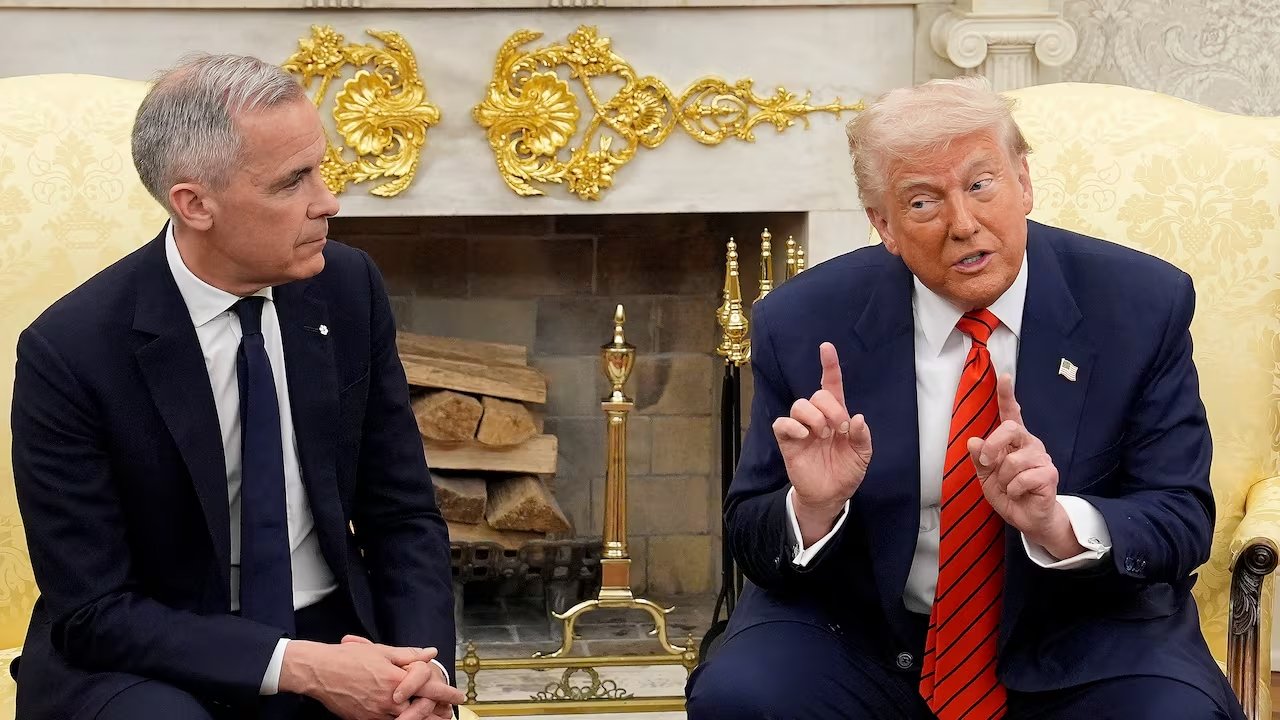


Prime Minister Mark Carney publicly claims to defend Canadian sovereignty against American pressure. Yet, his government quietly permits the Pentagon and foreign entities to acquire direct equity stakes in critical domestic resources. This reveals a profound and dangerous hypocrisy.
The Illusion of Sovereignty and the Reality of Foreign Stakes
On the campaign trail, Prime Minister Mark Carney warned Canadians about the aggressive posture of U.S. President Donald Trump, explicitly stating that Washington intended to break Canada to own it. Yet, the moment political survival and cozy bilateral optics took precedence over economic nationalism, that fiery rhetoric evaporated. Today, the Carney administration looks on with silent complicity—or active facilitation—as the U.S. military apparatus embeds itself directly into the bedrock of our sovereign territory.
We are witnessing an unprecedented surrender of Canadian wealth. Through a web of defence-linked grants, subsidies, and direct equity injections under the Cold War-era Defense Production Act (DPA), the Pentagon has pumped over $78 million into companies operating vital critical mineral and extraction projects across our provinces.
Worse yet, the Canadian government has routinely matched these investments with tens of millions in public funds, effectively subsidizing Washington's expanding footprint on Canadian soil. Firms like Vancouver-based Trilogy Metals Inc. and Toronto-based Fortune Minerals are seeing their ownership registers and corporate boards populated by Washington’s war machine.
When foreign states—particularly a superpower locked in global resource competition and prone to aggressive tariff warfare—begin buying direct equity shares in our raw subterranean assets, they are no longer just customers. They are landlords. And Prime Minister Carney is handing them the keys while preaching the Gospel of Canadian independence.
The Hypocrisy of "Reliable Supply" and Corporate Blind Spots
The hypocrisy stinks to high heaven. Prime Minister Carney recently dismissed the notion of using our massive energy and resource exports as a strategic lever during trade disputes. He piously declared:
"Being a reliable supplier is important... one of the biggest commodities, arguably the best, is trust."
Whose trust is he safeguarding? Certainly not the trust of Canadian workers or future generations who will watch raw materials get siphoned south to feed foreign defence industrial complexes under mandatory off-take or direct ownership decrees.
Critics of Carney have pointed out that this stance is a complete abdication of economic stewardship. When Ottawa "welcomes foreign direct investment" that translates to the Pentagon buying equity in Canadian soil, it ceases to be a policy of national benefit and becomes a policy of colonial submission. Economic critics have repeatedly hammered this point home, noting that the Liberal government is greenlighting deals with deep state actors while everyday Canadians are gaslit into believing our borders are secure. As one federal opposition critic recently noted in the House of Commons:
"The Prime Minister uses 'elbows up' rhetoric for the cameras in Ottawa, but behind closed doors, his ministers dismiss the Pentagon’s takeover of our mines as mere 'capitalism in action.' This isn't capitalism; it is the piecemeal liquidation of Canadian sovereignty to a foreign military."
How does a seasoned economist and former central banker rationalise this? The answer lies in the deep, uncomfortably tangled web of Mark Carney’s corporate past. His long-standing, formative ties to global asset management giants like Brookfield have fundamentally clouded his judgement. For Carney, the world is a balance sheet, and sovereignty is just another negotiable asset class.
Decades spent navigating international finance and private equity appear to have left him incapable of viewing national resources as anything more than transactions to be managed for global corporate portfolios. When your worldview is shaped by transnational capital accumulation, the boundary between "Canada" and "an investment opportunity for the American military" blurs into irrelevance.
Giving the Country Away Under Our Noses
The footprint of this surrender stretches from coast to coast to coast, embedding American state interests deep within vulnerable ecosystems and indigenous territories. Take the massive Strange Lake rare earth project near Lac Brisson in Nunavik, northern Quebec. The Carney government advanced an unprecedented $175 million loan to Torngat Metals for the site, even though a primary backer of the venture is Cerberus Capital Management—a controversial private equity giant deeply intertwined with the Trump administration's defense apparatus.
Further south, the La Loutre graphite project in Quebec’s Laurentian region has received direct Pentagon funding despite fierce resistance from local communities. Kitigan Zibi Anishinabeg First Nation Chief Jean-Guy Whiteduck has stood firmly against the project, stating:
"Our community is firmly against mining... it conflicts with ongoing efforts to restore ecosystems in our territory."
Yet, local indigenous rights and provincial environmental sovereignty are routinely bypassed or relaxed by Ottawa to expedite these projects under the guise of bilateral "supply chain security." From the Sisson tungsten-molybdenum project in New Brunswick to the NICO cobalt-gold-bismuth-copper project in the Northwest Territories, the story is identical: Canadian public money is being paired with U.S. military capital to build infrastructure that serves Washington first, and Canada last.
Critics across the political spectrum are right to call out this duplicity. You cannot stand at a podium in Ottawa or Montreal talking up a robust, independent Canadian defence and industrial strategy while simultaneously letting foreign shell companies and Pentagon-backed funds hollow out the very resource base that underpins our geopolitical leverage.
As antitrust and legal experts have warned, once these U.S. state-backed equity positions mature and the mines become fully operational, Washington will hold the ultimate trump card: the legal and financial power to demand that every ounce of critical metal bypasses Canadian processing facilities entirely and flows directly into American munitions factories.
Mark Carney is publicly defending an empty shell of Canadian sovereignty while giving away the actual substance of our nation under the very noses of unsuspecting Canadians. It is a generational sellout, masked in the sophisticated jargon of international cooperation, executed by a leader whose corporate reflexes have blinded him to the true cost of national surrender.

Comments
There are 0 comments on this post