
How Unethical Judges and Lawyers are weaponizing vexatious litigant orders in Ontario


The functional integrity of a democratic legal system depends upon a single foundational principle: that the courts must remain open, accessible, and bound by the rule of law. Within the architecture of Canadian jurisprudence, procedural fairness and natural justice are not mere programmatic ideals; they are absolute structural prerequisites. When an individual is systematically prevented from presenting evidence, obtaining representation, or accessing higher avenues of appellate review, the character of the system changes. It transitions from an open forum for dispute resolution into an insulated, self-protective administrative apparatus.
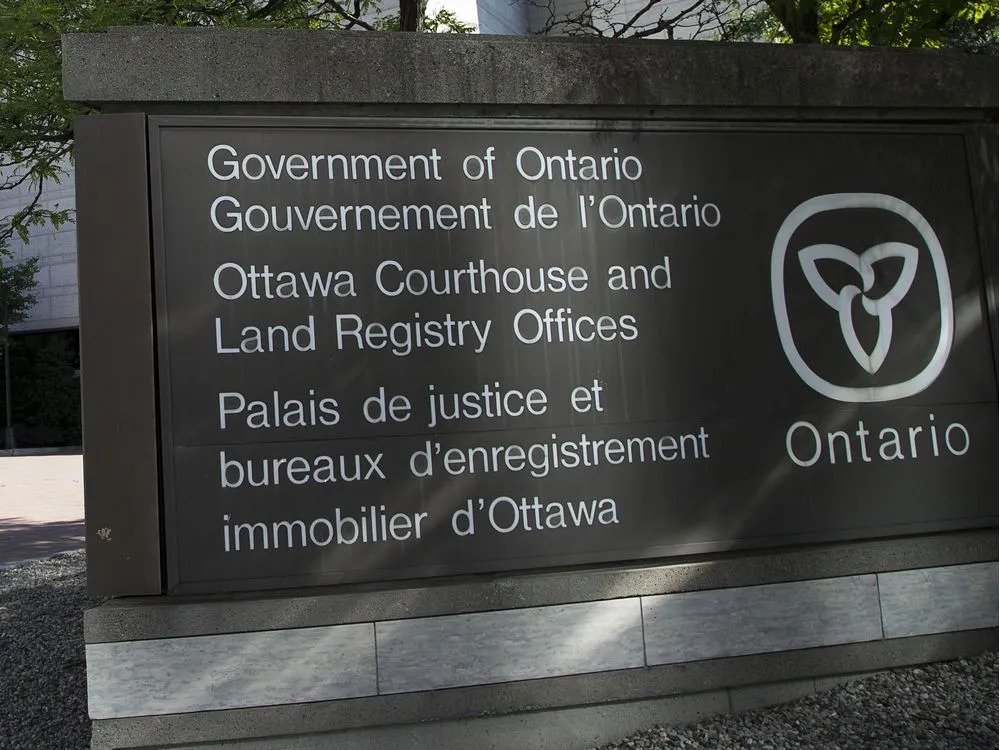
This reality is starkly illuminated through comprehensive documentation in Raymond Carby-Samuels v. Horace R. Carby-Samuels and the Attorney General of Ontario. Far from a simple familial disagreement, this extensive motion record offers a highly granular, factually backed look at how technical legal mechanisms—most notably the "vexatious litigant" designation under Section 140 of the Courts of Justice Act—can be operationalized to create a total administrative lockout. By tracking the documentary exhibits, prior judicial endorsements, and institutional actions contained within the record, we can map the exact anatomy of a procedural breakdown that ultimately insulated a regional courthouse from structural accountability.
The Foundations of a Dispute: The Primacy of Familial Well-Being
Every legal file possesses an emotional and moral core. In this instance, the trajectory of the litigation was set in motion by a direct effort by a son, Raymond Carby-Samuels, to safeguard the baseline physical health, human rights, and bodily autonomy of his vulnerable, elderly mother, Dezrin Carby-Samuels. According to the sworn affidavit and corroborating correspondence from retained counsel Gurbir Singh, LL.B., Dezrin Carby-Samuels was a mentally capable adult possessing severe physical disabilities.
The initial legal proceedings were designed to achieve a singular, humane objective: to verify her personal safety and ensure she was not being subjected to forced domestic isolation or profound physical and psychological trauma. Factual evidence of a high-risk environment was present within the history of the file, including a documented written note in Dezrin's own handwriting explicitly stipulating that "Dad abuses me". Furthermore, the moving party had himself suffered severe domestic violence from the respondent, requiring emergency reconstructive surgery that incapacitated him from work-related activities for over six months.
Initially, the judiciary recognized the validity and urgency of these concerns. In February 2016, The Honourable Justice Patrick Smith awarded a default judgment affirming that the applicant possessed a definitive right to visit his mother on a daily basis to ensure her well-being. Later, during a motion hearing on March 24, 2017, The Honourable Justice Callum MacLeod explicitly supported the efforts to verify Dezrin's status, imploring the respondent’s counsel, John Summers of Bell Baker LLP, to permit a neutral verification visit by a local rabbi to confirm her personal desires.
However, the institutional response shifted abruptly. In an email dated attachment March 27, 2017, defense counsel confirmed that the respondent would absolutely refuse to allow any such verification. Instead of facilitating a transparent inquiry into the safety of a vulnerable senior, the adversarial machinery of the court was instantly activated to penalize the individual seeking the investigation.
The Mechanism of Inversion: Weaponizing Section 140
The critical turning point in this matter occurred on November 16, 2017, when The Honourable Justice Sylvia Corthorn issued a sweeping, wide-reaching order declaring the applicant a "vexatious litigant" under Section 140 of the Courts of Justice Act.
Statutorily, the intent of a vexatious litigant order is clear: it is a defensive measure designed to protect the administration of justice from repetitive, hopeless, and bad-faith proceedings intended purely to harass an opposing party. It is meant to be used as a last resort. However, the documentation reveals a profound misapplication of this doctrine. Rather than filtering out frivolous actions, the order was deployed to retroactively chastise a self-represented person for attempting to utilize constitutionally enshrined processes. The system labelled a desperate, altruistic battle to protect a human life as a mere administrative "irritant"—an approach that lacks any valid legal or democratic basis for stripping a citizen of their baseline civil rights.
To achieve this total litigation ban, the presiding judge committed foundational errors of fact and law that severely undermined the integrity of the proceeding:
- Factual Errors Regarding Guardianship: The court erroneously imputed that the applicant was aggressively seeking "guardianship" of his mother. Court transcriptions clearly show that this was false; the applicant was simply seeking to verify her physical safety and ensure her desires were being respected.
- Reliance on Unverified Hearsay: The court fully accepted the unsubstantiated verbal assertions of defence counsel that Dezrin Carby-Samuels did not wish to see her son, and that the son lived with his parents for "free". These assertions were accepted as absolute truth without a single shred of physical or documentary proof.
- Suppression of Pre-Existing Judicial Orders: Most critically, the order was manifested within a complete judicial vacuum, directly violating the principle of horizontal stare decisis. Justice Corthorn completely ignored the written ruling of a senior administrative judge who had already ruled that the applicant possessed an arguable case, alongside the protective visitation orders previously granted by Justice Patrick Smith and Justice Callum MacLeod.
By completely blocking the applicant's efforts to verify his mother's desires, the court enforced an unyielding isolation protocol. The tragic, real-world consequence of this administrative freeze was immediate: cut off from her primary familial caregiver and protective interventions, Dezrin Carby-Samuels suffered a swift, total physical decline—losing the ability to walk, write, or speak within four weeks of her son's forced eviction—leading ultimately to her premature death.
The Denial of Natural Justice: The Elimination of Representation
A court ruling can only command moral and legal authority if it is arrived at through a process that respects the core tenets of natural justice and procedural fairness. The motion record establishes that the 2017 vexatious litigant hearing was factually hollowed out by a direct deprivation of the right to counsel.
The right to be represented by a qualified legal professional is a cornerstone of the adversarial system, particularly when an individual faces a penalty as severe as the permanent revocation of their right to access the court system. Factual documentation, including explicit correspondence from barrister and solicitor Gurbir Singh, proves that the applicant had successfully retained legal counsel for the hearing. Counsel had explicitly committed to driving overnight from Toronto to Ottawa to personally hand over all drafted motion materials and assist the applicant at the returnable motion.
Yet, when the hearing commenced, the trial judge explicitly blocked the retained lawyer from presenting oral arguments or placing the materials on the record. By physically and procedurally denying the presence of legal counsel, the court prevented vital fresh evidence from being introduced, subverted the right to present a full defense, and engineered a severe miscarriage of justice. The applicant was forced into an involuntary state of self-representation, allowing the court to sanitize an uneven adversarial dynamic under the guise of an orderly administrative protocol.
The Broader Matrix: Systemic Bias and the Colour of Law
When a courthouse registry or a localized judiciary functions as a closed-loop system that systematically rejects filings, ignores conflicts of interest, and suppresses exculpatory evidence, the activity can no longer be classified as a standard exercise of judicial discretion. It enters the realm of operating "under the colour of law"—utilizing legitimate legal titles and technical rules to achieve an illegitimate, predatory outcome.
The motion record places these localized events within a documented national framework of institutional bias. The applicant explicitly outlines a history of differential treatment that is deeply consistent with the systemic racial discrimination detailed in A Roadmap for Transformative Change: Canada’s Black Justice Strategy, published by the Department of Justice Canada. This ground-breaking federal strategy openly acknowledges that people of African descent face deep-seated Afrophobia, over-criminalization, and disproportionately negative outcomes when navigating Eurocentric legal frameworks that historically prioritized institutional insulation over equity.
The applicant's vulnerability to systemic profiling is further corroborated by verified extra-provincial findings. In 2018, Quebec's Commission des droits de la personne et des droits de la jeunesse (CDPDJ) formally affirmed that the applicant had been a direct victim of police racial profiling. This finding was cemented in 2025 when the Quebec Superior Court issued an absolute acquittal regarding a discriminatory "Walking While Black" ticket. That same year, the Canadian Human Rights Commission endorsed a prima facie case of racial discrimination advanced by the applicant against a major financial institution (RBC).
Despite this clear baseline of sound character and verified civil rights victories, the Ontario Superior Court utilized the 2017 vexatious designation to enforce an absolute administrative barrier. This effectively blocked the applicant from advancing a completely independent small claims court case against the Ottawa Police Services. The technical apparatus of the court was used to shield local law enforcement and corporate-legal insiders from standard civil discovery.
Breaking the Loop: The Threshold for Appellate Intervention
Once a local courthouse successfully insulates itself by refusing to process documentation or hear complaints, a citizen cannot find a remedy within that specific registry. The lockout itself becomes the dominant fact of the case. Under Ontario law, the only structural path forward requires forcing the litigation entirely outside the compromised regional infrastructure.
Mr Samuels seeks community help to support an application which seeks to redress the wide-reaching decision of Justice Corthorn in relation to Rules 1.04 and 61.16(6.1), pursuant to Sections 59.06(1) and 59.06(2) of the Rules of Civil Procedure and Section 140(4) of the Courts of Justice Act.
Mr Samuels seeks to rely on the rigorous application of the Palmer test for the admission of fresh evidence on appeal. The documentary record strictly satisfies all four criteria of the test:
- Due Diligence: The evidence could not have been properly adduced during the initial 2017 proceeding because the trial judge actively denied the presence of legal counsel and blocked the submission of motion materials.
- Relevance: The evidence bears directly upon a decisive issue, exposing a fundamental failure of procedural fairness and showing that the original order lacked a bona fide legal foundation.
- Credibility: The evidence is entirely credible and capable of belief, consisting of signed judicial endorsements, formal letters from active members of the Law Society of Ontario, and official publications from the Department of Justice Canada.
- Impact: If believed, the clear proof of a complete denial of representation, a violation of horizontal stare decisis, and the systematic repression of exculpatory evidence would reasonably be expected to completely overturn the initial result.
Ultimately, this case serves as a stark, structural warning for the Canadian judiciary. Section 2(a) of the Canadian Charter of Rights and Freedoms explicitly guarantees freedom of conscience as a fundamental, protected right. When a citizen acts out of moral conscience to protect a vulnerable family member from profound trauma, the courts cannot mathematically invert their own rules to label that empathy as a legal offence. An institution that immunizes itself from constitutional scrutiny by shutting its registry doors forfeits its legal authority. The integrity of the judicial system can only be maintained if higher courts step in, dismantle localized lockouts, and ensure that the courthouse doors are opened to the light of truth and natural justice.

Comments
There are 0 comments on this post