
Supreme Court of Canada’s corrupt treatment of Quebec legitimates Alberta separatism
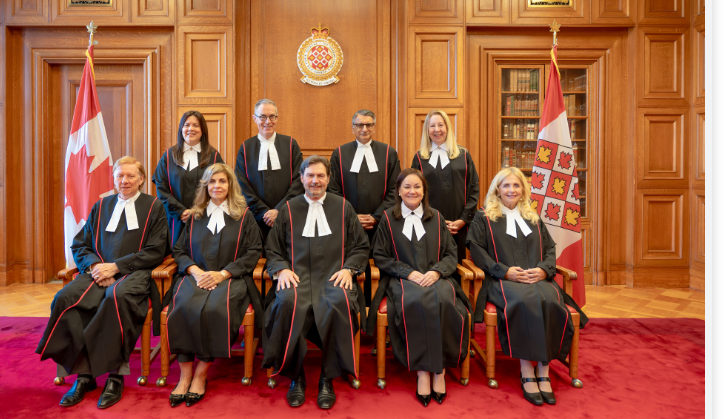


The foundational myth of the Canadian Confederation is that it is a partnership of equals. It is a comforting fiction, routinely repeated in high school history textbooks and federal election campaigns from coast to coast. But for anyone paying close attention to the structural mechanics of our highest courts, that fiction has completely dissolved.
The crisis of Canadian unity is no longer just about resource revenue, carbon taxes, or equalization formulas. It has matured into a profound crisis of institutional integrity. When the Supreme Court of Canada treats constitutional rights as optional variables depending on geography, it does more than just fail language minorities in Quebec. It actively legitimizes the intellectual foundation of Alberta separatism.
To understand why Western alienation has transformed from a populist grumble into a coherent constitutional argument, one must look at how federal institutions handle Quebec. The highest court in the land has increasingly practiced a policy of "hear no evil, see no evil, speak no evil" when it comes to human rights abuses in La Belle Province. This institutional double standard was laid bare when the Supreme Court quietly dismissed an application for leave to appeal in Raymond Carby-Samuels v. Ville de Gatineau, et al.
The Carby-Samuels case should have been an open-and-shut matter for a court concerned with the uniform rule of law. The applicant sought a state-supported court interpreter within the Quebec Human Rights Tribunal and the Superior Court of Quebec to address linguistic barriers. To support his claim, he relied heavily on R. v. Tran, a landmark 1994 Supreme Court ruling. Tran established a clear, progressive precedent: language minorities across Canada have a fundamental right to understand the court proceedings that govern their lives—a principle that extends from criminal courts to civil and human rights tribunals.
In response to Tran, provinces like Ontario expanded their judicial infrastructure, providing state-supported interpreter services to close to 100 language groups. Access to justice became a living reality. Yet, in Quebec, this fundamental case law has been systemically ignored, leaving hundreds of thousands of non-Francophone Canadians vulnerable to legal exclusion unless they can afford private bilingual representation.
When Mr. Carby-Samuels presented an immaculate submission to the Supreme Court—meeting every threshold of public importance—the high court had a clear duty to intervene. It was an opportunity to affirm that Quebec is just as obliged to respect Supreme Court precedents as any other province. Instead, the court rejected the leave application.
Far worse, his efforts to champion a pivotal Supreme Court decision in support of a just society for all Quebecers transformed him into a target. In what critics view as direct retaliation against a human rights claimant endorsed by a government agency, he was subjected to aggressive vexatious litigant proceedings. When Mr. Carby-Samuels turned to the Supreme Court for refuge against these continued Quebec court abuses of established Canadian law, the Supreme Court once again turned a blind eye. By abdicating its role, the highest court permitted the judicial machinery in Quebec to proceed unchallenged, effectively giving a green light to punitive measures against those who voice constitutional grievances.
By refusing to enforce its own structural human rights rulings uniformly, the Supreme Court has signaled that Quebec operates under a different constitutional sky. This callous disregard for enforcing the supremacy of the Canadian Charter of Rights and Freedoms allows parts of the country to operate less like a cooperative democracy and more like an authoritarian enclave insulated from the rule of law.
This is precisely where the intellectual basis for Alberta separatism becomes unassailable.
For decades, Ottawa has attempted to pacify Western discontent with transactional politics—bickering over oil pipelines, adjusting fiscal stabilization programs, or attempting to appease provincial leaders with regulatory concessions. But these economic band-aids miss the deeper, systemic rot. Albertans look at the federal apparatus and see an asymmetrical federation where one province is permitted to insulate itself from uniform Charter compliance, while Western industries are aggressively micromanaged by centralizing federal authorities.
If the Supreme Court of Canada lacks the integrity to uphold its own decisions when they conflict with Quebec’s political sensitivities, the concept of a "just society" collapses. If the high court will not protect the foundational principle of provincial equality, then the constitutional compact is broken.
Alberta’s sovereignty movement is no longer just an emotional reaction to economic grievance; it is a rational response to an unequal partnership. When the highest court in the land fails to maintain an even hand, it provides undeniable credence to Alberta separatists. It signals to Western Canadians that the rules of Confederation only apply to those without the political leverage to break them, handing bad-faith actors the ultimate tool to destroy Canada from within.
Canada is desperately in need of a new era of judicial accountability and federal leadership—one that looks past regional political anxieties to vocally champion a nation built on true provincial equality. Justices who cannot, or will not, uphold the integrity of fundamental access-to-justice decisions have no business sitting on the country's highest bench. Until we have a Supreme Court and a federal government willing to enforce the Charter equally from sea to sea to sea, Ottawa has no right to wonder why the West wants out.
Read about the Carby-Samuels case in Peter Tremblay's book on Amazon HERE.

Comments
There are 0 comments on this post