
Justin Trudeau: How politicians immortalize themselves through corrupt judges and other appointments
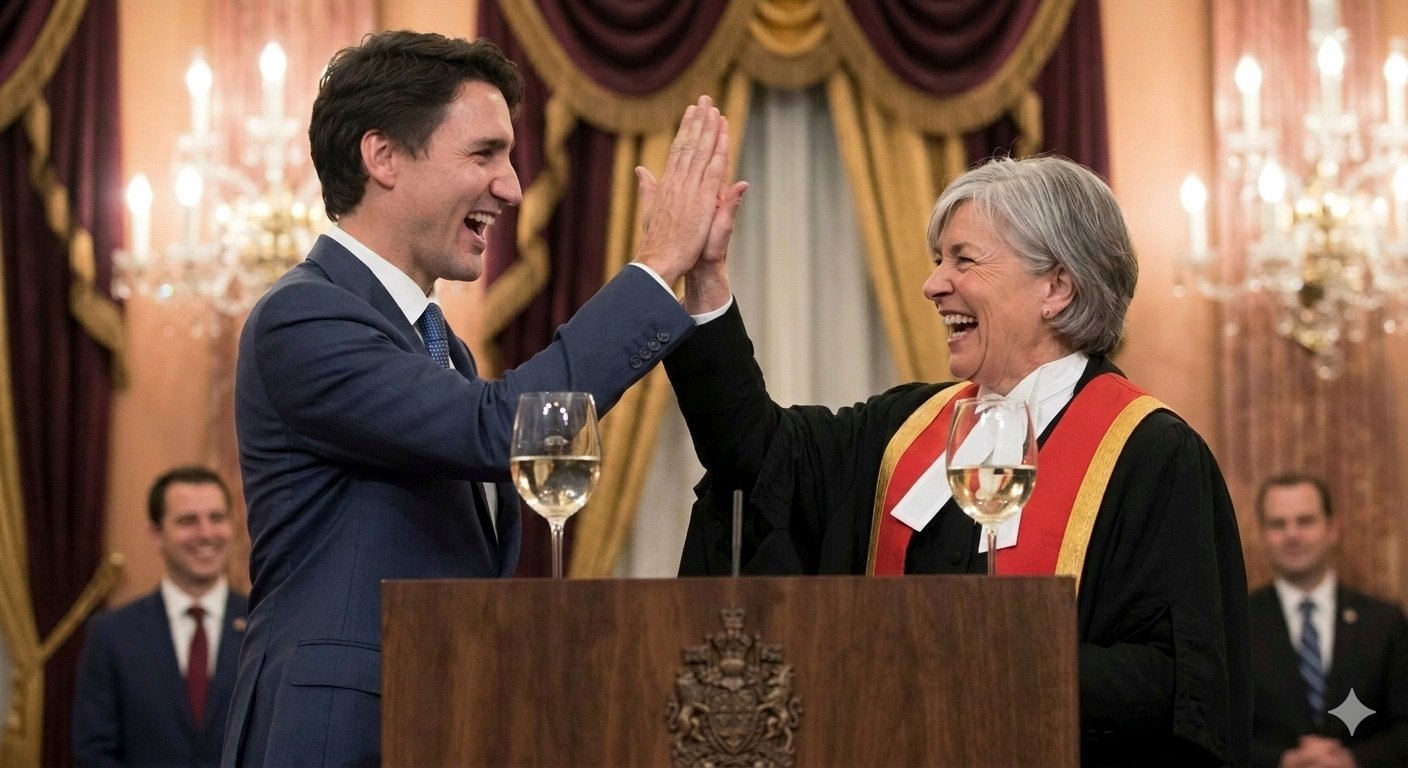



When former Prime Minister Justin Trudeau walked away from the office he held for nearly a decade, a palpable sense of relief swept across large swathes of the Canadian electorate. For many, his departure signalled the definitive end of an era defined by ethical breaches, unchecked spending, and a growing disconnect from the economic realities facing everyday citizens. There is a comforting, yet deeply naive, narrative currently circulating within the national discourse: the idea that the "bad old days" of the Trudeau administration are safely behind us, locked away in the annals of political history.
This assumption is not only incorrect, but dangerously short-sighted. A prime minister's true power does not vanish when they hand over the keys to Rideau Cottage. Instead, the most enduring—and insidious—legacy of any long-serving populist leader is achieved through the quiet, bureaucratic exercise of the appointment power. Long after a politician has exited the public stage, their ideological agenda, their preferred biases, and their systemic failures remain frozen in time, protected from democratic accountability by a vast army of tenured officials.
The Lifelong Bench: The Subversion of Judicial Selection
Nowhere is this phenomenon more pronounced, or more damaging to the fabric of Canadian democracy, than within the federal judiciary. Throughout his tenure, Mr. Trudeau oversaw the appointment of approximately 800 federally regulated judges across Canada. Under the guise of creating a more diverse and progressive bench, critics argue that the selection process was systematically hollowed out to ensure the elevation of individuals who were ideologically aligned with the Liberal Party’s central agenda.
The primary danger of this massive judicial overhaul lies in the absolute protection afforded to these appointees through the doctrine of judicial immunity. In Canada, federal judges are granted secure tenure until the mandatory retirement age of 75. They cannot be easily removed, they cannot be sued for their decisions, and their courtroom conduct is shielded from standard political or bureaucratic review. While judicial independence is a foundational tenet of the rule of law, it transforms into an instrument of systemic oppression when the bench is packed with partisans.
For the average Canadian seeking judicial relief, this reality creates a rigged playing field. When a citizen attempts to pursue litigation that directly conflicts with the institutional norms, systemic racism, or political corruption that became emblematic of the Trudeau era, their efforts are frequently met with a wall of judicial hostility. The current system effectively allows a prime minister to govern from the grave. Long-term litigants find themselves pleading their cases before individuals whose entire career trajectories were enabled by the very political apparatus the litigants are trying to hold accountable.
This model of judicial capturing is not unique to Mr. Trudeau; rather, his administration perfected a blueprint that empowers other ambitious politicians to appoint judges in their own image. When the highest courts of the land are populated by individuals chosen for their political reliability rather than their unyielding commitment to objective justice, the principles of procedural fairness and the rule of law are reduced to mere rhetorical flourishes.
The Red Chamber and the Bureaucracy: Cultivating Lifelong Loyalists
The entrenchment of this political agenda is further cemented through the cynical exploitation of Senate appointments. Mr. Trudeau frequently boasted about his "independent" Senate selection process, claiming to have removed partisanship from the upper house. In reality, the appointments to the Red Chamber during his tenure consistently favoured individuals who shared a homogenous, institutional worldview—effectively transforming the Senate into an ideological echo chamber designed to rubber-stamp government policy and resist future legislative reform.
Like federal judges, these senators enjoy long-term tenured positions, drawing significant public salaries and wielding immense legislative blocking power until they are forced to retire. They are accountable to no one, yet they possess the constitutional authority to frustrate the will of future, democratically elected parliaments that may wish to dismantle the regulatory and social frameworks established under the previous administration.
Compounding this legislative capture is the deep saturation of cronyism within the senior levels of Canada's public service. Over nearly ten years, key administrative agencies, tribunals, and crown corporations were populated with loyalists who owed their professional dominance to the Prime Minister's Office. This has created a self-perpetuating ecosystem within the federal bureaucracy—one that is fundamentally resistant to change, naturally defensive of its own institutional privileges, and thoroughly insulated from the needs of the Canadian public.
The Silent Partners: Media Owners and the Architecture of the Cover-Up
A corruption of this magnitude cannot survive in a healthy democracy without the active complicity, or at least the deliberate blind spot, of the mainstream press. This raises a critical question: why has the true scale of this institutional capture been so thoroughly downplayed within the national media?
The answer lies in the deep financial and structural entanglement between corporate media owners and the political establishment. For years, major Canadian media outlets survived on a diet of federal subsidies, specialized tax credits, and regulatory protections handed out by the Liberal government. The wealthy corporate interests and institutional donors who fund and maintain these media empires are the very same entities that stand to gain the most from a stable, compliant judicial and political system.
To expose the complete capture of the federal judiciary and the public service would be to pull back the curtain on a system that serves the elite at the expense of ordinary citizens. Consequently, Canada’s legacy media has consistently sought to cover up this reality, framing highly controversial judicial appointments as routine administrative matters and ignoring the profound systemic biases that afflict marginalized Canadians when they enter a courtroom. This wall of journalistic silence ensures that the ecosystem of entrenched racism, nepotism, and corporate protectionism remains hidden from public scrutiny, depriving Canadians of the vocabulary needed to demand meaningful reform.
Restoring Justice: The Need for Democratic Control
This comprehensive network of political appointments is at the very root of the profound crises that Canadians face on a daily basis. Whether seeking redress for environmental degradation, institutional racism, corporate malfeasance, or municipal overreach, citizens find themselves trapped in a legal and administrative labyrinth designed by past politicians to protect the status quo. The current apparatus does not respect procedural fairness because its primary, unstated function is institutional self-preservation.
If Canada is to ever restore the integrity of its democratic institutions, the country must fundamentally reform how its judges and senior public officials are selected. Canadians must be granted direct, transparent, and democratic control over the judicial appointment process, moving it away from the unilateral whim of the Prime Minister's Office and the insular review committees that currently police the gates.
We must implement rigorous, public confirmation hearings for federal judges—similar to models used in other Western democracies—where nominees are forced to answer for their records, their legal philosophies, and their potential conflicts of interest before the eyes of the public. Furthermore, the absolute shield of judicial immunity must be balanced with robust, independent oversight bodies that have the power to investigate and discipline judges who exhibit clear behavioural biases or engage in character assassination from the bench.
The departure of Justin Trudeau from active politics was merely a cosmetic change at the top of the pyramid. The stone blocks of his administration—the hundreds of judges, senators, and bureaucrats he left behind—remain firmly in place, dictating the boundaries of Canadian life. Until we dismantle the current appointment system and return control of the judiciary to the people, the rule of law will remain a luxury reserved for the powerful, and the shadow of past political corruption will continue to govern our collective future.

Comments
There are 0 comments on this post