
The China Blueprint: Why only raw military power will save CUSMA and Canadian sovereignty
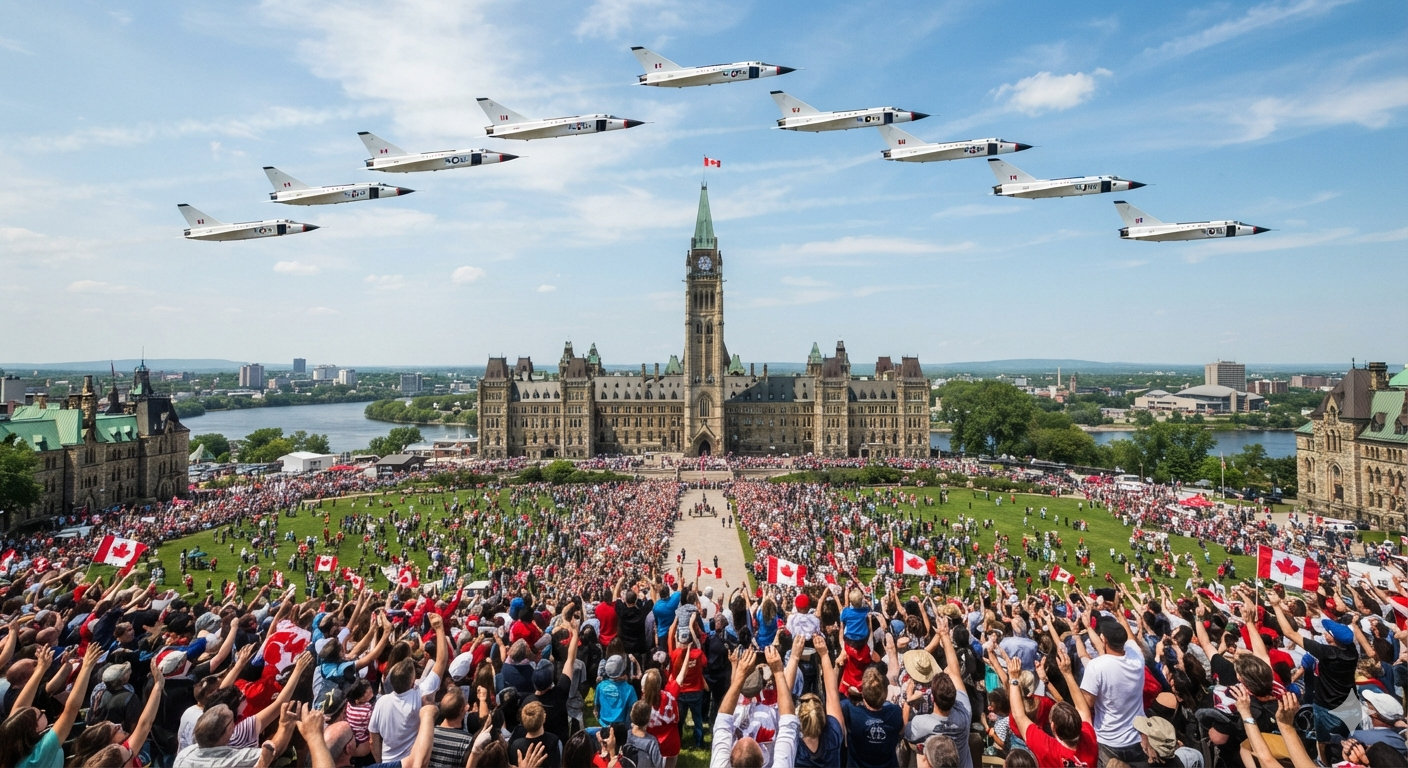



OTTAWA — For decades, Canada’s foreign policy establishment has operated under a comforting, if increasingly naive, delusion: that the world’s longest undefended border is secured by a shared history, mutual democratic values, and a common commitment to the rule of law. We have treated trade agreements not as battlegrounds of raw leverage, but as legal frameworks negotiated in good faith by rational actors.
The 2026 milestone review of the Canada-United-States-Mexico Agreement (CUSMA) has shattered that illusion. The U.S. administration’s refusal to grant an automatic 16-year extension, opting instead to trap Canada in a cycle of rolling annual reviews, is not a minor bureaucratic disagreement. It is a hostile economic siege designed to slowly erode Canadian sovereignty.
If Canada is serious about getting CUSMA renewed on its own terms, it must abandon the polite, defensive diplomacy of the past. It must look across the Pacific for a blueprint on how to deal with an unpredictable and aggressive American administration.
Beijing has provided Ottawa with a masterclass in modern geopolitical survival. The lesson is simple, brutal, and undeniable: Donald Trump and the political cabal driving his administration do not respect shared history, international treaties, or progressive values. They respect raw military power.
We are no longer dealing with a traditional ally; we are dealing with a regime whose inner circle openly flirts with the annexation of both Canada and Greenland, and which actively stokes internal division by backing Alberta separatism. To expect anything from Washington but economic and political treachery while we remain a vulnerable target is a form of state-level negligence. If we want to protect our sovereignty and secure our economic future, Canada must immediately transform itself into an indigestible military prospect. The price of an American conquest—whether economic, political, or military—must be made devastatingly, prohibitively high.
From Futuristic Pipe Dreams to Immediate War Footing
For the past several years, the policy vision laid out by the Mark Carney government has been debated in academic circles and policy institutes as an ambitious blueprint for Canada’s future. It spoke of economic resilience, supply chain security, and a re-engineered industrial base. But in the face of an existential threat to the federation, this vision can no longer be treated as a futuristic pipe dream or a long-term electoral roadmap. It must become active, hard-hitting government policy tomorrow morning.
The Carney vision must be weaponized. Economic resilience means nothing if the state lacks the hard power to defend its borders and its infrastructure. Ottawa must immediately enact sweeping government mandates to convert our industrial capacity into a wartime engine, overhauling and scaling up a renewed Canadian Armed Forces (CAF) capable of operating a significantly expanded military deterrent capability.
This cannot be a gradual, twenty-year procurement cycle. The traditional Canadian habit of debating fighter jet contracts for decades or taking ten years to build a single surface combatant is a luxury of a bygone era. The threat is at our doorstep. The modernization of our forces must be immediate, aggressive, and massive. We must build an army, navy, and air force that can project undeniable power over our vast geography, signaling to the cabal in Washington that Canada is no longer a soft vacuum waiting to be filled, but a fortified fortress ready to defend its sovereignty.
The Royal Canadian National Defence and the 300,000-Strong Peace Corps
A renewed CAF, however, is only the first line of defense. To truly alter Trump’s perception of Canada, we must fundamentally restructure how this nation thinks about national security. This requires the immediate creation of a new national institution: the Royal Canadian National Defence.
Under this new paradigm, Canada must look well beyond its traditional, contract-based reliance on NATO frameworks. NATO remains a cornerstone of our Atlantic security, but it is an institution frequently paralyzed by its own internal politics and American leverage. To counter a direct threat from a hostile neighbour, Canada must build a secondary, immediate alternative military alliance.
We must look to our unique global networks—specifically the Commonwealth and the Francophonie. These are not merely cultural or historical clubs; they are vast networks of nations that span every continent, many of whom share a deep interest in maintaining a rules-based international order and resisting unilateral American hegemony. Canada must immediately forge deep, bilateral military training and defense pacts with key powers within these global networks.
The core mission of this alternative alliance will be the rapid mobilization, training, and consolidation of a 300,000-strong civilian peace corps. This will not be a passive humanitarian group, but a massive, highly organized, and disciplined domestic resistance and civil defense structure. Recruited from our diverse, multicultural population, this civilian corps will ensure that every community, every piece of critical infrastructure, and every vital supply line has a dedicated, trained body of citizens ready to defend it.
By mobilizing our society on this scale, we turn our greatest domestic strength—our multiculturalism and social cohesion—into a lethal defensive asset. A population of 40 million that possesses a 300,000-strong trained civilian defense corps is a country that cannot be occupied, coerced, or annexed without an asymmetric cost that no American administration could ever justify to its own electorate.
Allied Boot Pacts: Securing the Transition
Building the Royal Canadian National Defence and training a 300,000-strong civilian peace corps cannot happen overnight. It will take time to recruit, equip, and organize a force of this magnitude. During this critical vulnerability window, Canada cannot afford to stand alone.
Therefore, as a matter of immediate national survival, Canada must implement an "Allied Boot Pact." We must invite foreign troops from friendly Commonwealth, Francophonie, and non-US NATO nations onto Canadian soil.
Crucially, these foreign forces will not operate as independent actors or an occupying army. To protect our constitutional sovereignty, all foreign troops deployed to Canada must operate strictly under the Canadian Armed Forces umbrella. They will serve as a vital transitional force, providing a defensive shield while Canada builds its own domestic civilian peace corps and scales up its own military hardware.
These allied troops must be deployed immediately and visibly across every part of the country. They must be stationed in our major urban centres, alongside our critical economic infrastructure, and most importantly, across the remote, resource-rich expanses of the Canadian North.
The Arctic is the frontline of the new geopolitical reality. The Trump administration’s overtures regarding Greenland and its aggressive posture toward northern sovereignty make it clear that the Arctic is viewed as a vacuum ripe for American corporate and military exploitation. By placing a visible, permanent international coalition of allied troops across the Arctic front lines, Canada sends an unmistakable message to Washington: any unilateral move into the North is not a bilateral dispute with Canada; it is a direct military confrontation with a global coalition of nations.
This massive coalition presence shifts the global perception of Canada in an instant. It shatters the image of a vulnerable, isolated middle power that can be bullied at the negotiating table or fractured through foreign interference in western provinces. It projects the image of an emerging military superpower—one that is ready to use its vast natural resources, its global diplomatic networks, and its deep societal ideals to secure its independence.
The Realist Path to CUSMA Renewal
There will be those in the traditional diplomatic corps who view this strategy as reckless provocation. They will argue that pointing missiles and stationing foreign troops on our soil will only enrage the beast in Washington, leading to the immediate termination of CUSMA and economic ruin.
They are wrong. They continue to misread the character of the political movement currently governing the United States.
Appeasement has never worked with bullies, and it certainly does not work with a transactional administration driven by a zero-sum view of global trade. Every time Canada has offered a defensive concession—whether on dairy access, intellectual property, or digital service taxes—it has not bought goodwill. It has only invited further demands, further tariffs, and further insults.
China has shown us the alternative. Despite intense trade wars and decoupling rhetoric, Washington treats Beijing with a level of cautious respect that it never affords to Ottawa. Why? Because China possesses the raw military power to make a conflict unthinkably expensive.
When Canada projects an image of devastating defensive cost, the entire dynamic of the CUSMA review changes. Trump’s desire to squeeze concessions out of Canada relies on the assumption that Canada has no choice but to capitulate. Once that assumption is removed—once Washington looks across the border and sees a country fortified by global alliances, backed by foreign troops under domestic command, and mobilized down to the civilian level—the calculus changes.
Only when the Trump administration realizes that economic coercion or political annexation is too costly will Canada secure CUSMA without sacrificing its economic sovereignty or its national soul. It is time for Canada to stop acting like a trade dependent and start acting like a nation prepared to fight for its survival. Hard power is the only currency that matters in the new Washington. It is time for Canada to start printing it.
The author is a writer specializing in international security and Canadian foreign policy.

Comments
There are 0 comments on this post