
The Ottawa Mayoral Race: Where the Frontrunners Stand on the City's Biggest Issues
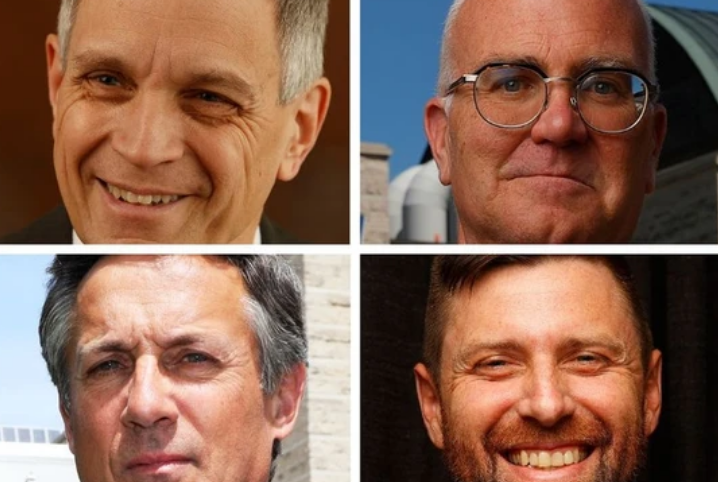

As Ottawa prepares for the municipal election on October 26, 2026, the race for the mayor's chair has officially taken shape. Incumbent Mayor Mark Sutcliffe faces a strong progressive and pragmatic challenge from a trio of prominent candidates: Jeff Leiper, Alex Lawson, and Neil Saravanamuttoo.
With the city grappling with transit deficits, housing shortages, and the economic fallout of post-pandemic work models, the frontrunners have put forward distinctly different visions for the future of the nation's capital.
The Return-to-Office Dilemma
How the city handles municipal and federal public servants has become a central flashpoint of the campaign, deeply tying workplace policy to the survival of the downtown core.
- Mark Sutcliffe has firmly defended the city's current five-day on-site work standard for municipal employees, classifying it as an internal operational decision for the city manager. While he supports federal Return-to-Office (RTO) policies to inject life back into downtown businesses, he maintains that the city cannot directly dictate federal human resources decisions.
- Jeff Leiper represents a complete reversal of this stance. He is promising to repeal Ottawa’s five-day municipal mandate to establish remote work as the city's default setting. Furthermore, Leiper has vowed to formally demand that the federal government reverse its controversial four-day RTO rule.
- Alex Lawson is carving out a middle ground by opposing blanket RTO policies in favor of decentralization. He promises to use municipal leverage—including city-owned land, zoning laws, and permits—to help build federal suburban satellite offices closer to where workers live in communities like Kanata, Orléans, and Barrhaven.
- Neil Saravanamuttoo opposes federal RTO policies purely on infrastructure grounds, arguing that the city's transit system cannot handle the influx. He plans to request an immediate delay and evaluation of the federal mandate while proposing interim solutions, such as a dedicated shuttle service from underutilized perimeter parking lots to the downtown core.
Taxes and Fiscal Responsibility
With Ottawa facing a massive infrastructure funding gap, the candidates are split between tax caps, new levies, and aggressive internal spending reviews.
- Mark Sutcliffe is running on a platform of fiscal predictability, promising to protect homeowners by limiting property tax increases to a maximum of 2% to 2.5% for the next two years.
- Jeff Leiper argues that avoiding tax increases worsens the infrastructure gap. He is proposing a 1% infrastructure levy on property tax bills—costing the average homeowner roughly $28 more per year—to directly fund repairs.
- Neil Saravanamuttoo is promising a top-to-bottom spending review at City Hall before locking in tax rates. To ensure transparency, he plans to establish an independent Office for Financial Responsibility to hunt for municipal efficiencies.
- Alex Lawson is holding the line against tax hikes during an affordability crisis. He plans to find city savings through operational optimizations, such as using smarter traffic signal timing to reduce congestion and travel times.
Public Transit and Affordability
Rebuilding trust in OC Transpo is a priority for all four campaigns, though their methods range from steep pass discounts to radical fare overhauls.
| Candidate | Proposed Transit Strategy |
|---|---|
| Mark Sutcliffe | Pledges a 30% price cut for monthly transit passes by securing bulk corporate and institutional deals. |
| Jeff Leiper | Vows to reverse the service cuts from the 2025 "New Ways to Bus" network overhaul and introduce a strict Transit Service Guarantee. |
| Neil Saravanamuttoo | Promising a $1 flat transit fare across the entire network to immediately lower the cost of living for commuters. |
| Alex Lawson | Focuses heavily on base reliability, promising to track Para Transpo as a core service and guaranteeing transparent, reliable route maps. |
The Housing Crisis and Economic Growth
The debate over how to scale up housing supply reveals a fundamental divide on the role of the municipal government in real estate development.
- Neil Saravanamuttoo has unveiled the most aggressive housing plan, vowing to double Ottawa's share of non-market housing from 5% to 10%. He plans to scale up a public homebuilder to construct 25,000 to 30,000 new affordable units.
- Jeff Leiper is taking a steady target approach, committing the city to building 1,500 dedicated affordable housing units annually.
- Alex Lawson is focusing his economic blueprint on workforce integration. He is promising a "Career Pathways Ottawa" portal, embedding workforce development directly into municipal contracts, and requiring real-time quarterly tracking of youth unemployment.
Public Safety and Community Health
Candidates are offering sharply contrasting views on how to handle crime, policing, and the toxic drug crisis.
- Mark Sutcliffe is taking a security-forward approach, committing to hiring 350 more first responders—including 200 new police officers. He also plans to double funding for alternative response programs and appoint a specialized "downtown safety czar" to oversee the core.
- The Challengers (Leiper, Lawson, and Saravanamuttoo) are collectively pivoting away from an enforcement-first model. Their platforms emphasize a balance of social supports, visible municipal service delivery, and targeting the root economic and mental health causes of the addiction crisis.

Comments
There are 0 comments on this post