
Trump is attempting to hijack Canada's Department of National Defence via NORAD
How Pentagon Operatives Hijacked Canada’s Greatest Aviation Myth to Peddle F-35 Fighter Jets
If you listen very closely to the bureaucratic rustling coming out of National Defence Headquarters in Ottawa, you can almost hear a familiar, unmistakable cadence. It is the brash, transactional, America-First sales pitch of Donald J. Trump, miraculously translated into polite Canadian military-speak and stapled onto an internal Royal Canadian Air Force discussion paper.
They call it "Project Arrow."
You have to admire the sheer, unmitigated gall of the branding. Whoever in the Department of National Defence dreamt up that title deserves a gold medal in psychological operations—or at least a complimentary weekend at Mar-a-Lago. By invoking the sacred name of the Avro CF-105 Arrow, the RCAF’s internal planners are attempting a breathtaking feat of subliminal sleight-of-hand. They want Canadians to hear the word "Arrow," feel a warm, patriotic swell of maple-syrup nostalgia for our lost 1950s aerospace glory, and blindly swallow a blueprint that locks Canada into permanent, subservient dependence on the United States military-industrial complex.
Let us be crystal clear: this RCAF discussion paper is an imposter. It is a Trojan Horse painted in red and white, rolled straight through the gates of Parliament Hill by uniformed operatives whose operational chain of command leads directly to Washington.
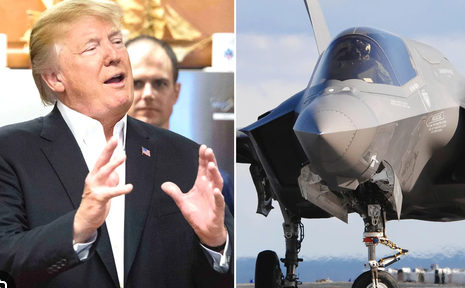
While Prime Minister Mark Carney’s government is actively reviewing Canada’s fighter jet procurement and weighing a transformative industrial offer from Sweden’s Saab to build Gripen E fighters right here on Canadian soil, the brass at the RCAF decided to drop a convenient little memo into the bloodstream of Ottawa. In their vision of "Project Arrow," the future of Canadian air power revolves squarely around the American-made Lockheed Martin F-35, paired with autonomous drones. As for the Swedish Gripen—the only genuine, sovereign alternative on the table—it isn't merely dismissed. It is erased entirely, scrubbed from the page like a Soviet commissar airbrushed out of a Kremlin photograph.
To understand why Canadian military planners are working overtime to kneecap a domestic manufacturing revival before Cabinet can even finish its review, one must follow the chain of command. "Project Arrow" is not an independent strategic assessment crafted for the benefit of Canadian taxpayers, Canadian engineers, or Canadian sovereignty. It is the wish list of Canadian personnel operating squarely under the thumb of NORAD.
And who runs NORAD? Officially, it is a bi-national command. Practically, operationally, and structurally, it is an appendage of the United States Air Force and U.S. Northern Command. And who sits at the very top of that pyramid as Commander-in-Chief? Donald Trump.
When you strip away the polite Ottawa jargon, "Project Arrow" reads like a Trump rally speech ghostwritten by a Lockheed Martin lobbyist and delivered by a NORAD desk officer. One can practically hear the Commander-in-Chief’s voice echoing through the classified corridors of the Pentagon and bouncing off the walls in Ottawa: “Folks, we have a tremendous Arrow, the best Arrow, a beautiful American Arrow—made in Fort Worth, Texas! Nobody builds Arrows like Lockheed. Those nasty Swedes want to build jets in Halifax? Disaster! Total disaster! Canada is going to buy our F-35s, they’re going to pay bigly, and they’re going to love it!”
It would be hilarious if the stakes for Canadian sovereignty were not so grave. Under the clever, patriotic mantra of "Project Arrow," uniformed personnel embedded in a U.S.-dominated continental command structure are effectively lobbying their own elected government to abandon industrial independence. They are functioning as internal advocates for their de facto operational bosses in Washington, pushing a procurement outcome that serves the U.S. political-military-industrial complex at the direct expense of Canada’s national interest.
The Ghost of Black Friday and the Real Meaning of the Arrow
To grasp just how insulting this imposter "Project Arrow" truly is, Canadians need to remember what the real Avro Arrow represented—and how it died.
On February 20, 1959—a date etched into Canadian industrial history as "Black Friday"—Prime Minister John Diefenbaker’s government abruptly cancelled the Avro CF-105 Arrow program. At the time, the Arrow was arguably the most advanced interceptor aircraft on the planet, a supersonic, delta-winged marvel conceived, designed, and built in Malton, Ontario, powered by the homegrown Orenda Iroquois engine.
The cancellation was an act of industrial self-harm without parallel in modern democratic history. Over 14,500 Avro employees were laid off instantly, along with nearly 15,000 more workers across the domestic supply chain. Worse still, within months, every completed airframe, every prototype, every engine, every jig, and every blueprint was ordered cut up for scrap and destroyed. Canada did not just cancel an airplane; it incinerated its own technological sovereignty.
And where did the brilliant minds behind the Arrow go? They went south. In what became known as Canada’s greatest "brain drain," NASA recruiters flew up to Ontario, sifted through hundreds of applications, and scooped up roughly three dozen of Avro’s top engineers and technicians—including chief aerodynamicist Jim Chamberlin and engineer Owen Maynard—into the fledgling Space Task Group. Those displaced Canadian minds went on to lead the engineering of Projects Mercury, Gemini, and Apollo, designing the very lunar module that landed American astronauts on the Moon.
The tragedy of 1959 was not merely that Canada bought American Bomarc missiles and Voodoo interceptors instead of flying its own plane. The real tragedy was that Ottawa traded away its sovereign capacity to design, build, maintain, and upgrade world-class aerospace technology, reducing Canada to a branch-plant customer of Washington.
That is why the RCAF’s decision to slap the name "Project Arrow" onto an F-35-centric wish list is such an Orwellian perversion of history. The original Arrow died because Canada surrendered to continental integration and American defence priorities. Naming a blueprint for permanent F-35 dependency "Project Arrow" is like naming a fast-food drive-thru "The Culinary Institute of Paris." It is an insult to the 30,000 Canadians who lost their livelihoods in 1959 and to the generations of engineers who were forced to leave their country to build someone else’s future.
The Real Project Arrow: What the Saab Gripen Offer Actually Delivers
The supreme irony of this entire affair is that Canada actually does have a chance to launch a real Project Arrow—one that genuinely rekindles the technological base Diefenbaker extinguished in 1959. It is sitting right on the Cabinet table, courtesy of Sweden’s Saab and its Gripen E proposal.
While the RCAF’s internal discussion paper dismissively sniffs that its vision empowers "more than just final assembly in Canada"—a barely veiled, deeply dishonest swipe at Saab—the actual facts of the Swedish offer tell the exact opposite story. Far from being a mere screwdriver-and-wrench assembly operation, the Saab Gripen package is a comprehensive blueprint for restoring Canadian aerospace sovereignty from the ground up.
Consider what happens if Mark Carney’s government refuses to be bullied by NORAD’s internal lobbyists and splits the fighter fleet by acquiring the Gripen E alongside the initial batch of F-35s:
1. Rebuilding a Domestic Aerospace Ecosystem Across Canada
Saab has already inked agreements with major Canadian aerospace players—including IMP Aerospace & Defence in Halifax, Magellan Aerospace, and Montreal-based CAE—to establish a complete domestic production, assembly, and sustainment network. Rather than shipping billions of Canadian tax dollars straight to Lockheed Martin’s factories in Texas while begging for sub-tier component scraps, Canada would build its own fighter jets on Canadian soil, creating thousands of high-skilled engineering, manufacturing, and technical jobs over four decades.
2. Full Intellectual Property Transfer and Source-Code Sovereignty
This is the single most critical difference between buying a Saab Gripen and renting an American F-35. When a country buys the F-35, it does not truly own the aircraft’s brain. Lockheed Martin and the Pentagon maintain ironclad control over the jet’s proprietary software, mission data files, and source code. If Canada wants to integrate a new Canadian-made sensor, tweak an electronic warfare suite, or upgrade a weapons system on an F-35, Ottawa has to get in line, pay Washington, and ask permission.
Saab’s offer flips that colonial dynamic on its head. Sweden is offering full intellectual property transfer and open-architecture access, alongside dedicated research, sensor, and cyber resilience centres in Montreal, Toronto, and Vancouver. Canadian engineers would have the sovereign legal and technical authority to modify, upgrade, and evolve the aircraft independently. That is the exact DNA of the original Avro Arrow—reborn for the twenty-first century.
3. Operational Independence from Washington’s Political Whims
Let us speak plainly about the geopolitical reality of 2026. With Donald Trump back in the White House—wielding tariffs as a cudgel, openly musing about economic coercion, and treating long-standing allies like delinquent tenants—relying 100 percent on a single American defence contractor for our entire air force is strategic madness.
Every F-35 on Earth is tethered to a global logistics and software network controlled by the United States. Without continuous American spare parts, software patches, and cryptographic updates, an F-35 fleet quickly becomes a collection of very expensive tarmac ornaments. The Gripen E, by contrast, was specifically engineered by neutral-turned-NATO Sweden to fight and survive independently against a superpower adversary without relying on massive, vulnerable bases or foreign logistical lifelines. It can operate off icy highways and remote northern strips, be refuelled and rearmed in minutes by a small crew of conscripts, and fly in brutal Arctic conditions that make maintenance-heavy stealth jets weep.
4. Export Potential and Global Supply Chain Leadership
Unlike the F-35 program, where Canada is just one of many junior partners competing for minor subcontracts at the pleasure of the Pentagon, a Canadian Gripen production line positions Halifax and Montreal as global export hubs. If Canada builds Gripens, Canadian factories can supply airframes, structures, and upgrades to future international customers—turning Canada back into a premier aerospace exporter rather than a passive consumer.
Why NORAD’s Operatives Fear a Mixed Fleet
Knowing all of this, ask yourself: why on earth would elements within the Royal Canadian Air Force produce a paper called "Project Arrow" that pretends the Gripen does not exist?
The answer has nothing to do with defending Canadian airspace and everything to do with bureaucratic convenience and ideological capture. For decades, senior RCAF officers have spent their careers rotating through Colorado Springs, Washington, and Pentagon liaison offices. They speak the language of the USAF, think in terms of USAF doctrine, and view Canada’s air force not as an independent national instrument, but as an auxiliary squadron of the American military.
To these NORAD-conditioned planners, managing a mixed fleet of F-35s and Canadian-built Gripens sounds like an annoying administrative headache. Why bother rebuilding Canadian engineering capacity, training technicians on a second platform, and fostering sovereign industrial independence when you can just take the path of least resistance, buy everything off the shelf from Lockheed Martin, and keep the brass at the Pentagon happy?
It is the exact same branch-plant mentality that convinced Diefenbaker’s military advisors in 1959 that Canada had no business designing its own supersonic interceptor when we could just plug into America’s continental defence grid. Back then, the excuse was that missiles had made manned interceptors obsolete—a claim proven laughably wrong within a few years. Today, the excuse is that "interoperability" requires total uniformity with the U.S. Air Force—even as Canada’s own aerospace innovators are proving that modern open-architecture systems and collaborative drones can integrate seamlessly across allied platforms without surrendering national sovereignty.
Ottawa Must Reject the Imposter and Build the Real Thing
Make no mistake: the leak and circulation of "Project Arrow" while Prime Minister Carney’s government is actively deliberating on the Gripen file is not an innocent coincidence. It is an ambush. It is an attempt by entrenched, Washington-aligned insiders within National Defence to box in their civilian leadership, manufacture a false consensus, and railroad Canada into buying all 88 American F-35s before the public realizes what is being given away.
Canadians should not fall for the con. Whenever a bureaucrat or a general tries to wrap an American procurement monopoly in the nostalgic flag of the Avro Arrow, taxpayers should hold tightly to their wallets—and their sovereignty.
If Donald Trump and his admirers in the Pentagon want to cheer on an all-F-35 Canadian Air Force, let them do it from Washington, not through ghostwritten discussion papers circulating inside our own Department of National Defence. Canada already gave away its aerospace birthright once in 1959, sending our best and brightest engineers packing for NASA while we settled for second-tier branch-plant status.
Prime Minister Carney now faces a historic choice. He can bow to the NORAD echo chamber, accept the imposter "Project Arrow," and consign Canada to another half-century of technological dependency on a volatile, protectionist neighbour. Or he can call the Pentagon’s bluff, sign the Saab Gripen deal, and launch the real Project Arrow—one built by Canadian hands, owned by Canadian minds, and answerable only to Ottawa.

Comments
There are 0 comments on this post