
Hegseth Is threatening Canada with military invasion — David McGuinty’s face tells It all
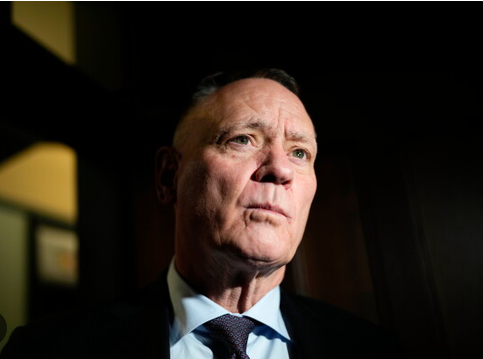

When Canadian Defence Minister David McGuinty stepped up to the microphones in Halifax and Ottawa this month, his public posture was the very picture of diplomatic discipline. "Business as usual," he assured the press corps, insisting that NORAD operations and continental defence integration remained completely intact despite leaked reports of a classified Pentagon directive restricting U.S.-Canada military engagements. Yet to anyone paying attention to his expression rather than his talking points, McGuinty’s face told a far heavier story—one etched with tight-jawed preoccupation and the unmistakable strain of a man staring down an existential threat while trying not to spook the public.
To the pundit class in Washington and Toronto, U.S. Secretary of War Pete Hegseth’s secret memorandum—followed promptly by a blistering Pentagon "fact sheet" scolding Ottawa over its defence spending and F-35 fighter jet review—looked like standard diplomatic hardball. That is certainly how Hegseth and his boosters would like it framed: just a tough-talking former Fox News weekend host bringing some long-overdue "warrior ethos" to an ungrateful neighbour.
Let’s pause for a moment and appreciate the sheer majesty of that performance. Here we have Pete Hegseth—a man whose primary strategic qualification for overseeing the largest military apparatus in human history was mastering the teleprompter between commercials—now strutting around the newly rebranded "Department of War" like a nineteenth-century Prussian field marshal. You almost have to admire the confidence. Most people, when handed the keys to a global superpower's defence establishment, spend a few months reading briefings and learning how alliances actually work. Not Pete. Pete took one look at eighty-five years of seamless North American defence cooperation—the very architecture that kept the continent safe through the Cold War—and decided what it really needed was a secret memo shutting down communications and a public temper tantrum.
Because nothing says "strategic genius" quite like alienating the one neighbour who shares an eight-thousand-kilometre undefended border, guards your northern airspace, and supplies the critical minerals and energy keeping your economy running. Truly, Sun Tzu would weep.
The "Donroe Doctrine" and the Ghost of Lebensraum
Of course, if we look past the cable-news bravado, there is nothing accidental about what is happening. What Hegseth is executing is not a policy disagreement; it is coercive intimidation designed to bully Ottawa into surrendering its sovereignty to what the administration’s acolytes proudly call the "Donroe Doctrine"—a bizarre, chest-thumping caricature of nineteenth-century hemispheric imperialism repackaged for the social media age.
The premise of the Donroe Doctrine is refreshingly simple, provided you have never opened a history book: everything in the Western Hemisphere belongs to Washington, international borders are merely suggestions, and neighbouring democracies should be grateful if they are allowed to keep their own flags while handing over their resources, trade policy, and strategic autonomy.
It would be hilarious if it weren’t an explicit ideological cousin to one of the darkest concepts in modern history: Nazi Lebensraum.
In the pages of Mein Kampf, Adolf Hitler argued that a dominant nation had an inherent, quasi-spiritual right to expand into neighbouring territories, absorb their land and resources, and subjugate their populations under the guise of national security and destiny. To justify that aggression to a domestic audience, the Nazi propaganda apparatus wrapped raw territorial greed in the language of wounded pride, martial glory, and pseudo-religious destiny.
Look at the rhetoric pouring out of Washington today and try to spot the difference:
- Territorial Absorption Framed as Destiny: President Donald Trump’s repeated musings about annexing Canada as the "51st state," seizing Greenland, and reclaiming the Panama Canal are not off-the-cuff jokes. They are trial balloons for hemispheric expansionism aimed at securing Arctic shipping lanes, freshwater, oil, and critical minerals.
- The Cult of War and Christian Nationalism: Renaming the Department of Defense the "Department of War" is not a bureaucratic quirk. It is a deliberate ideological signal—borrowing the aesthetics of Christian nationalist crusade and martial supremacy to sanctify aggression and frame neighbouring democracies as weak, parasitic obstacles to American greatness.
- Manufactured Grievances: Just as Hitler portrayed Germany as the victim of unfair treaties and ungrateful neighbours before marching across borders, Hegseth’s Pentagon fact sheet paints Canada as a freeloader exploiting American protection—conveniently erasing decades of Canadian blood and treasure spent fighting alongside American troops from Korea to Kandahar.
Why McGuinty Knows the Pattern
To understand why David McGuinty looked so visibly shaken behind his calm diplomatic script, you have to remember what he did before becoming Minister of National Defence. For seven years, McGuinty served as the inaugural chair of the National Security and Intelligence Committee of Parliamentarians (NSICOP), Canada’s highest-level parliamentary intelligence oversight body. He spent nearly a decade reading classified intelligence assessments, studying threat matrices, and examining how authoritarian regimes prepare the battlespace long before a single shot is fired.
Anyone with even a passing familiarity with twentieth-century military intelligence knows what it means when an aggressive neighbour abruptly severs military-to-military communication channels, freezes joint defence boards, and compartmentalizes operational contact.
In the lead-up to the Second World War, Hitler repeatedly used the deliberate breakdown of military cooperation and intelligence sharing as a direct prelude to invasion:
- The Mechelen Incident and Basic Order No. 1 (January 1940): Ahead of the invasion of France and the Low Countries, Hitler issued strict decrees prohibiting cross-unit coordination and banning officers from sharing operational information outside narrow silos. By shutting down routine military communication, Berlin concealed the massive buildup of armoured divisions aimed at the Ardennes.
- Excluding Allies Ahead of Operation Barbarossa (1941): Before launching the invasion of the Soviet Union, the German High Command systematically cut off diplomatic and military transparency with neighbouring states and even Axis partners, ensuring that defensive coordination collapsed and no warning could leak across borders.
- Neutralizing Border Cooperation: Ahead of the invasions of Denmark, Norway, and Yugoslavia, Germany abruptly halted normal defence consultations, replacing decades of diplomatic predictability with sudden ultimatums and manufactured security crises.
When Pete Hegseth signed a secret directive restricting U.S. defence officials from attending Canadian security forums, curtailed informal military exchanges, and followed the administration’s decision to freeze the Permanent Joint Board on Defense—an institution created in 1940 specifically to coordinate continental security against fascist aggression—David McGuinty did not need a translator. He recognized the textbook signature of a power transitioning from partner to adversary.
Hegseth’s message to Ottawa was unmistakable: Comply with our demands on procurement, trade, and continental alignment, or watch the security architecture protecting your sovereignty be dismantled piece by piece.
A Democracy Distracting From Its Own Collapse
There is also a glaring domestic reason why this sudden escalation against Canada is happening right now, and it has nothing to do with F-35 fighter jets or Arctic radar stations.
History shows that authoritarian movements rarely launch external confrontations from a position of calm, stable governance. Hitler used foreign crises, scapegoats, and manufactured wars to dismantle the Weimar Republic and consolidate absolute power when domestic economic and political pressures threatened his grip. Today, an administration reeling from sweeping Republican losses in the November 2026 midterm elections, mounting congressional investigations, and deepening public backlash at home is reaching for the oldest trick in the authoritarian playbook.
When your domestic agenda is imploding and voters have just delivered a historic rebuke at the ballot box, nothing changes the subject faster than beating the drums of war. Whether it is escalating military brinkmanship with Iran abroad or bullying Canada into submission at home, the strategy is identical: wrap yourself in the flag, invent foreign enemies, and demand unquestioning loyalty in the name of national emergency.
And let’s be honest about the irony here. The same people who spent years lecturing the world about "America First" and promising to end foreign entanglements are now itching to pick fights on multiple continents while threatening the closest friend the United States has ever had. It turns out "America First" was never about peace or restraint. It was simply the prelude to "America Alone—and Looking for Someone to Push Around."
The Line Ottawa Refuses to Cross
For decades, Canadians have perfected the art of polite understatement, often treating American political theatre with a mixture of bemusement and quiet patience. That luxury expired the moment the Pentagon began treating Canada as a hostile target rather than a treaty ally.
To his credit, behind the careful diplomatic phrasing, McGuinty eventually delivered the only answer that matters. Pressed by reporters on how Washington reacted to Canada’s sovereign defence decisions, the minister dropped the script and spoke plainly: "Canada is a sovereign nation. I'll be very direct. We don't report to the United States."
Those thirteen words should be printed on the front page of every newspaper from St. John’s to Victoria—and read aloud in every congressional office on Capitol Hill. Because Canadians are not the only ones whose future is on the line. When a government normalizes the intimidation of peaceful neighbours, glorifies war as an instrument of national vanity, and replaces constitutional alliances with strongman extortion, the democracy it destroys first is always its own.
David McGuinty’s face told Canadians that the storm is no longer on the horizon—it is already at the border. The only question left is whether citizens on both sides of that line will recognize the danger before it is too late.

Comments
There are 0 comments on this post