
Trump's tariff war is aligned with Nazi Germany and not Making America Great
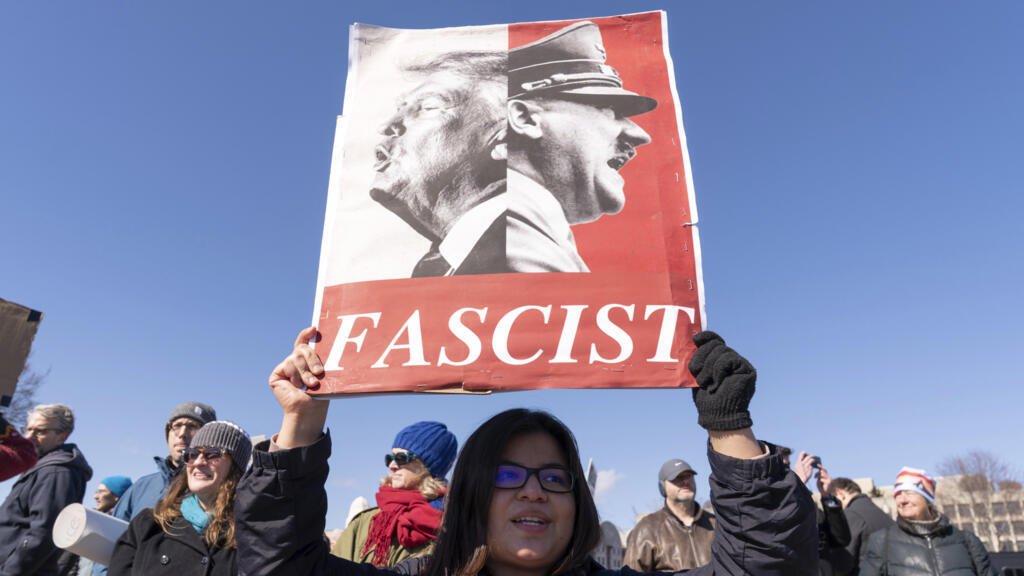
Across modern political history, economic policy is rarely just an exercise in accounting, trade balances, or fiscal management. More often, it serves as a vehicle for deeper ideological narratives and political mobilization. Today, the aggressive deployment of sweeping, across-the-board tariffs by Donald Trump is sold to the American public as a straightforward, common-sense blueprint to resurrect domestic manufacturing, protect blue-collar workers, and restore national prosperity. Yet, when examining the rhetoric, timing, and underlying objectives of this modern protectionist crusade, historians, economists, and even senior officials from Trump’s own administration point to deeply troubling parallels with the authoritarian statecraft of the 1930s—most notably the early economic and political strategies of Nazi Germany.
At the core of this historical comparison is not merely the mechanics of a tariff, which democratic nations have utilized for centuries to shield nascent industries or counter unfair trade practices. Rather, it is the political mythology surrounding the policy and the authoritarian worldview it reflects. To understand why modern tariff wars echo a darker chapter of the twentieth century, one must look beyond the balance sheets and examine how economic nationalism was weaponized in 1933, how top U.S. officials have characterized Trump’s ideological instincts, and how the pursuit of total economic self-sufficiency—known as autarky—subordinates the well-being of ordinary citizens to the ambitions of state power.
The Architecture of Political Myth and the "Big Lie"
Any serious analysis of authoritarian movements begins with the role of political mythology. In 1930s Germany, the National Socialist regime did not rise to power merely through brute force; it consolidated control through a carefully constructed narrative of national humiliation, betrayal, and existential struggle. In Mein Kampf, Adolf Hitler famously articulated the concept of the "Big Lie"—the notion that the broader public is more easily deceived by a colossal fabrication than a minor falsehood, particularly when that fabrication appeals to wounded national pride and offers a clear scapegoat for complex societal problems.
In that era, the Nazi regime framed Germany’s post-World War I economic collapse not as the result of military defeat and global financial turmoil, but as a deliberate conspiracy orchestrated by internal traitors and foreign adversaries. The promise to restore German greatness was not a conventional policy platform; it was a unifying myth designed to demand absolute loyalty from the masses while justifying the dismantling of democratic norms.
Critics, political scientists, and legal scholars have increasingly drawn parallels between this rhetorical architecture and the modern "America First" movement. In an adapted lecture examining the legal and political trajectory of the Trump administration, University of Illinois law professor Matthew Finkin argued that the unprecedented actions of the current American executive were foreshadowed by the early maneuvers of the Third Reich. "What ensued there resonates here," Finkin stated, pointing to how nationalist grievance is used to erode institutional guardrails.
Within this framework, the slogan "Make America Great Again" operates less as a measurable set of economic benchmarks and more as an emotional and ideological myth. By casting complex global supply chains and trade deficits not as the natural outcomes of comparative advantage and consumer demand, but as deliberate acts of foreign aggression, Trump transforms economic policy into a permanent "national struggle." In this narrative, foreign nations are not trading partners or competitors, but predatory enemies, while domestic critics, economists, and journalists who point out the costs of tariffs are branded as "enemies of the people."
Warnings from Inside the Room: Official Accounts of Authoritarian Instincts
Historically, comparisons between modern American politicians and 1930s European fascism were dismissed as partisan hyperbole. However, during and after Trump’s first term, such assessments ceased to come solely from outside critics. Instead, they emerged directly from the highest-ranking military and civilian officials appointed by Trump himself—individuals tasked with executing his policies and observing his decision-making behind closed doors.
Perhaps the most striking assessment came from retired Marine Corps General John Kelly, who served as Trump’s longest-tenured White House Chief of Staff and Secretary of Homeland Security. In on-the-record interviews with The New York Times and The Atlantic, Kelly explicitly stated that his former boss meets the political science definition of a fascist. Reading aloud from a standard definition of fascism—a far-right, authoritarian, ultranationalist political ideology characterized by a dictatorial leader and forcible suppression of opposition—Kelly remarked that Trump "certainly falls into the general definition of fascist, for sure."
Kelly went further, recounting private conversations in the Oval Office that revealed Trump’s admiration for the authoritarian governance of Nazi Germany. According to Kelly, Trump stated "more than once" that "Hitler did some good things, too"—a reference to Germany’s economic recovery in the 1930s—and expressed frustration that American military leaders did not show him the same absolute, unquestioning personal loyalty that Hitler’s generals showed the Führer.
Kelly’s warnings were echoed in stark terms by retired Army General Mark Milley, whom Trump appointed as Chairman of the Joint Chiefs of Staff. In interviews with veteran journalist Bob Woodward for the book War, Milley described Trump as "a total fascist" and "a fascist to the core," adding, "No one has ever been as dangerous to this country as Donald Trump." Upon his retirement in 2023, Milley underscored the constitutional divide between democratic service and authoritarian rule, reminding the armed forces that "we don't take an oath to a king, or a queen, to a tyrant or a dictator, and we don't take an oath to a wannabe dictator."
While Trump’s spokespeople have vehemently denied these accounts, dismissing them as fabrications by disgruntled former aides, the convergence of testimony from the nation’s top military officers and White House leadership provides an unprecedented official record. When leaders who worked directly alongside the president warn that his governing philosophy is rooted in ultranationalist authoritarianism, it forces a fundamental re-evaluation of his signature economic weapon: the tariff.
February 1933 and the Timing of the Trade War
To see how authoritarian ideology translates into trade policy, one need only examine the timeline of early Nazi governance. Adolf Hitler was appointed Chancellor of Germany on January 30, 1933. Within weeks—by mid-February 1933—the new regime, working alongside nationalist Economics Minister Alfred Hugenberg and protectionist theorists like Gottfried Feder, moved rapidly to erect towering tariff walls.
The timing was deliberate. The immediate imposition of steep tariffs—some reaching up to 500 percent on agricultural imports—was designed to send an unmistakable signal of nationalist resolve. Publicly, the regime sold these tariffs as an emergency rescue package for struggling German farmers and workers devastated by the Great Depression. It was framed as a patriotic assertion of sovereignty against a global capitalist system that Nazi theorists derided as a tool of international finance.
The parallels in timing and political theater with Trump’s trade agenda are unmistakable. Just as the regime in 1933 wasted no time upon securing power before launching a trade offensive, Trump made the immediate imposition of sweeping, universal tariffs a centerpiece of his return to the Oval Office. Rather than engaging in targeted, multilateral trade negotiations to address specific unfair practices, the strategy relies on shock-and-awe executive action—imposing baseline tariffs on allies and adversaries alike from day one.
In both eras, the immediate economic reality diverged sharply from the populist sales pitch. In 1933, Germany’s agricultural tariffs triggered immediate retaliatory trade barriers from neighboring European nations, including France, the Netherlands, Sweden, and Denmark, crippling German industrial exports and driving up domestic food prices for ordinary citizens. Similarly, modern economists across the political spectrum—from conservative free-market institutions to Wall Street analysts—have warned that broad-based tariffs function directly as a regressive tax on American consumers, raising the cost of everyday goods while provoking retaliatory tariffs that devastate American farmers and exporters.
The Pursuit of Autarky Over Prosperity
If broad tariffs consistently fail to deliver a sustainable golden age for the working class, why do nationalist leaders pursue them with such relentless determination? The answer lies in the concept of autarky—the pursuit of absolute economic self-sufficiency.
In the 1930s, Nazi economic planners were not fundamentally concerned with maximizing the standard of living or consumer purchasing power of the average German household. As historians of the Third Reich have documented, the regime’s obsession with tariffs, import quotas, and domestic production was driven by a singular strategic imperative: insulating the German state from foreign pressure so it could wage war without vulnerability to naval blockades or international sanctions.
In Mein Kampf, Hitler explicitly argued that Germany’s collapse in World War I was accelerated by its reliance on global trade for food and raw materials. Therefore, economic policy had to be subordinated entirely to military preparedness and territorial expansion (Lebensraum). Under Economics Minister Hjalmar Schacht’s "New Plan," traditional tariffs evolved into strict state-managed import controls and bilateral barter agreements designed to funnel raw materials into heavy industry and rearmament at the expense of consumer goods. As Hermann Göring famously summarized the regime’s economic philosophy in 1936: "Guns will make us powerful; butter will only make us fat."
In the modern American context, critics and historians see a disturbingly familiar rationale beneath the rhetoric of "Make America Great Again." While Trump frequently speaks of bringing back factory jobs, the actual structure of his trade policy prioritizes heavy industrial capacity, strategic decoupling, and coercive leverage over consumer well-being. By attempting to wall off the United States from global supply chains, the administration is pursuing a modern form of autarky—seeking to make the nation entirely self-contained so it can operate free from international constraints, alliances, and multilateral rules.
Furthermore, this economic insulation is explicitly linked to a transactional, expansionist worldview. Rather than viewing trade as a mutually beneficial exchange that fosters global stability, tariffs are wielded as an instrument of raw coercion—a weapon to extract unilateral concessions from neighbors, threaten allies, and project unilateral dominance. When trade policy is paired with rhetoric questioning the sovereignty of neighboring nations, demanding territorial acquisitions, or threatening to abandon historic defense alliances unless financial tribute is paid, the parallels to 1930s power politics become impossible to ignore.
The Counterargument and the Historical Verdict
Supporters of Trump’s trade policies fiercely reject any comparison to 1930s authoritarianism, arguing that such analogies are an offensive smear designed to delegitimize a popular economic movement. From the perspective of administration defenders and economic nationalists, tariffs are a classic American tool—used by figures from Alexander Hamilton to Abraham Lincoln—to build domestic industry. They contend that decades of unfettered globalization and corporate offshoring hollowed out the American heartland, destroyed millions of manufacturing jobs, and left the United States dangerously dependent on geopolitical rivals like China for critical goods such as steel, pharmaceuticals, and semiconductors. In their view, aggressive tariffs are a necessary corrective to restore fairness and protect national security.
Yet, there is a profound difference between targeted industrial policy within a rules-based international order and sweeping economic warfare driven by nationalist grievance. History offers a clear verdict on what happens when a major power abandons global cooperation in favor of zero-sum protectionism and the myth of autarky.
In the 1930s, the combination of the American Smoot-Hawley Tariff Act and the aggressive economic nationalism of European authoritarian states triggered a catastrophic collapse in global trade, deepening the Great Depression and poisoning international relations. In Germany, the pursuit of autarky did not bring lasting prosperity; it locked the regime into an unsustainable economic spiral that required ever-greater state coercion, debt, and ultimately military conquest to sustain.
Today, the slogans used to sell a modern trade war promise an effortless return to a mythical past of boundless American prosperity. But the mechanics of the policy tell a very different story. By embracing the politics of grievance, ignoring the stark warnings of his own senior officials, and prioritizing coercive self-sufficiency over the economic well-being of everyday consumers, Donald Trump’s tariff war does not represent a blueprint for making America great. Instead, it echoes the perilous path of 1930s economic nationalism—a strategy that history proves rarely delivers the golden age it promises, and always exacts a far higher price than the public is led to believe.

Comments
There are 0 comments on this post